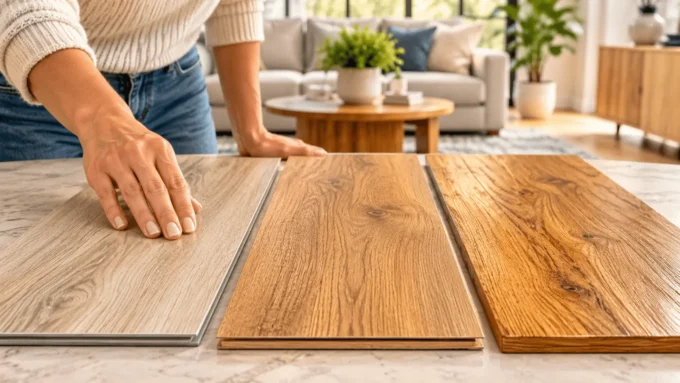


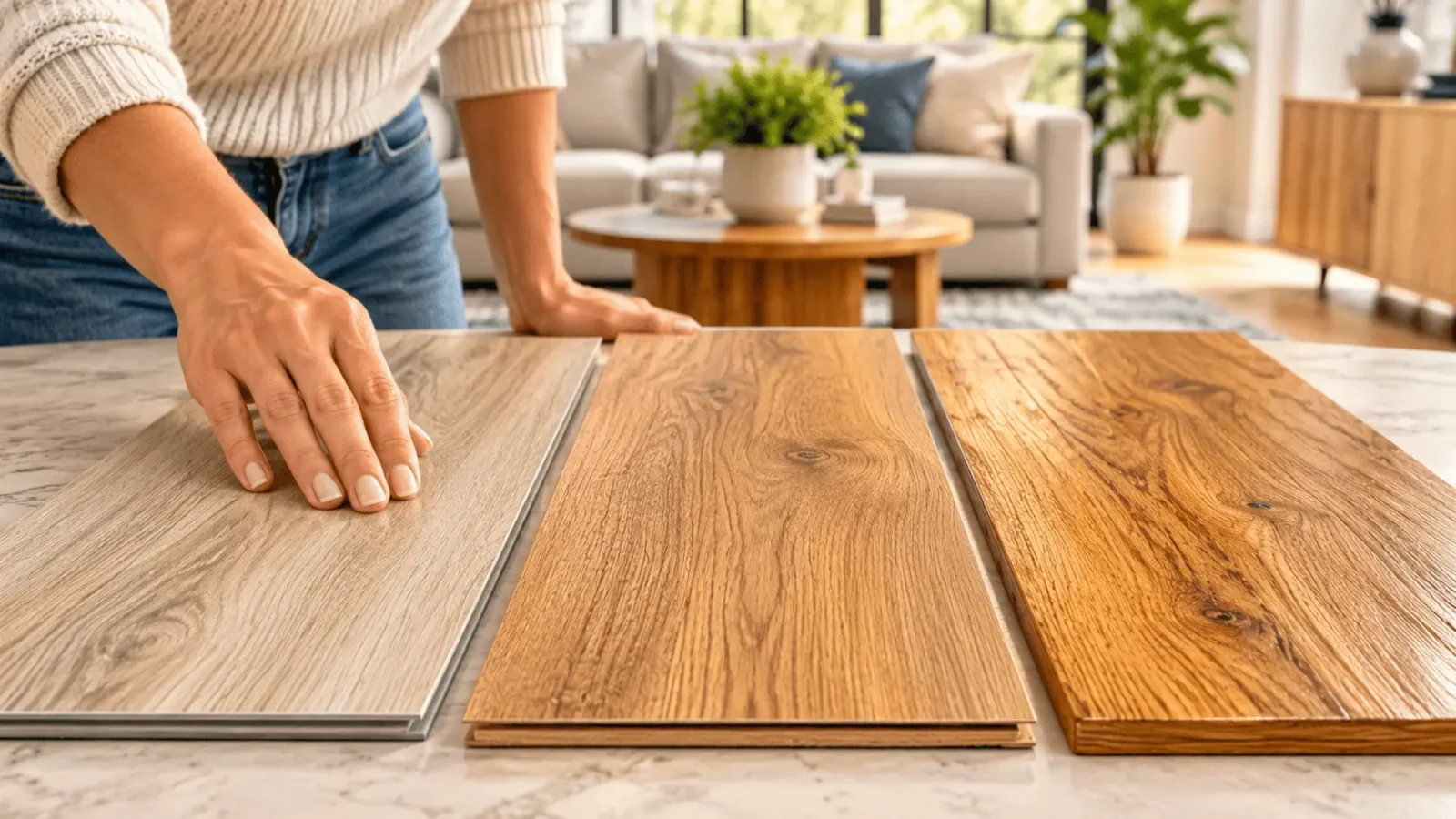
You are standing in a showroom holding three samples that all look like wood. The plank on the left says “100% waterproof.” The middle one says “AC5 rated.” The one on the right is real oak and costs three times as much. The floor you pick will stay under your feet for the next 15 to 30 years, so the question is worth getting right.
Luxury vinyl plank (LVP), laminate, and hardwood each solve a different problem. LVP is built for water. Laminate is built for scratch resistance on a budget. Hardwood is built for long-term value and refinishing. In 2026, the pricing, warranties, and product quality have shifted enough that the old advice no longer fully applies.
This guide compares all three by water resistance, durability, cost, feel underfoot, and best room. It also covers the specs that actually predict how a floor will perform: wear layer thickness for LVP, AC rating for laminate, and veneer thickness plus species for hardwood.
The short answer
LVP is fully waterproof and the best all-around choice for kitchens, basements, laundry rooms, and pet homes. Laminate wins on scratch resistance and price in dry rooms like bedrooms and home offices. Hardwood is the gold standard for authenticity, refinishing, and resale value. Match the material to the room’s moisture risk, not the catalog photo. In 2026, most installed projects fall between $4 and $25+ per square foot, depending on which one you pick.
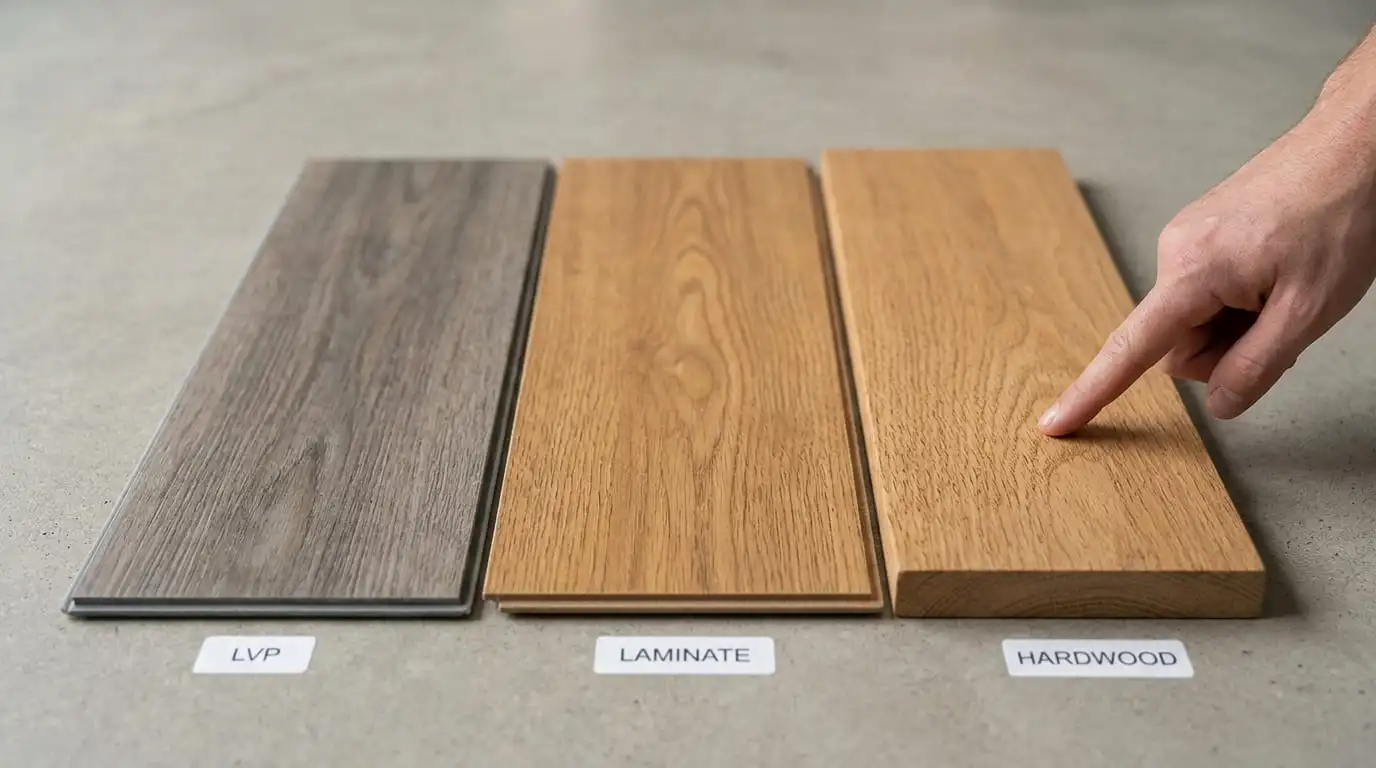
Quick comparison table
Start here. The table below gives you the numbers and traits that matter most. The sections after it explain what each one means in a real home.
| Factor | LVP | Laminate | Hardwood |
|---|---|---|---|
| Core material | Synthetic (SPC or WPC) | Wood-fiber (HDF) | Real wood (solid or engineered) |
| Water resistance | Fully waterproof | Water-resistant only | Poor to moderate |
| Scratch resistance | Good (wear layer dependent) | Excellent (AC3 to AC5) | Varies by species |
| Feel underfoot | Slightly soft and resilient | Firm, can feel hollow | Warm, solid, natural |
| Refinishable | No | No | Yes |
| Typical lifespan | 15-25+ years | 15-25 years | 50-100+ years |
| Installed cost per sq ft | $4-$12 | $3-$9 | $8-$25+ |
| Best for | Kitchens, baths, basements | Dry rooms on a budget | Living areas and long-term value |
What each flooring type is
The names on the box do not tell you much. What matters is what sits under the surface.
Luxury Vinyl Plank (LVP)
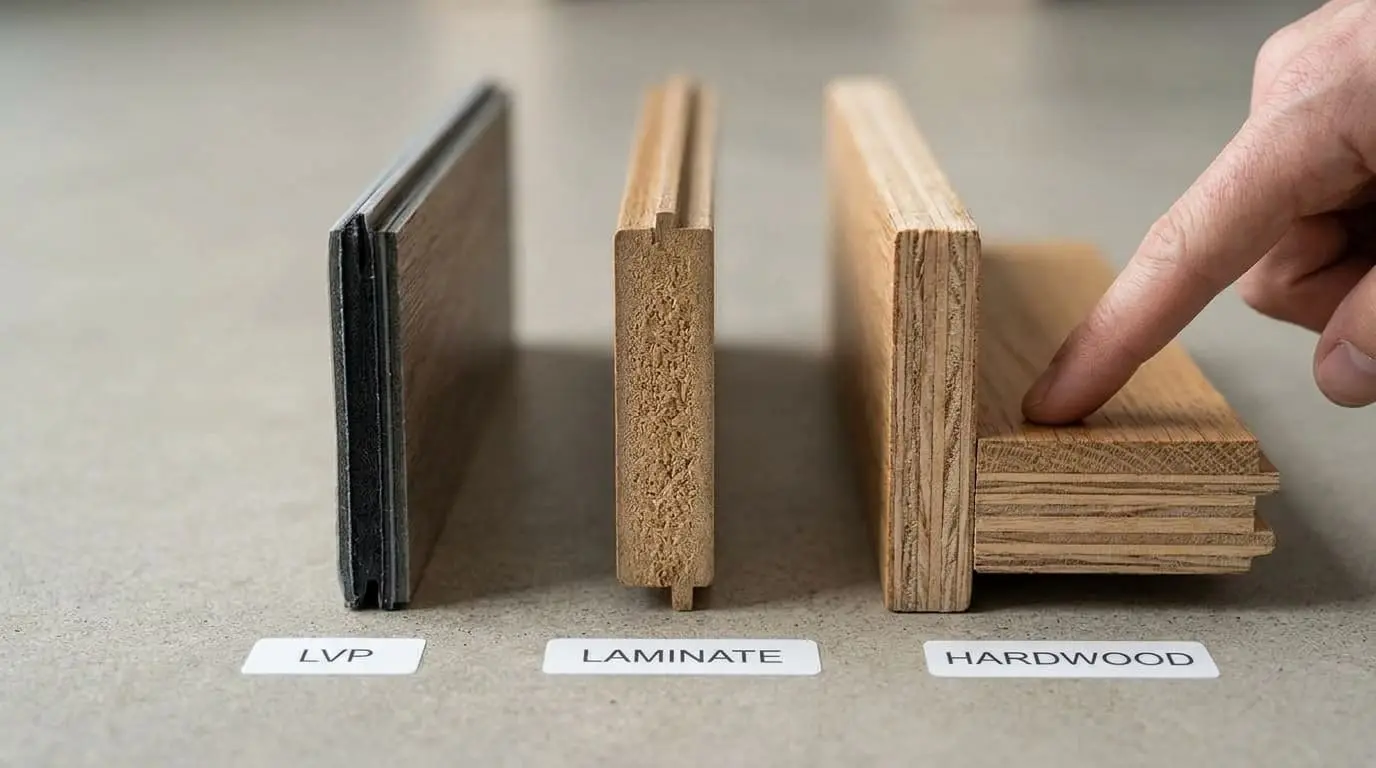
A multi-layer synthetic product. A high-resolution wood image sits under a clear wear layer (measured in mils). The core is typically rigid SPC (stone plastic composite) or WPC (wood plastic composite). Quality rigid-core LVP is 100% waterproof at the plank level and has become the most popular hard-surface flooring in residential projects over the last five years.
Laminate
A photographic wood image under a very hard melamine wear surface, bonded to a high-density fiberboard (HDF) core. Modern premium laminate offers excellent texture and realism. The surface is extremely hard and scratch-resistant, but the wood-fiber core remains vulnerable to moisture. Once water reaches the core, the plank swells and does not return to its original shape.
Hardwood
Solid hardwood is a single piece of real wood. Engineered hardwood features a real wood veneer over a multi-ply core for better stability across humidity swings. Both deliver authentic grain and the unique ability to be sanded and refinished. That refinishing ability is what separates hardwood from LVP and laminate over 30 to 50 years.
Water resistance: the biggest difference
This is the factor that decides most real-world projects. A floor that looks identical in the showroom can fail differently after one plumbing leak.
- LVP wins clearly. The plank itself does not swell. Safe for kitchens, bathrooms, laundry rooms, and basements. Spills wipe up; standing water for a few hours is not a disaster.
- Laminate is only water-resistant. Standing water that reaches the core causes permanent swelling. Small drips are fine. Slow leaks, pet accidents left overnight, or a wet mop used too generously can void the warranty.
- Hardwood is the most vulnerable. Solid hardwood is riskiest because the wood absorbs moisture and cups. Engineered hardwood performs better with normal humidity swings but still should not face standing water.
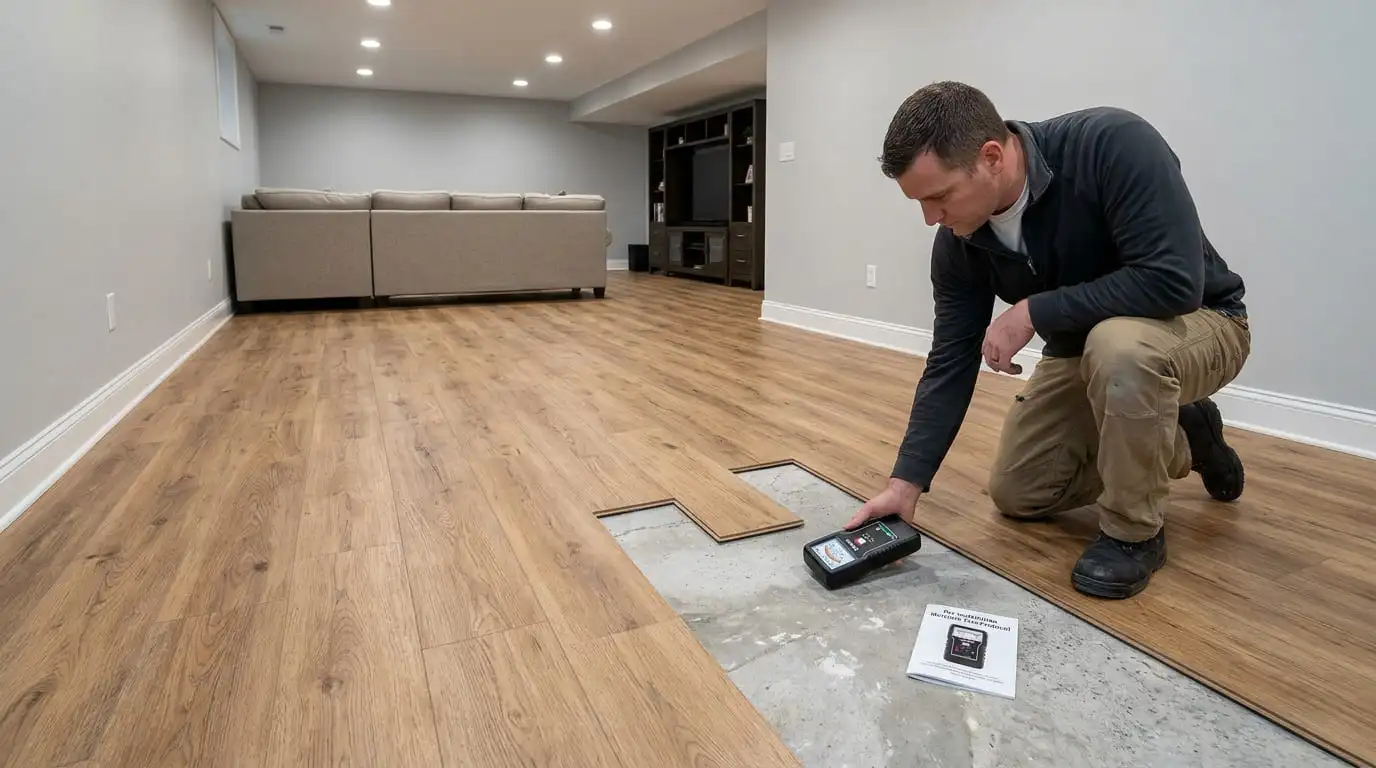
Basement tip
For basements, rigid-core LVP is the safest and most common recommendation. Engineered hardwood can work only in fully controlled, dry environments with proper moisture testing on the slab. If you are planning a basement remodel and want the full picture, see our guide on basement finishing costs.
Durability and everyday wear
“Durable” means different things depending on what is wearing on the floor.
- Laminate leads in pure surface scratch resistance. The aluminum-oxide wear layer and AC rating system (look for AC4 or AC5 in busy homes) are built for heavy foot traffic, kids’ toys, and furniture legs.
- Quality LVP with a 20+ mil wear layer resists scratches, dents, and pet claws very well. Below 12 mils, the surface wears faster under traffic.
- Hardwood durability depends on species and finish. Oak and hickory handle heavy traffic well. Softer species like pine dent easily. The advantage is that hardwood can be sanded and refinished instead of fully replaced when it wears.
Cost reality in 2026
Laminate remains the most budget-friendly option once installed. Mid-range LVP has closed the gap and often costs only slightly more, especially when the installer’s labor rate is included. Hardwood, especially solid, is the clear premium investment.
Over many decades, hardwood can win on cost-per-year because it can be refinished (typically two to three times over its life) instead of fully replaced. That math only works if you plan to stay in the home long enough for the refinishing to matter. For a full breakdown of renovation budgeting, see our guide on setting a realistic renovation budget.
Best flooring by room
Match the material to the room, not the room to the material you already like.
| Room or situation | Best choice | Why |
|---|---|---|
| Basement | LVP | Waterproof and handles concrete slab moisture |
| Kitchen, laundry, bath | LVP | Spills and humidity are routine |
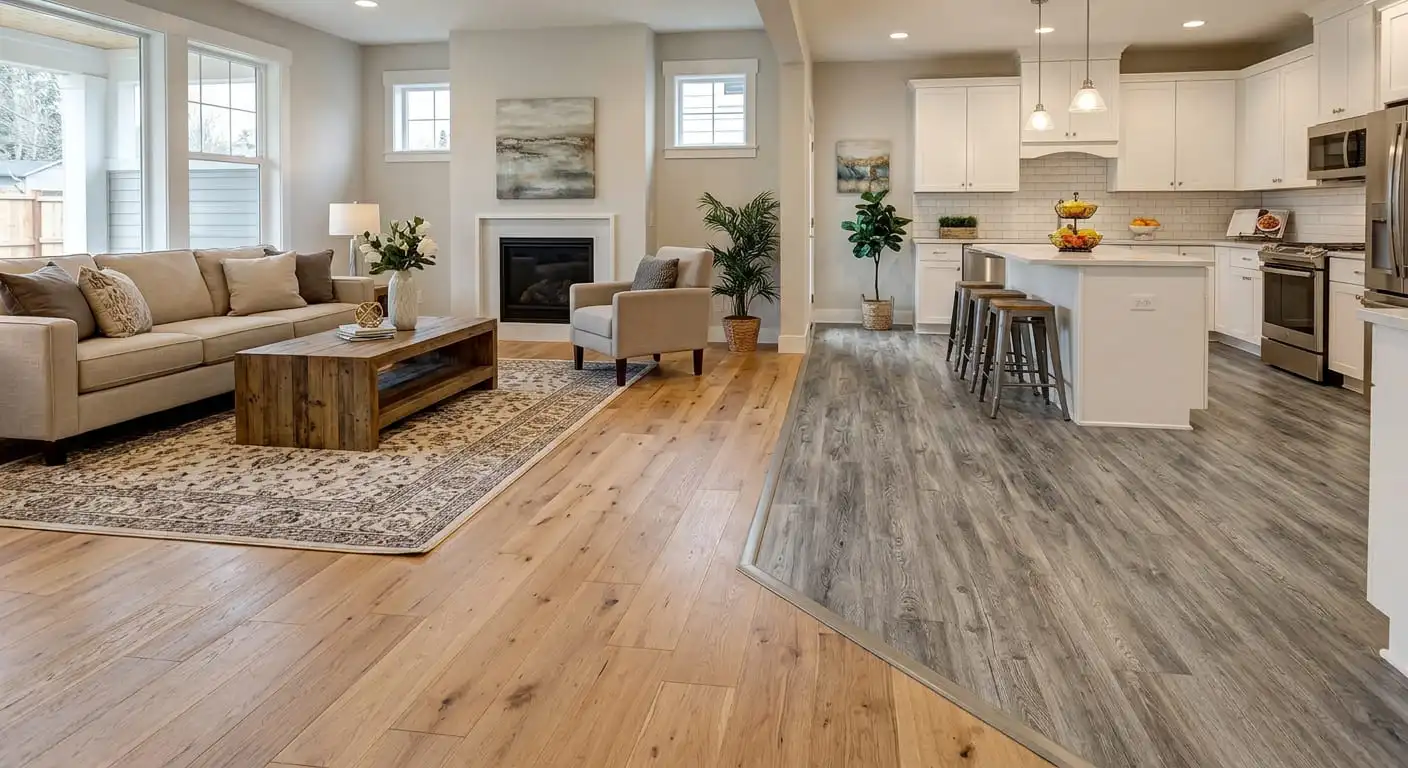
| Living and dining rooms | Hardwood or premium LVP | Aesthetics and daily traffic |
| Bedrooms | Laminate or LVP | Cost-effective, low moisture risk |
| High-pet or high-traffic homes | LVP | Best balance of toughness and water protection |
| Long-term investment home | Hardwood | Refinishable and strongest resale value |
How to choose
Three plain rules cover most real decisions:
- Water protection is the priority (basement, kitchen, pets). Choose quality rigid-core LVP with at least a 12-20 mil wear layer.
- Maximum scratch resistance on a budget in dry rooms. Choose premium laminate rated AC4 or AC5.
- Real wood, long-term value, and refinishing ability. Choose hardwood, engineered for more locations and solid where conditions allow.
Focus less on the category name and more on the actual product specs: wear layer thickness for LVP, AC rating for laminate, and veneer thickness plus species for hardwood. Those three numbers predict more about how the floor will age than any marketing claim.
Frequently asked questions
Is LVP better than laminate?
For most homes, yes, because LVP is fully waterproof and more comfortable underfoot. Laminate is better in dry rooms where scratch resistance and the lowest price matter more than moisture protection.
Can hardwood go in a basement?
Solid hardwood should not go in a basement because of moisture from the slab and humidity swings. Engineered hardwood can work only in fully controlled environments with proper moisture testing. Most basement projects go with rigid-core LVP instead.
What is the cheapest flooring option?
Laminate is generally the cheapest of the three once installed, with mid-range LVP often only slightly higher. Entry-level vinyl sheet and peel-and-stick are lower still, but they do not deliver the same look or lifespan.
Does laminate hold up to pets?
Laminate handles pet claws and traffic well thanks to its hard surface. The problem is moisture. Pet accidents left overnight can reach the core and cause permanent swelling. For homes with pets that have accidents, LVP is the safer choice.
How long does LVP last?
Quality LVP with a 20+ mil wear layer typically lasts 15 to 25 years in a busy home. Thin wear layers (under 12 mils) wear faster. Lifespan depends more on the wear layer and the traffic than the brand name.
Can you refinish LVP or laminate?
No. Once the wear layer or wear surface wears through, the floor has to be replaced. Hardwood is the only one of the three that can be sanded down and refinished, which is why it lasts 50 to 100 years in the right conditions.
Final thoughts
LVP, laminate, and hardwood are not interchangeable, and that is fine. Each one does something the others cannot. The mistake is buying on looks alone, then discovering two years later that the floor under the bathroom sink does not match the way your family actually lives.
Start with the room. Check the moisture risk. Read the wear layer, the AC rating, or the veneer thickness. Then pick the floor that fits the room, not the room that fits the floor you already like. That single habit saves more money than any showroom sale.

Keep planning your project
More practical, plain-English guides on costs, permits, design, and hiring from the RemodelPulse team.