

A home renovation should make everyday life better, not leave you worrying about money long after the dust settles. That is why a realistic home renovation budget matters. It gives you a clear limit, helps you make trade-offs with confidence, and keeps the project focused on what your home actually needs.
Here is the honest truth: renovation budgets are often exceeded. Surveys report very different rates, ranging from about one-third of homeowners to more than three-quarters, depending on the study and how the question is asked. The exact percentage matters less than the pattern behind it: unclear plans, underestimated prices, and unexpected problems can all push costs higher. You can reduce that risk before the first wall comes down.
This guide takes you through the process step by step. You will work out what you can safely spend, divide your priorities, understand the major cost categories, and account for expenses that are easy to overlook. Most importantly, you will learn how to make decisions without letting a few small upgrades quietly turn into a much larger bill.
The short version
Know what you can safely spend. Split your wish list into must, should, and dream. Get real prices in writing. Add a 10 to 20 percent cushion. Then protect that cushion from upgrades. The cushion is for surprises, not for a fancier faucet.
Why do renovations go over budget?
To build a budget that holds up, first understand why budgets fail. Houzz surveys have pointed to several recurring causes. They are useful because many are decisions homeowners can influence, rather than unavoidable bad luck.
- Changing the plan midway. In Houzz’s 2018 report, 42 percent of homeowners chose more expensive products after the work had already started, and around 3 in 10 of those who went over budget said they simply changed their minds about the plan.
- Prices higher than expected. In a later Houzz study, more than half of those who went over said products or services cost more than they thought.
- Surprises behind the walls. About a quarter blamed unexpected construction problems, and nearly a third said the job was more complex than expected.
- No budget at all. In one Houzz-based report, nearly 3 in 10 homeowners never set a budget before starting.
You can read more in Houzz’s own pieces on why remodels go over budget and on how much people spend.
The pattern is clear: overspending often begins with decisions that seem harmless in isolation. While a wall is open, you decide to add a window. Since the old floor is already removed, you choose a more expensive tile. Neither change may feel huge on its own, but several changes can consume your contingency fund surprisingly quickly. A written plan gives you a moment to pause and ask whether each extra is worth the cost.
Step 1: Find your real number
Start with what you can comfortably afford, not the largest amount a lender is willing to offer. Your home renovation budget should leave enough room for normal living expenses, savings, and emergencies. Before pricing materials, answer these questions.
- How much cash can you use without touching your emergency fund? A common guideline is to keep three to six months of living expenses available for emergencies.
- How long do you expect to stay in the home? A major upgrade may be easier to justify when you expect to benefit from it for years.
- Is the work addressing a safety or maintenance problem, or is it an improvement you would simply like to have?
You may also see rules of thumb that suggest budgeting a percentage of your home’s value for a major kitchen renovation. Recommendations vary widely, from around 6 percent to 15 percent or even 25 percent. Treat these figures as a rough sense-check, not a target you must spend. For example, 10 percent of a $300,000 home is $30,000, but your actual budget should reflect the work required, local prices, and what you can afford.
One more reality check: a renovation does not automatically return its full cost when you sell. Remodeling magazine’s annual Cost vs. Value report generally shows projects recovering only a portion of their expense, with results varying by project and market. Improve your home because the change suits your needs; consider any resale benefit a possible bonus rather than a guarantee.
Step 2: Sort your wish list
Write down every change you would like to make, from essential repairs to the finishing touches. Then place each item into one of three groups. Do this before visiting showrooms or browsing product photos. It is much easier to set priorities before you fall in love with a particular finish.
| Group | What it means | Examples |
|---|---|---|
| Must | Fixes safety, water, or structure problems | Leaky roof, bad wiring, rotten floor, mold |
| Should | Makes daily life work better | More storage, better lighting, a working layout |
| Dream | Nice to have, not needed | Fancy stone, a wine fridge, heated floors |
Fund the Musts first, then move to the Shoulds. Dream items belong at the end of the list and should only be included if the budget still allows them after essentials and contingency are protected. If you are unsure what counts as a Must, our list of signs your home needs a renovation can help.
Step 3: See where the money goes
A cost breakdown helps you see whether one part of the project is taking up too much of the available money. Kitchen budgets are often discussed using typical allocations associated with the National Kitchen & Bath Association (NKBA). Use the figures below as planning estimates, not fixed prices: your layout, materials, labor rates, and location can change the proportions considerably.
| Kitchen item | Typical share | Example on a $30,000 kitchen |
|---|---|---|
| Cabinets and hardware | About 29 to 30 percent | About $8,700 |
| Installation labor | About 17 percent | About $5,100 |
| Appliances and ventilation | About 14 percent | About $4,200 |
| Countertops | About 10 percent | About $3,000 |
| Everything else (floors, lights, plumbing, walls, permits, design) | About 30 percent | About $9,000 |
Cabinets are often one of the largest expenses in a kitchen renovation, so the cabinet style and how it is supplied can have a meaningful effect on the total. Stock and ready-to-assemble options may help control costs, depending on the product and installation needs. Our guide to RTA vs assembled cabinets shows where the real savings are.
Bathrooms and other rooms have different cost patterns, but the same principle applies: identify the two or three largest expenses first. Get those estimates early, because decisions about major items usually have a greater effect on the total than small decorative choices.
Step 4: Get real prices, in writing
An estimate becomes useful when you can compare it with other estimates on equal terms. Ask for at least three written quotes where practical, and give each contractor the same scope of work, material expectations, and finish level. Then compare what each price actually includes, not just the final number.
- Is the price itemized, or just one big number?
- Are cabinets, appliances, tile, and fixtures included, or bought separately? Many bids leave these out, which makes them look cheaper than they are.
- What are the allowances? These are placeholder amounts for items you have not chosen yet. A low allowance makes a bid look good and a final bill look bad.
- Who pays for permits, delivery, and cleanup?
- How long is the price valid, since material costs can change?
Our guide on how to read a contractor quote goes through this line by line, including the red flags. Also read about permits so you do not get surprised by fees or inspections.
Step 5: Add a safety cushion
A practical renovation budget includes a separate contingency fund of 10 to 20 percent for unexpected costs. A newer home and a straightforward project may need a smaller cushion; an older home or a project involving opened walls, plumbing, or structural work may justify closer to 20 percent. The right amount depends on the condition of the property and how much uncertainty remains.
Keep this money separate from the amount you plan to spend. It is there for genuine surprises, such as unsafe wiring behind a wall, damaged subflooring beneath a tub, or a repair required after inspection. Using it to upgrade a faucet or countertop turns your safety net into ordinary spending. If a real problem appears later, the money will no longer be there.
| Where surprises hide | What you might find |
|---|---|
| Behind walls | Old or unsafe wiring, damaged pipes, missing insulation |
| Under floors | Rot, mold, uneven or damaged framing |
| In older homes | Lead paint or asbestos materials that need special handling (see the EPA lead page) |
| In the rules | Code updates or extra permits required by the inspector |
| In the market | Material or labor prices that rise before you buy |
A small mind trick
Think of your budget as 100 percent, but your spendable budget as 85 percent. Plan everything inside the 85. If you never touch the last 15, you will finish under budget, and that feels wonderful.
The costs people forget
Some expenses are easy to miss because they do not look like part of the renovation itself. Add them to your plan early. Individually they may seem minor, but together they can make a noticeable difference to the final cost.
- Permits, inspections, and design fees
- Dumpster rental and trash removal
- A temporary kitchen, takeout meals, or even a short stay somewhere else
- Storage for furniture, and moving things around
- Delivery fees and sales tax on materials
- Painting and touch-ups after the work is done
- Small items: hardware, switch plates, shelves, curtains
- Higher water and power bills while work is happening
If you are deciding what to fix and when, our guide to the best order to renovate a house helps you avoid paying twice for the same work.
Where will the money come from?
How you finance the work affects the total cost just as much as the contractor’s quote. Interest, fees, repayment terms, and the risk attached to the loan all matter. The options below are general information, not personal financial advice; compare actual offers and seek qualified advice if you are unsure.
| Option | How it works | Watch out for |
|---|---|---|
| Savings or cash | No interest, no debt | Do not drain your emergency fund |
| Home equity loan | A lump sum with a set payment, secured by your home | Your home is the security, so late payments are risky |
| HELOC (home equity line of credit) | A credit line you draw from as needed, often with a variable rate | Payments can rise if rates go up |
| Personal loan | A loan with no home as security | Rates are often higher than home-based loans |
| Credit cards | Quick and easy | Interest can add up fast; best for small, paid-off-soon costs |
Some lenders cap total borrowing against home equity at roughly 80 to 85 percent of the home’s value, including the existing mortgage, but limits and eligibility rules vary. Ask the lender to explain the maximum amount, interest rate, fees, and repayment terms that would apply to your situation.
How to stay on track once work starts
Even a well-planned renovation can drift off budget if costs are not checked as the work progresses. A short weekly review helps you spot a problem while there is still time to adjust.
- Keep one simple sheet. List each item with columns for planned cost, quoted cost, and actual cost. Update it weekly.
- Use the 24-hour rule. When something unexpected comes up, wait one day before deciding, unless it is a safety issue. The urge to say “while we’re at it” often feels less convincing after a night’s sleep.
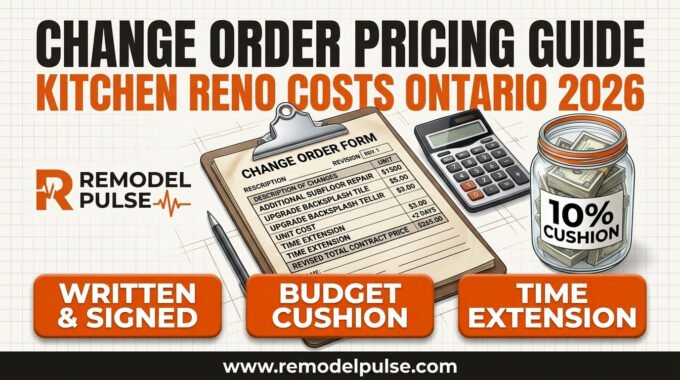
- Put every change in writing. Ask for a written change order that states the new cost and any new time. Never agree to extra work on a handshake.
- Connect payments to completed work. Tie payments to progress, not dates, and hold back the last payment until the job passes final inspection.
- Use a one-in, one-out rule. If you add something, remove something of similar cost.
- Save every receipt and document. You will need them for warranties, taxes, and resale.
Ways to spend less without a worse result
- Keep the layout. Moving plumbing, gas, and walls is where costs jump. Keeping things in place frees money for finishes.
- Choose stock sizes. Standard-size cabinets, doors, and windows often cost less than custom ones. One expert estimate puts the savings at roughly 20 to 30 percent.
- Spend where hands and eyes land. Put money into things you touch daily, like faucets, drawer slides, and lighting. Save on things you rarely notice.
- Refresh, do not replace. Painting, refacing cabinets, or swapping hardware can change a room for much less.
- Do safe jobs yourself. Painting, cleanup, and simple demolition can be DIY if there is no lead, asbestos, or wiring risk.
- Skip the trend. Pick finishes you will still like in ten years.
- Phase the project. Finish the must-do parts first, then add the rest later.
A simple budget sheet you can copy
| Line item | Planned | Quoted | Actual |
|---|---|---|---|
| Design, permits, fees | |||
| Demolition and trash removal | |||
| Structure and framing | |||
| Plumbing and electrical | |||
| Insulation and drywall | |||
| Cabinets and countertops | |||
| Flooring and tile | |||
| Fixtures and appliances | |||
| Paint, trim, and lighting | |||
| Cushion (10 to 20 percent) | |||
| Living costs (food, storage) |
Frequently asked questions
How much should I budget for a home renovation?
It depends on the room, the size, and your area. A useful method is to price each item from real quotes, add a 10 to 20 percent cushion, and check the total against what you can safely spend. As a loose guide, a major kitchen is often planned at roughly 6 to 15 percent of the home’s value, though some guides go higher.
How much cushion should I keep for surprises?
Most experts suggest 10 to 20 percent. Choose about 10 percent for newer homes and simple jobs, and closer to 20 percent for older houses or projects that open walls and floors.
Is it cheaper to renovate in phases or all at once?
Doing it all at once usually saves money, because trades come once and walls are opened once. Phasing spreads out the cost and can be easier on your budget, but you may pay to repair and redo some work. Start with the must-do jobs either way.
What if I run out of money in the middle of the project?
Stop and make a list of what is left. Finish anything that keeps the house safe and dry first. Then pause the nice-to-have items, talk to your contractor about options, and avoid high-interest credit cards to fill the gap.
How do I keep my contractor from going over budget?
Start with an itemized written quote, agree on allowances, require written change orders, and tie payments to finished work. Check in weekly and compare actual costs to your sheet.
Does renovating add as much value as it costs?
Usually not in full. Most projects return part of their cost when you sell, and the amount varies by project and by market. Renovate for how you live, and ask a local agent about resale before spending on big upgrades.
Final thoughts
A budget is not a cage. It is a way to say yes to the things that matter, and no to the things that only feel urgent for a week. The best renovations are not the ones that cost the most. They are the ones where the owner knew what they wanted, what it would cost, and what they would do if something went wrong.
Start with one focused hour. Write your Must, Should, and Dream lists, request written quotes, and add a contingency fund before committing to the work. You do not need every answer today; you do need a clear starting point. A little preparation now can prevent expensive decisions and a great deal of stress later.
Keep planning your project
More practical, plain-English guides on costs, permits, design, and hiring from the RemodelPulse team.