


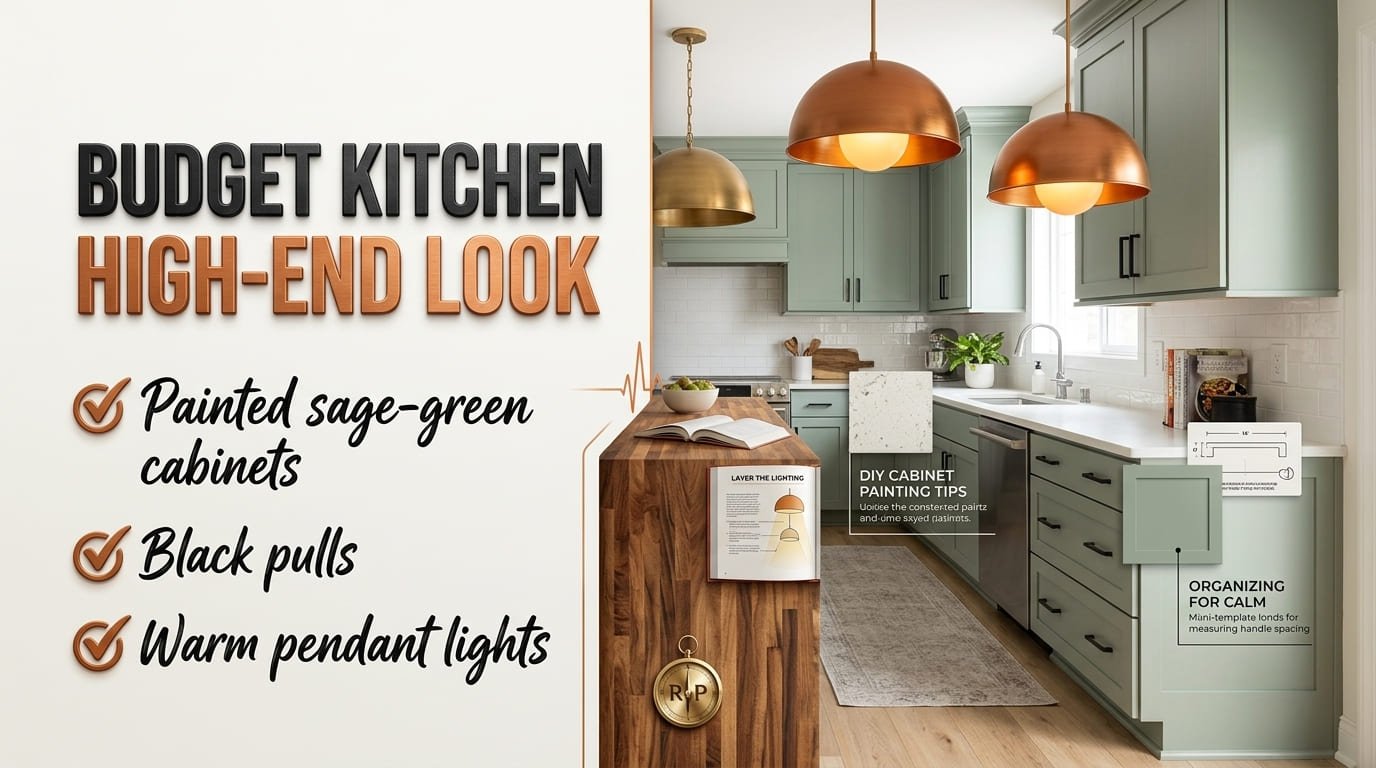
Walk into a kitchen that looks expensive and you rarely notice the price tag. Instead, you notice the calm. Specifically, the cabinets look sturdy, the light is warm, the faucet feels solid in your hand, and nothing seems to be shouting for attention.
Here is the good news. That feeling does not come from spending the most. In fact, it comes from a handful of choices that designers repeat again and again, and most of them cost far less than a full remodel.
Therefore, this guide shows you which budget upgrades make a kitchen look high-end, what each one really costs, and which popular “cheap” ideas to skip. Additionally, there are plenty of pictures to plan with, so take your time.
The quick answer
Generally, the best looks per dollar come from cabinet color, hardware, lighting, one smart counter move, a simple backsplash, and a better faucet. For example, one cost guide estimates that painting cabinets, new hardware, new counters, better lighting, and smart storage can transform a kitchen for under $10,000 combined. Similarly, Houzz found that homeowners who did minor kitchen updates spent a median of about $20,000. As a result, a careful budget plan can land well below that.
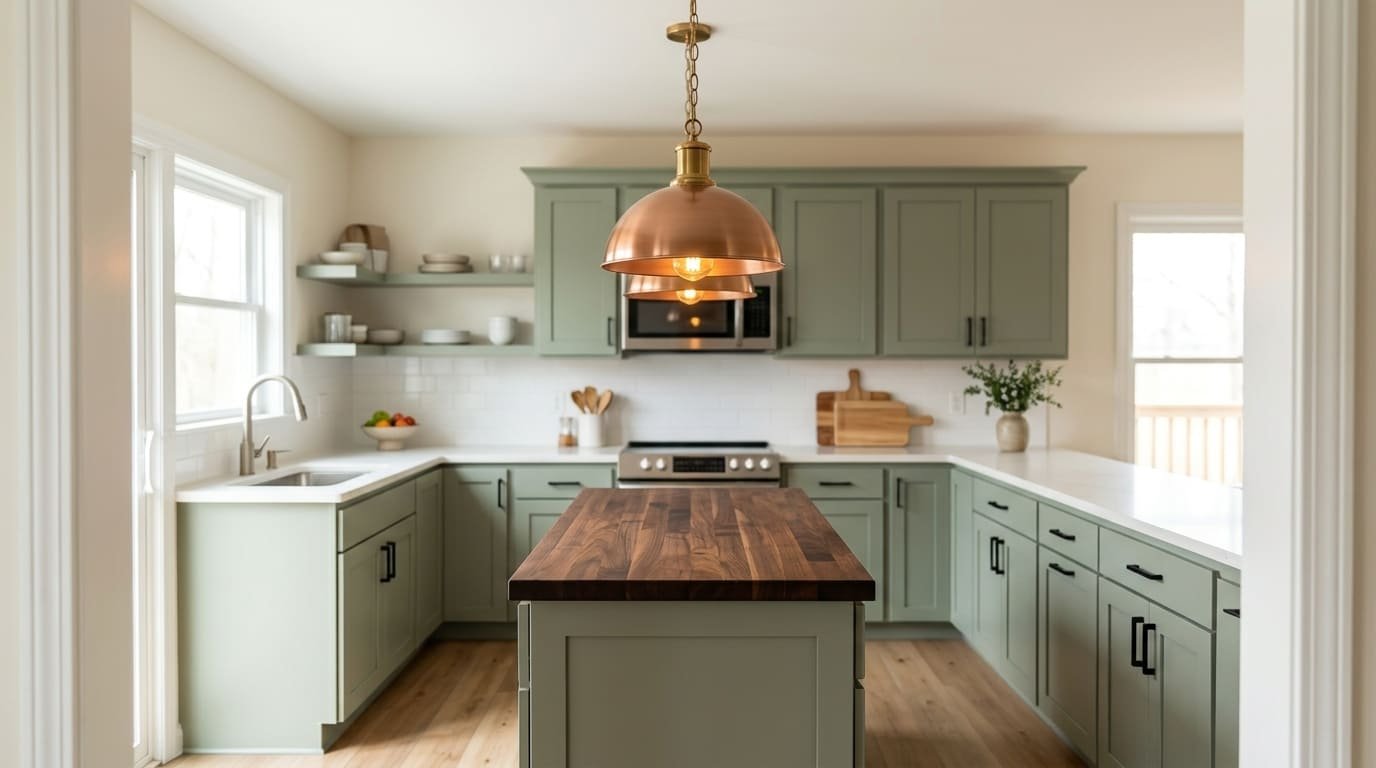
Why some kitchens look expensive
People judge a room in a few seconds, and they judge it by what is at eye level and what they touch. Fortunately, that is good news for your wallet, because those are exactly the things that cost the least to change. Below are five quiet rules that make a kitchen feel high-end.
- First, use fewer materials. Two or three finishes repeated well look planned. Conversely, six different ones look accidental.
- Second, spend where hands go. Pulls, knobs, and faucets are touched a dozen times a day. Therefore, if they feel heavy and smooth, the whole kitchen feels better.
- Third, light in layers. Bright overhead light is not enough. Instead, add light under the cabinets and over the island so surfaces glow.
- Also, keep lines clean. Simple door styles, tight gaps, and neat caulk look more expensive than fancy details done badly.
- Finally, leave breathing room. A kitchen with clear counters looks bigger and calmer than one covered in gadgets.
However, the flip side is also true. Specifically, a few small “tells” make a kitchen look cheap: mismatched metal finishes, yellowed outlet covers, dated light fixtures, and chipped caulk. Fortunately, they are inexpensive to fix.
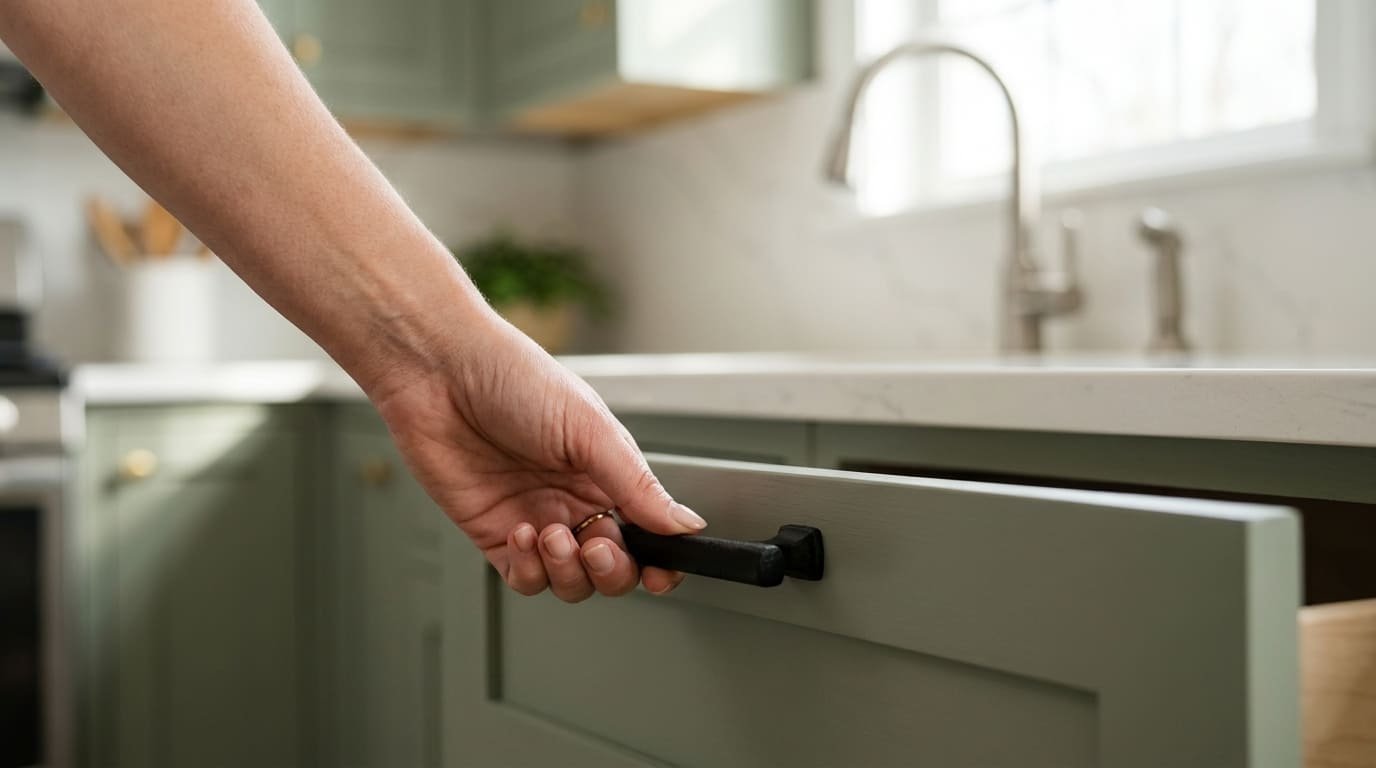
The budget map: cost and impact at a glance
Specifically, the cost ranges below come from published 2026 guides and a homeowner cost database. However, your area and your kitchen size will change them, so use them as a starting point.
| Upgrade | Typical cost | Visual impact | DIY-friendly? |
|---|---|---|---|
| Paint cabinets | DIY about $200 to $800; professional about $1,000 to $5,000, more for large kitchens | Very high | Yes, but it takes time and care |
| Reface cabinets | Average about $7,230, with most jobs about $4,234 to $10,226 | Very high | Mostly professional |
| New hardware and hinges | About $200 to $500 | High | Yes |
| Better lighting | About $100 to $300 for simple additions | High | Often yes; call an electrician for new wiring |
| New countertops | About $2,000 to $5,000 | High | Professional install |
| Simple tile backsplash | Low to medium, since the area is small | Medium to high | Yes for simple tile |
| Better faucet | Low to medium | Medium | Yes |
| Open shelving or glass doors | Low | Medium | Yes |
Additionally, one more number is worth keeping in mind. Cabinets are usually the biggest line in a kitchen budget, often around 30 percent of the total. Therefore, changing how they look instead of replacing them saves a lot. Our guide to a simple budget sheet you can copy shows how to track every line.
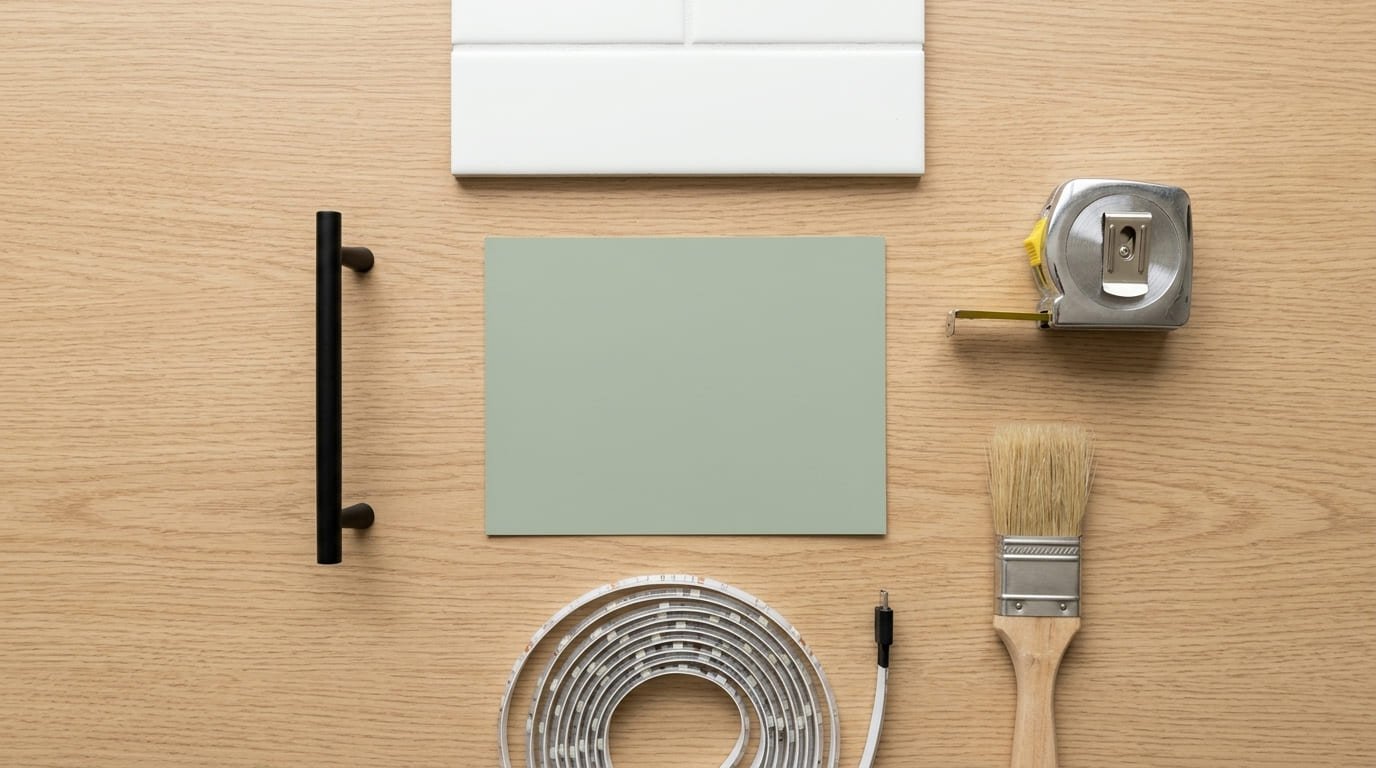
12 upgrades that look high-end
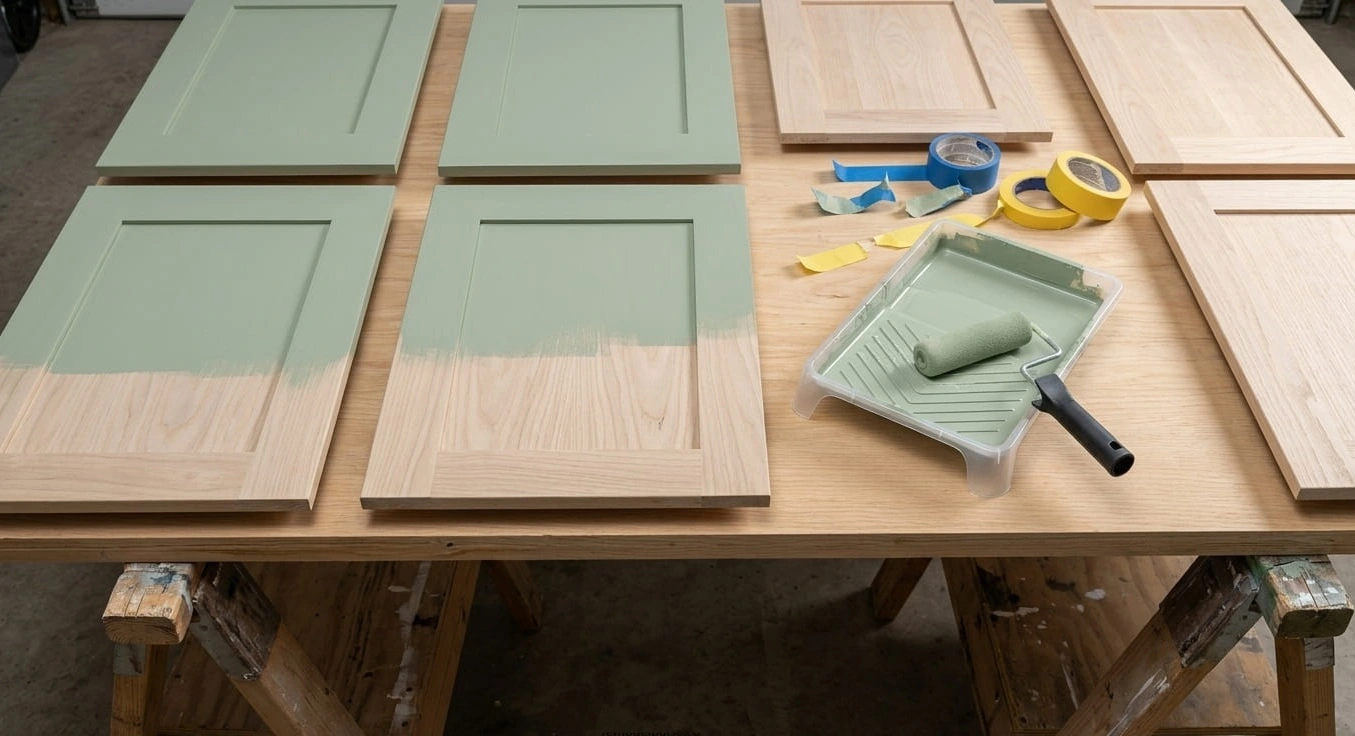
1. Paint the cabinets
First, this is the single biggest change you can make for the least money. For example, cost guides put do-it-yourself materials at roughly $200 to $800 and professional jobs at about $1,000 to $5,000, and one guide notes labor is about 70 to 85 percent of a professional bill. In other words, that tells you where the work is: in the prep, not the paint.
However, a fair warning is due. DIY painting is doable, but it often takes 30 to 60 hours, and a poor prep job shows up as peeling within months. Therefore, degrease, sand, prime, and use a hard-wearing cabinet enamel. If you hire out, get clear quotes using our guide to getting clear bids for painting or refacing.
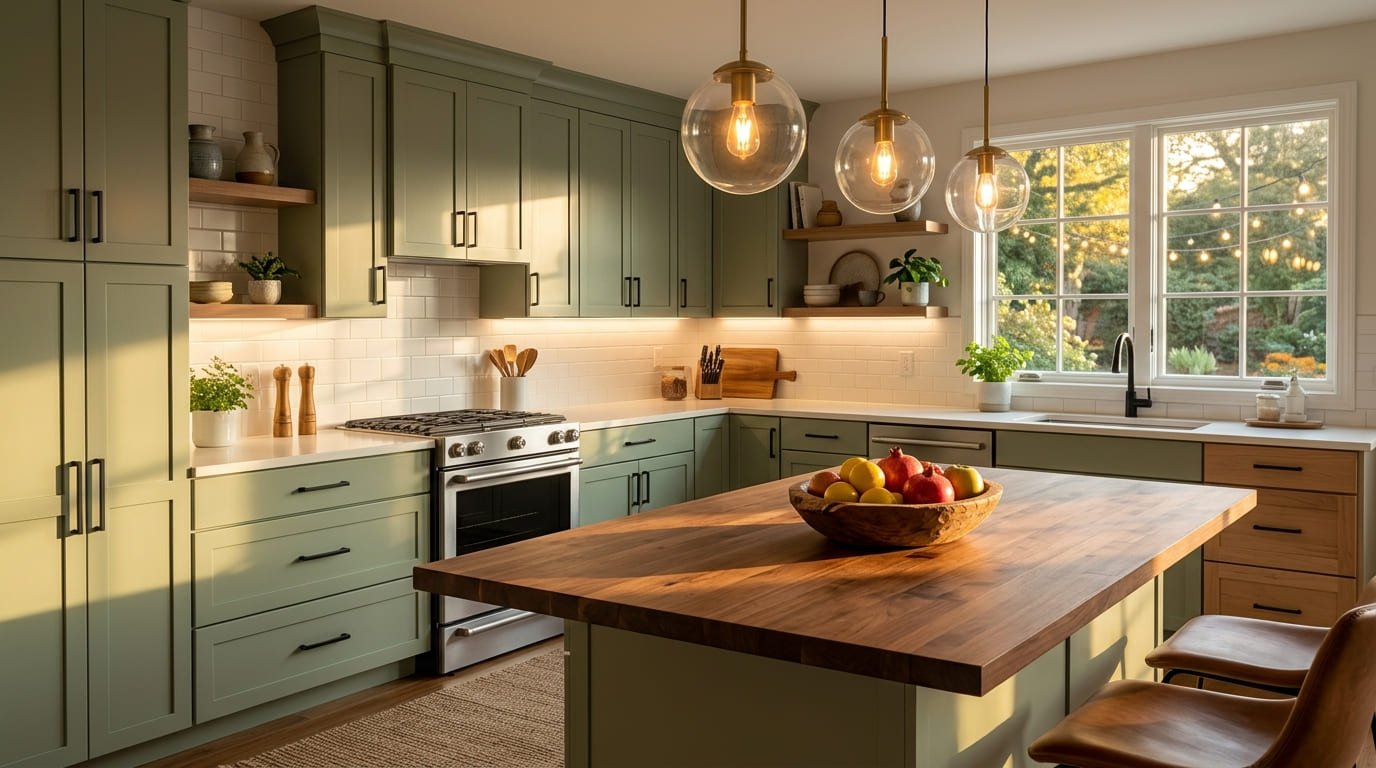
Meanwhile, choosing a color is the fun part. Warm greens, soft olives, and rich neutrals are leading the field, and our article on paint colors worth trying next year shows what is popular.
2. Reface or swap just the doors
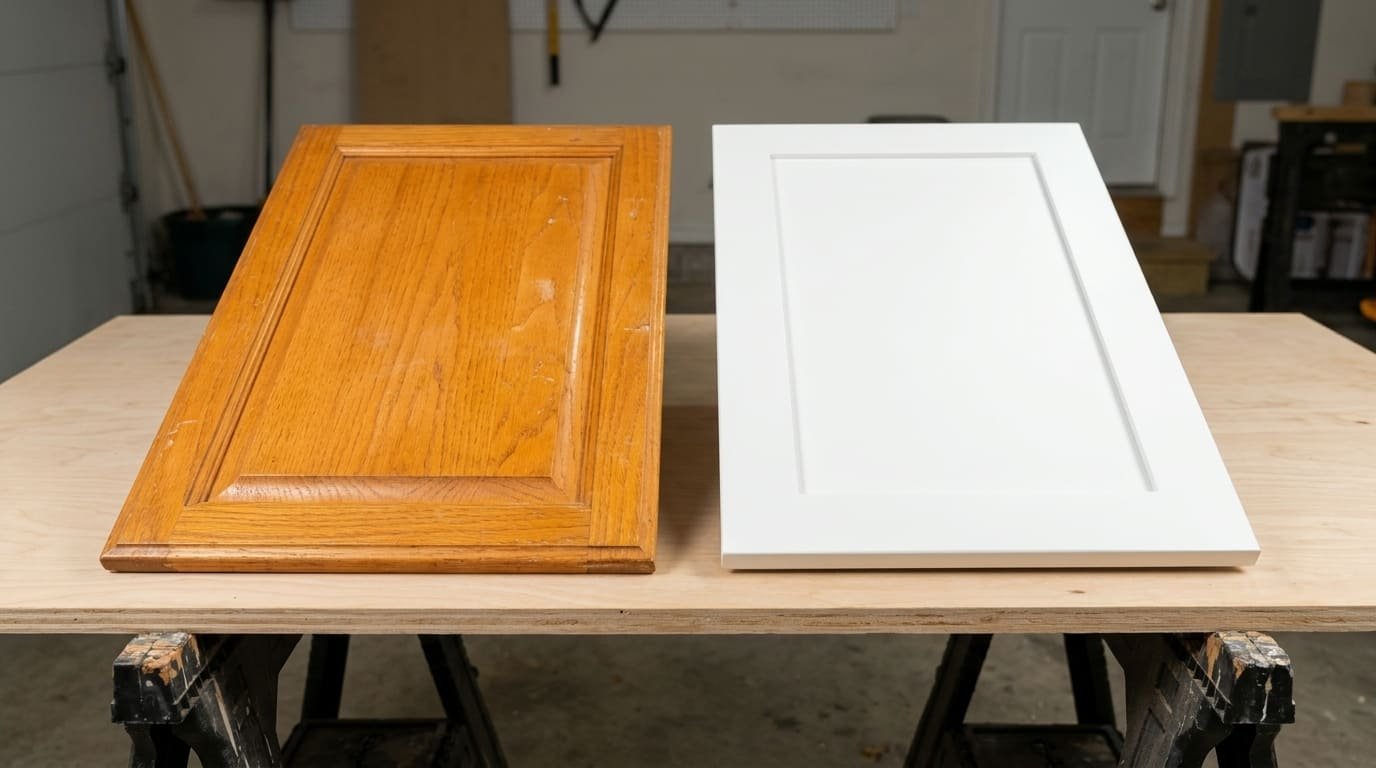
Next, if your cabinet boxes are sound but the doors look tired, new doors and drawer fronts can change everything. Specifically, refacing adds new door fronts and a veneer over the existing boxes. For example, HomeAdvisor reports an average of about $7,230, with most projects between roughly $4,234 and $10,226. See its cabinet refacing cost guide.
Generally, simple flat or shaker-style doors tend to look the most current and the least fussy. Additionally, if you do want all-new cabinets and are comparing formats, read about when flat-pack boxes make sense.
3. Upgrade the hardware
In fact, new pulls and knobs are the cheapest jewelry a kitchen can wear. For instance, one guide puts hardware and hinges at around $200 to $500. Therefore, choose one finish and use it everywhere. As a result, mixing three metals becomes a common cheap tell you avoid.
- First, choose pulls with some weight and a clean shape.
- Also, size them to the drawer: longer pulls on wide drawers, smaller knobs on doors.
- Moreover, fill old holes before painting, and use a template so every pull sits at the same height.
- Finally, replace worn hinges at the same time. A soft-close hinge feels like a luxury upgrade.

4. Layer the lighting
Interestingly, lighting is the secret weapon of expensive-looking kitchens. Specifically, replace dated builder-grade fixtures, add LED strips under the upper cabinets, and put a dimmer on the main light. As a result, a simple set of additions can cost about $100 to $300.
Additionally, many designers prefer warm bulbs, around 2700K to 3000K, because they make wood and food look inviting. Therefore, pick one color temperature and use it throughout. If new wiring is needed, hire a licensed electrician and check whether you need a permit; our notes on checking if electrical work needs approval walk you through it.

5. Make one smart counter move
However, new counters can cost about $2,000 to $5,000, so choose carefully. Therefore, here are a few clever ways to look high-end without the full price:
- First, mix surfaces. Put butcher block on the island and a harder surface around the perimeter. In fact, in Houzz’s 2026 kitchen study, about 1 in 5 homeowners now use a different surface on the island, and butcher block is a favorite.
- Second, use a remnant. If your kitchen is small, a leftover stone slab from a fabricator can cost much less than a full slab.
- Finally, pick a simple edge. A clean, slightly eased edge reads as expensive. Conversely, heavy decorative edges can look dated.

6. Choose a simple backsplash
Because the backsplash is a small area, even good tile stays affordable. Specifically, choose a clean shape, such as a plain subway tile or a soft handmade-look tile, and keep the grout color close to the tile. Additionally, running the tile all the way up to the underside of the upper cabinets looks finished.
However, be careful with peel-and-stick tiles. They are tempting, but one cost guide notes they struggle exactly where kitchens get the most heat and water. Therefore, keep them away from the stove and sink.

7. Upgrade the faucet and sink
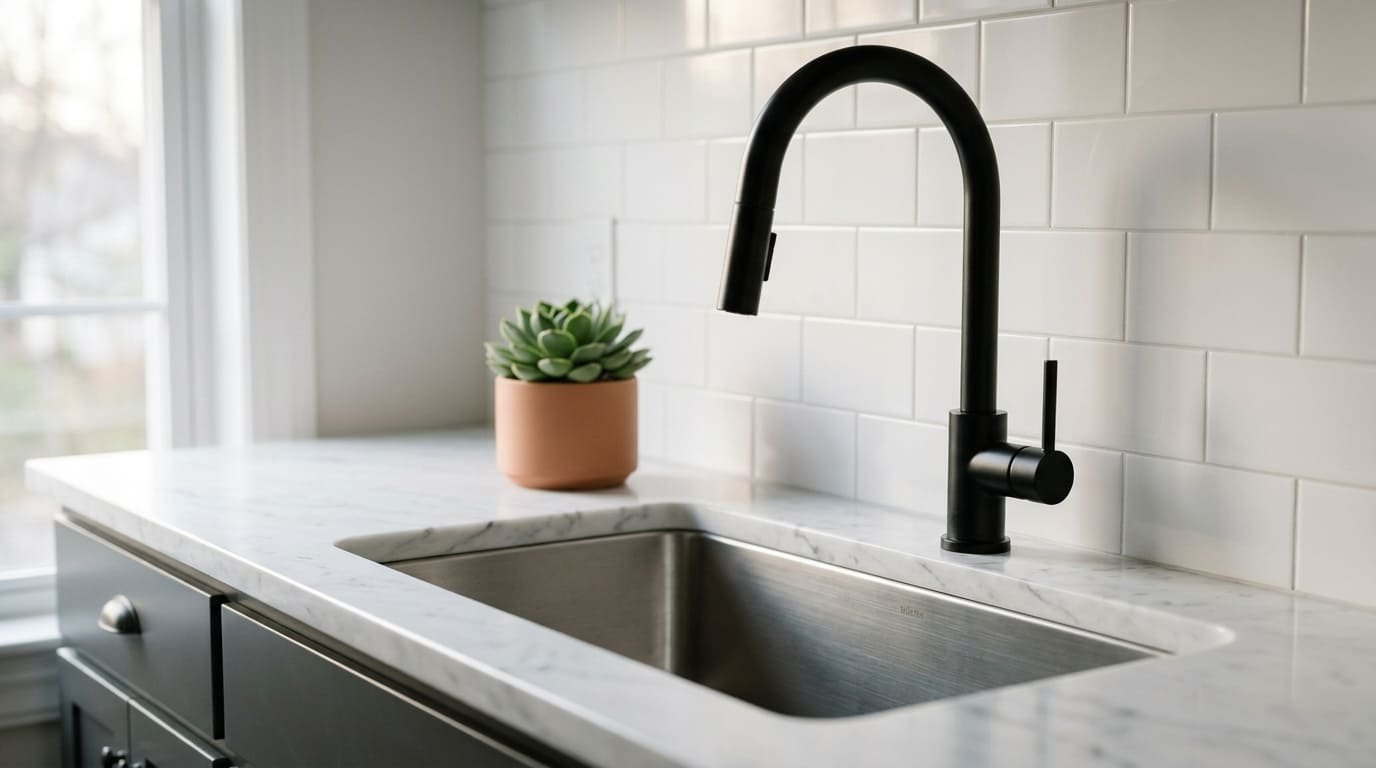
Because you touch the faucet more than any other fixture, it pays to get a good one. Therefore, choose a solid-feeling pull-down model in a finish that matches your hardware. Additionally, if your counters allow it, a new sink can lift the whole look too, but check that the new size fits the cabinet opening first.
8. Try open shelves or glass doors
In fact, removing a few upper doors, or swapping some for glass, makes a kitchen feel lighter and more personal. Furthermore, it is low cost, and it works best for two or three shelves, not a whole wall. However, keep the display tidy, because open shelves show every mess.
9. Paint the walls and trim
Similarly, fresh paint on the walls, ceiling, and trim makes every other upgrade look cleaner. For instance, a slightly deeper color on the walls than the cabinets often looks designed. Therefore, test big samples in your kitchen light, since kitchens change color as the day goes on.
10. Add the trim details
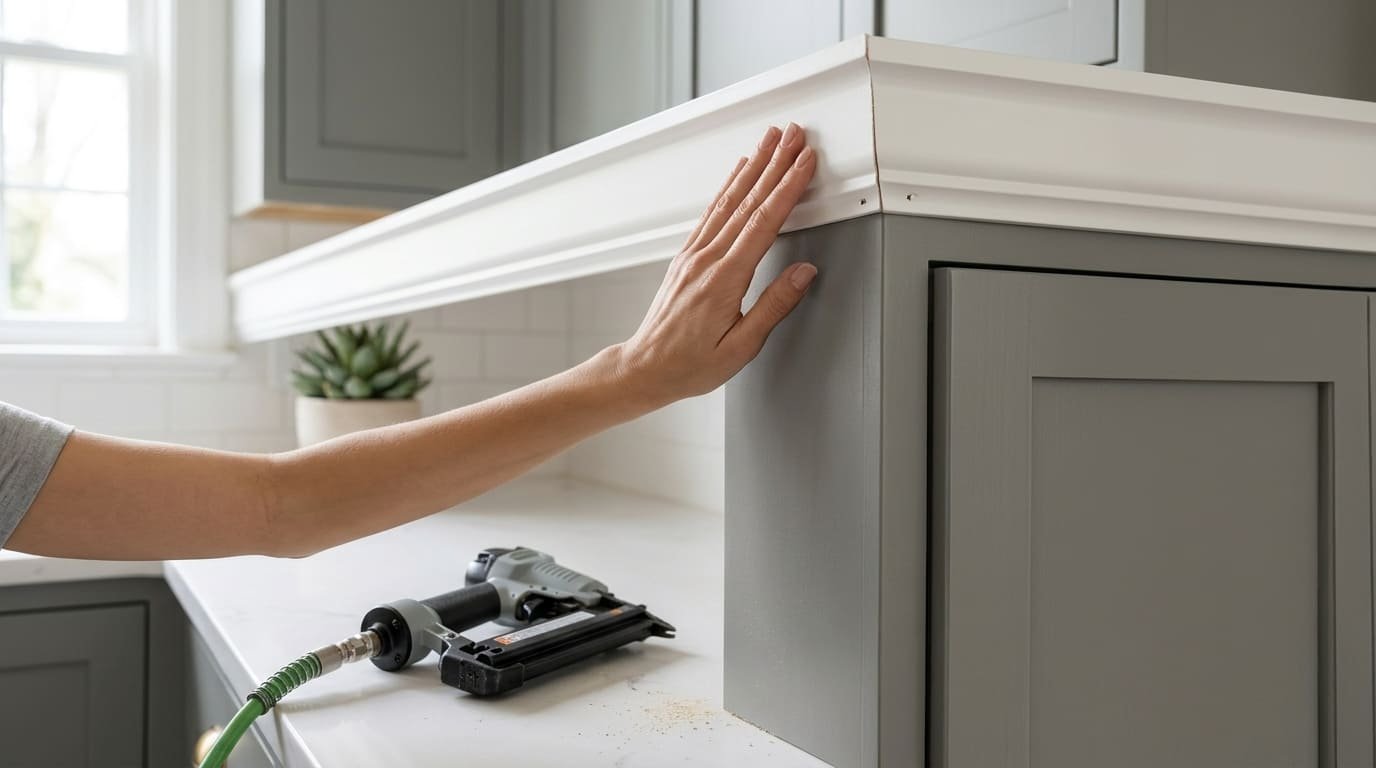
Interestingly, stock cabinets look custom when you add a few finishing touches: crown molding on top, a clean toe-kick, matching end panels on exposed sides, and a trim piece under the upper cabinets to hide the light strip. Additionally, these details are inexpensive, and they hide the “builder-grade” look.
11. Organize for calm
In fact, a clutter-free kitchen looks richer. Therefore, add a pull-out trash bin, drawer dividers, and a slim pantry organizer. Additionally, our look at what is trending in kitchens next year shows how popular storage upgrades are right now.
12. Keep the floor, fix the details
However, new flooring can eat a budget quickly. Therefore, if your floor is in decent shape, clean it, repair obvious damage, and regrout if needed. Instead, save the replacement for a time when the budget allows, and pick a simple, durable material then.
What to skip
- First, skip moving plumbing or gas. It is the fastest way to turn a budget project into an expensive one. Therefore, keep the layout, and see our guide on layouts that keep plumbing in place.
- Also, avoid painting cabinets without prep. Cheap paint with no sanding or primer will chip fast.
- Similarly, skip peel-and-stick near heat or water. It tends to lift and curl.
- Additionally, avoid trendy tile you may tire of. Therefore, choose timeless tile and let color come from paint and accessories.
- Moreover, do not buy every appliance at once. Instead, upgrade one or two that matter most, and keep the rest.
- Finally, never skip the written scope. Vague quotes lead to extras. See why small add-ons get expensive.
Three budgets you can copy
In short, these totals are simple math using the ranges above. However, real quotes will vary, but they show what each budget level might buy.
| Budget | What it could include | Rough total |
|---|---|---|
| Under about $1,600 | DIY cabinet painting, new hardware, simple lighting additions | About $500 to $1,600 |
| About $3,300 to $10,800 | Professional cabinet painting, new hardware, lighting, and new counters | About $3,300 to $10,800 |
| About $6,500 to $16,000 | Cabinet refacing, new counters, hardware, and lighting | About $6,500 to $16,000 |
Additionally, remember to keep a cushion of 10 to 20 percent for surprises. Furthermore, if your kitchen is older, aim for the higher end.
What to do first
- First, fix any water or electrical problems. Pretty finishes do not last on top of leaks.
- Next, plan the layout and keep plumbing where it is.
- Then, do the dusty and messy jobs first, like trim work and repairs.
- Also, paint the walls and ceiling, then the cabinets.
- After that, install counters, backsplash, and lighting.
- Finally, finish with hardware, the faucet, and styling.
If your project has several stages, the logic in the order that saves rework also applies to a small refresh. Additionally, if you wonder about timing, see what a two-week refresh looks like.

Frequently asked questions
What is the cheapest way to update a kitchen?
First, start with new cabinet hardware, better lighting, and a fresh coat of paint on the walls. These three changes cost the least and show up the most. Then, painting the cabinets is the next step up.
Is painting kitchen cabinets worth it?
Usually yes, if the cabinet boxes are solid. In fact, it is one of the biggest visual changes for the lowest price. However, the catch is that it takes good prep, and a rushed DIY job can chip. Therefore, if you are unsure, hire a pro.
How much does a budget kitchen remodel cost?
Generally, a light refresh can cost under $1,600 if you do the work yourself. Meanwhile, a fuller budget update with professional painting, new counters, and lighting commonly runs about $3,300 to $10,800 using the ranges above. Additionally, larger projects cost more.
What upgrades make a kitchen look expensive?
Specifically, consistent finishes, heavy and well-chosen hardware, layered lighting, simple door styles, and a clean backsplash. Additionally, a good faucet also helps, because you notice it every day.
Can I update my kitchen without replacing the cabinets?
Yes. For example, painting, refacing, new doors, and new hardware can change the look completely. However, replace the boxes only if they are damaged, sagging, or no longer work with your layout.
Which kitchen upgrades add the most value?
Generally, smaller, well-done updates often return a larger share of their cost than big, expensive remodels. Therefore, ask a local agent what buyers in your area care about most.
Final thoughts
In reality, a high-end kitchen is not about the biggest check. Instead, it is about the right small choices, made in the right order, with a little patience for the boring prep. Specifically, paint it well, light it warmly, and choose hardware you love to touch.
Therefore, pick two or three ideas from this list and do them well, rather than ten halfway. As a result, your kitchen will feel new, your budget will stay calm, and nobody will guess how little you spent.
Keep planning your project
More practical, plain-English guides on costs, permits, design, and hiring from the RemodelPulse team.











Leave a comment