

Few kitchen choices start arguments faster than this one. Mention gas to a serious home cook and you may hear about the flame, the feel, and the way their grandmother cooked. Similarly, mention induction to a tech-loving friend and you may hear about boiling water in a blink.
Both sides have a point. Fortunately, you do not have to pick a team. You just need the facts, laid out in plain words, so you can match a cooktop to your kitchen, your budget, and the way you actually cook.
Therefore, this guide compares induction and gas on cost, installation, speed, efficiency, air quality, safety, and cookware. It uses US data, flags where experts disagree, and ends with a simple way to decide. Prices were checked in October 2026 and will change, so treat them as ranges.
The short answer
Choose induction if you want fast heating, precise low heat, an easy-to-clean surface, and better indoor air, and you can handle the wiring and cookware. Choose gas if you love a visible flame, cook with a round-bottom wok, want to cook during power outages, or your home already has a gas line and the electrical upgrade would be costly. In the end, many cooks are happy with either one.
How each one works
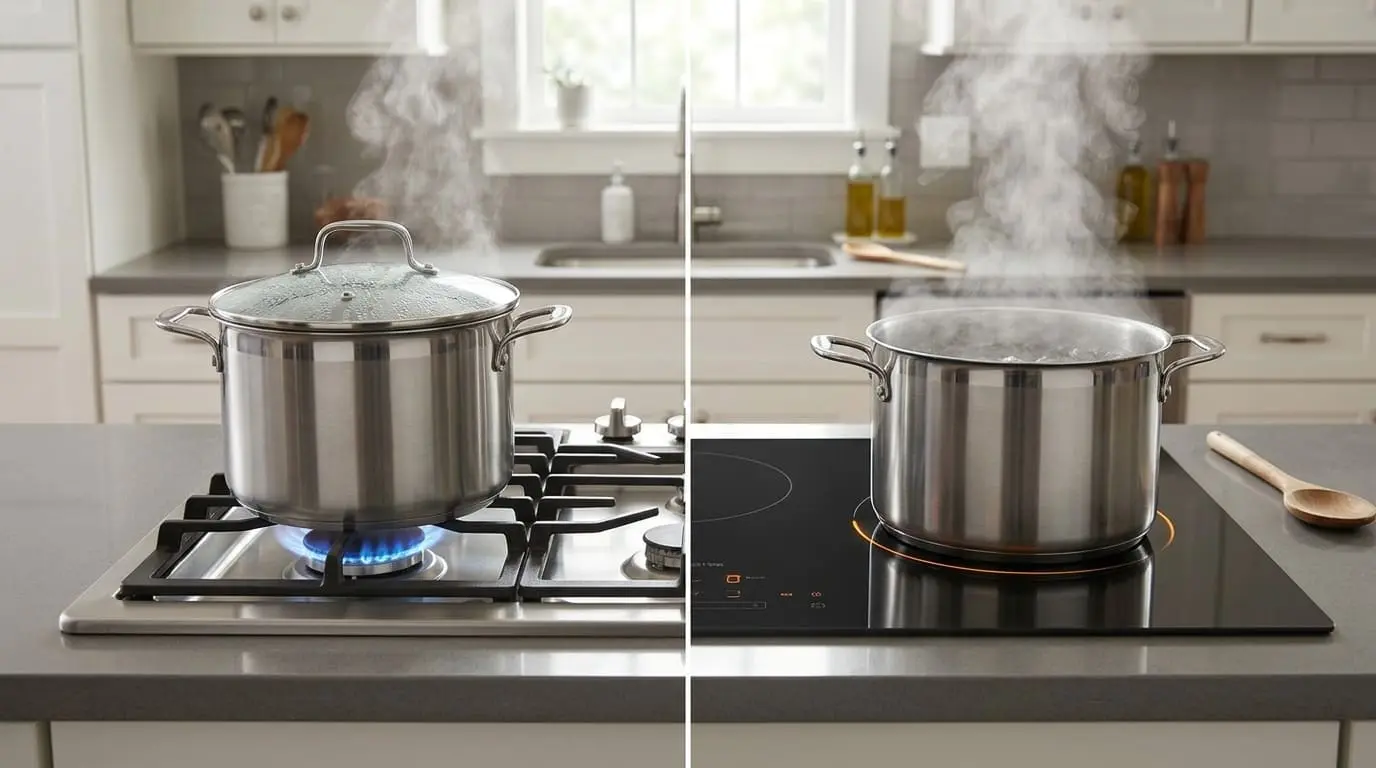
Gas burns natural gas (or propane) to make a flame. As a result, the flame heats the bottom of your pan and a lot of the air around it.
Induction, in contrast, uses an electromagnet under a glass surface. It creates a magnetic field that makes the pan itself heat up. Consequently, the glass stays cool, apart from heat that comes back from the hot pan. That is why induction only works with pans a magnet can stick to.
Both are common in the United States. Specifically, the US Energy Information Administration reported that about 38 percent of American households cooked with natural gas in 2020, with much higher shares in California (about 70 percent) and New Jersey (about 69 percent). Meanwhile, induction is growing from a much smaller base. In fact, in a survey of renters by the National Multifamily Housing Council, interest in induction rose from 5 percent in 2022 to 7 percent in 2024, while gas preference slipped from 47 to 40 percent.
Head-to-head at a glance
| Factor | Induction | Gas |
|---|---|---|
| Typical appliance price | About $1,100 to $3,500 | About $650 to $2,500 |
| Installation | Needs a 240-volt circuit | Needs a gas line and a vent plan |
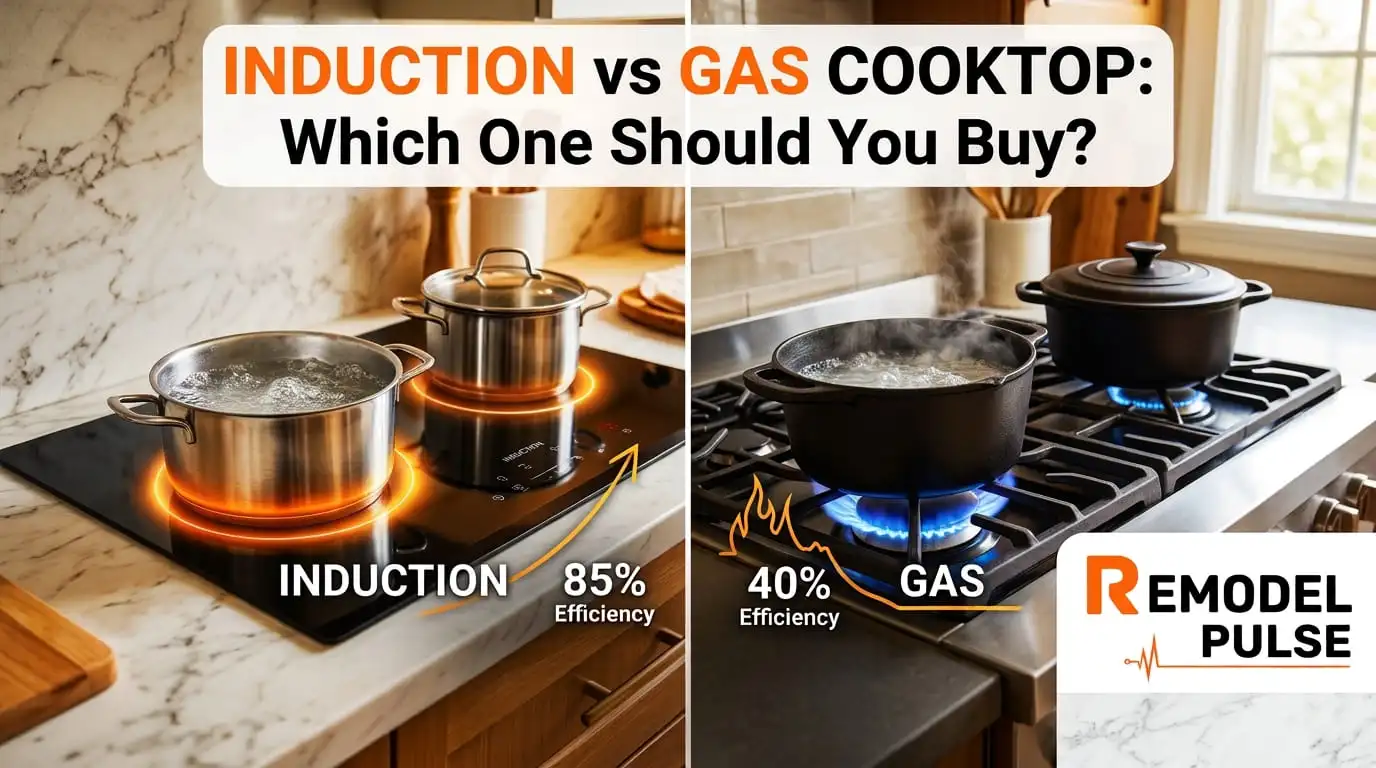
| Energy that reaches the pan | About 85 percent | About 40 percent or less |
| Heating speed | Fastest; tests show water boils about 20 to 40 percent faster | Fast, but slower to boil |
| Low-heat control | Very precise | Good, with a visible flame |
| Cleaning | Wipe a flat glass top | Remove grates and clean around burners |
| Works in a power outage | No | Many models can be lit with a match |
| Needs special cookware | Yes, magnetic pans | No |
| Indoor air | No combustion at the cooktop | Gas combustion makes nitrogen dioxide, which needs good ventilation |
What each one really costs
Naturally, the sticker price is only part of the story. Here is the full picture.
The appliance
For example, 2026 guides put gas ranges and cooktops at roughly $650 to $2,500 and induction at about $1,100 to $3,500. Meanwhile, entry-level induction ranges from major brands now show up around $1,100 to $1,700, so the gap has narrowed.
The installation
Specifically, Angi’s 2026 data puts a typical gas cooktop installation at about $400 to $1,000 and induction at about $500 to $1,200. However, that is for kitchens that are already set up. If you are switching from gas, the extra work is the real cost.
| Switching from gas to induction | Typical cost |
|---|---|
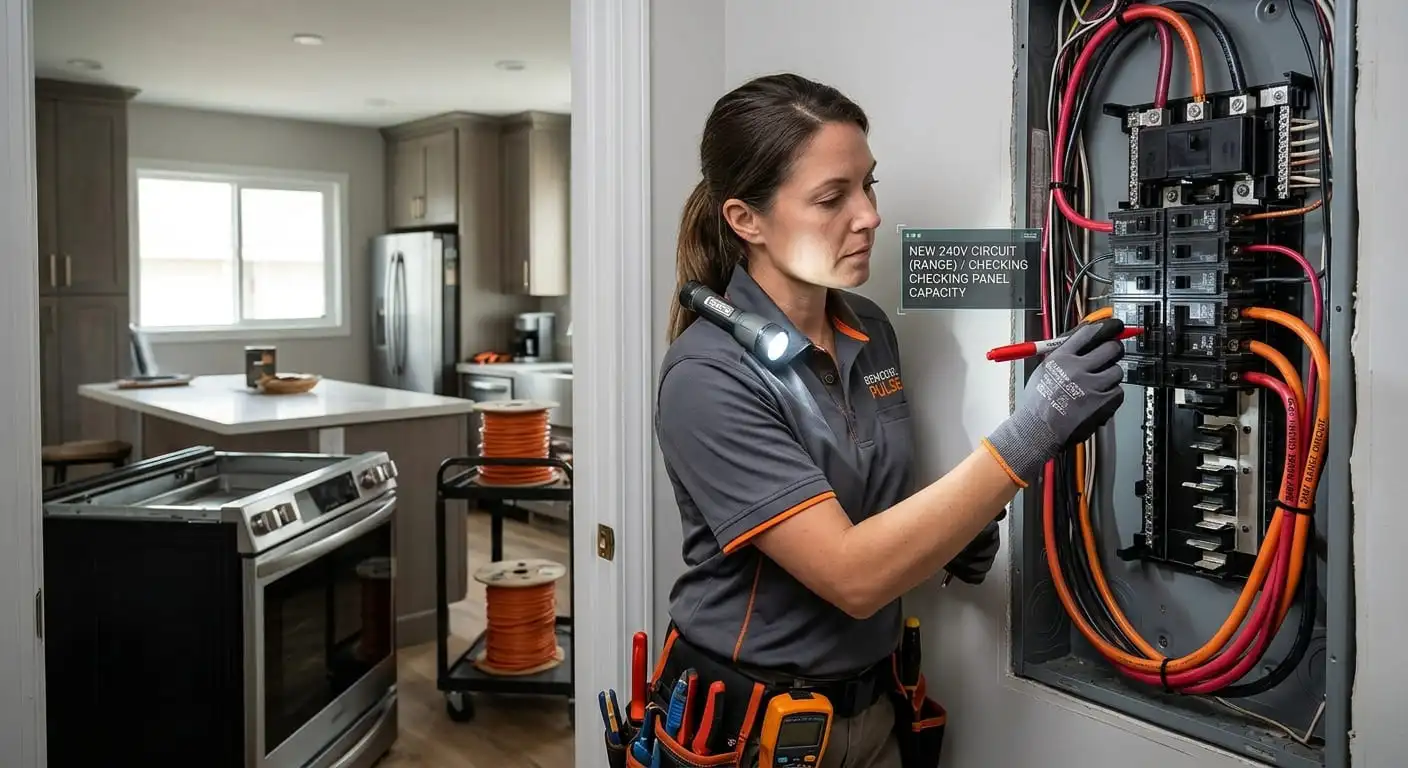
| New 240-volt circuit (if your panel has room) | About $300 to $700, sometimes more |
| Capping the old gas line by a licensed plumber | About $75 to $450 |
| Electrical panel upgrade (only if needed) | Often around $2,000 or more |
| Total for a gas-to-induction switch | Often $300 to $2,500 above the appliance, and more with a panel upgrade |
If your kitchen already has a 240-volt circuit, for example from an electric range, a swap is often only $150 to $400. Therefore, get the electrician’s price in writing, and use our tips for making sure nothing is left out of a bid. In fact, a panel surprise in the middle of a job is a classic example of how extra costs sneak in mid-project.
Rebates
Additionally, a federal program called HEAR (Home Electrification and Appliance Rebates) offers up to $840 toward an induction stove for qualifying households. The catch, however, is that states run it, eligibility depends on income, and availability varies. In 2026, reports said some states had used up their funds and others had not launched. Furthermore, some utilities and cities also give their own rebates, such as an $800 rebate in Washington, DC. Therefore, check your state energy office and your utility, because programs change quickly.
A note on tax credits
However, there is no federal tax credit for induction stoves. Specifically, the 25C energy-efficiency tax credit never covered cooking appliances, and it ended for projects placed in service after December 31, 2025.
Meanwhile, budgeting for the switch? Our guide on tracking appliance costs in your plan shows how to add the wiring and gas-cap costs to your numbers.
Efficiency, speed, and running costs
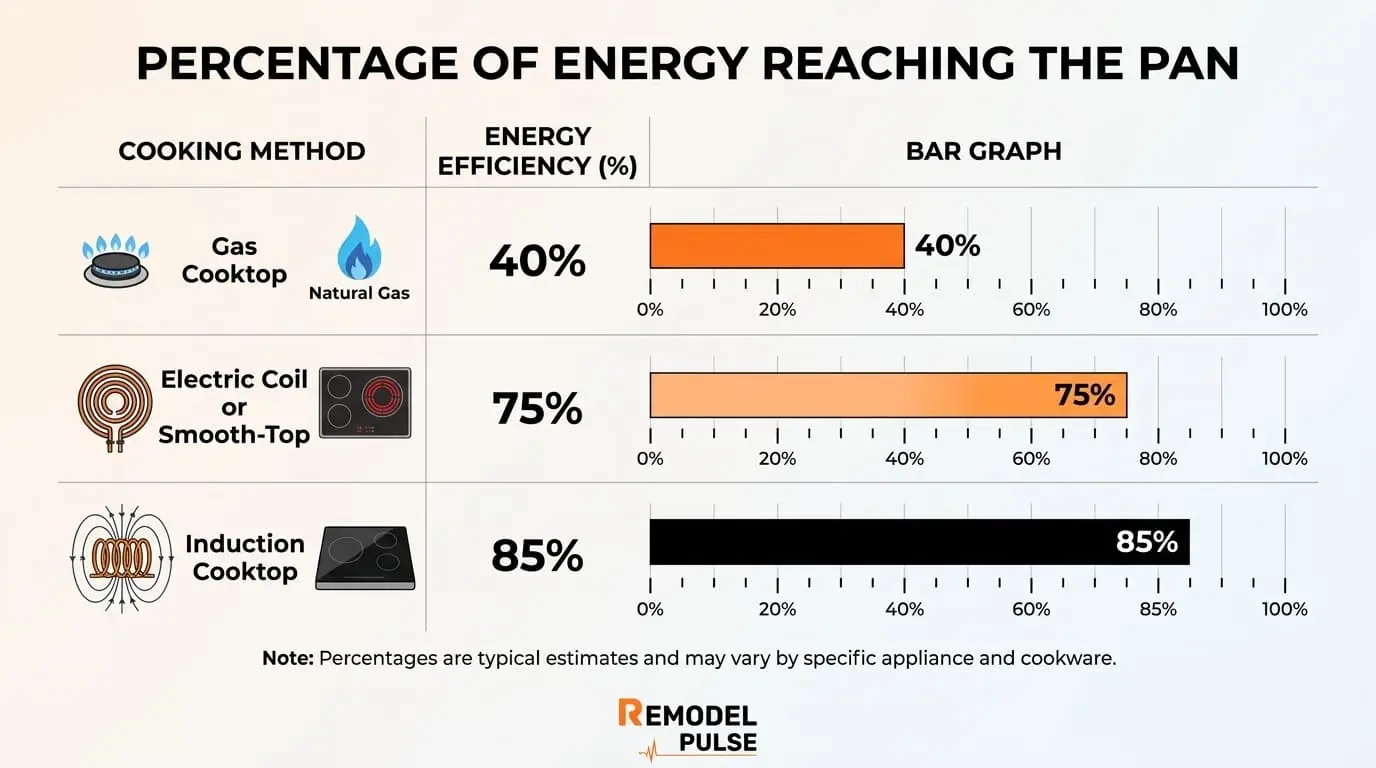
Here is where induction shines. For example, research from Lawrence Berkeley National Laboratory found that gas cooktops are about 40 percent efficient at moving energy into the food, compared with about 74 percent for standard electric and about 84 percent for induction. Similarly, ENERGY STAR says about 85 percent of induction’s energy reaches the cookware, versus roughly a third for gas. Meanwhile, Consumer Reports testing found that induction boiled water about 20 to 40 percent faster than the gas and electric cooktops it tested.
Does that mean lower bills? Maybe, but not always. Specifically, published estimates disagree. One 2026 example, at 16 cents per kilowatt-hour and $1.40 per therm of gas, put cooking at about $100 to $180 a year for gas and $60 to $90 for induction. However, other analyses call the national difference small, from nothing to $40 a year, and note that induction can cost more to run where gas is cheap and electricity is expensive.
Therefore, a simple way to estimate your own cost is: the energy your cooking needs, divided by the cooktop’s efficiency, times your local price. Your utility bill has the prices. Additionally, if the stove is your only gas appliance, dropping gas service can save the monthly fixed fee. One estimate puts that at $120 to $300 a year, though it varies by utility.
How they feel to cook on
- Speed. Induction heats almost instantly and boils faster. By contrast, gas is quick, but a lot of heat escapes around the pan.
- Low heat. Induction holds a gentle simmer or melts chocolate without scorching. Gas can do it too, but small flames can be fussy on cheaper burners.
- Response. Turn the dial and induction changes right away. Similarly, gas is responsive, and many cooks love seeing the flame.
- Woks. A classic round-bottom wok likes a gas flame. However, flat-bottom woks work fine on induction, and some induction models have special wok burners.
- Kitchen heat. Induction leaves your kitchen cooler, since less heat escapes. That matters in summer.
- Sound. Induction can hum or buzz at high power, depending on the pan. Meanwhile, gas clicks when it ignites.
Air quality and health
This is the part of the debate where facts matter most, so here is a calm summary of what researchers have found.
- For instance, burning gas makes nitrogen dioxide (NO2), a lung irritant. It can build up indoors, especially in small or poorly ventilated kitchens.
- Additionally, a 2022 Stanford study measured benzene, a known carcinogen, from gas stoves in 87 California and Colorado homes. In some homes, levels rose above established health benchmarks. By contrast, the gas industry argues the study did not reflect real-world kitchens and says ventilation manages the issue.
- Meanwhile, the American Public Health Association and the American Medical Association have both raised concerns, including a link between gas cooking and childhood asthma.
- Furthermore, in a small pilot in public housing in New York City and Buffalo, replacing gas stoves with induction cut NO2 in apartments by roughly 35 percent, according to preliminary findings.
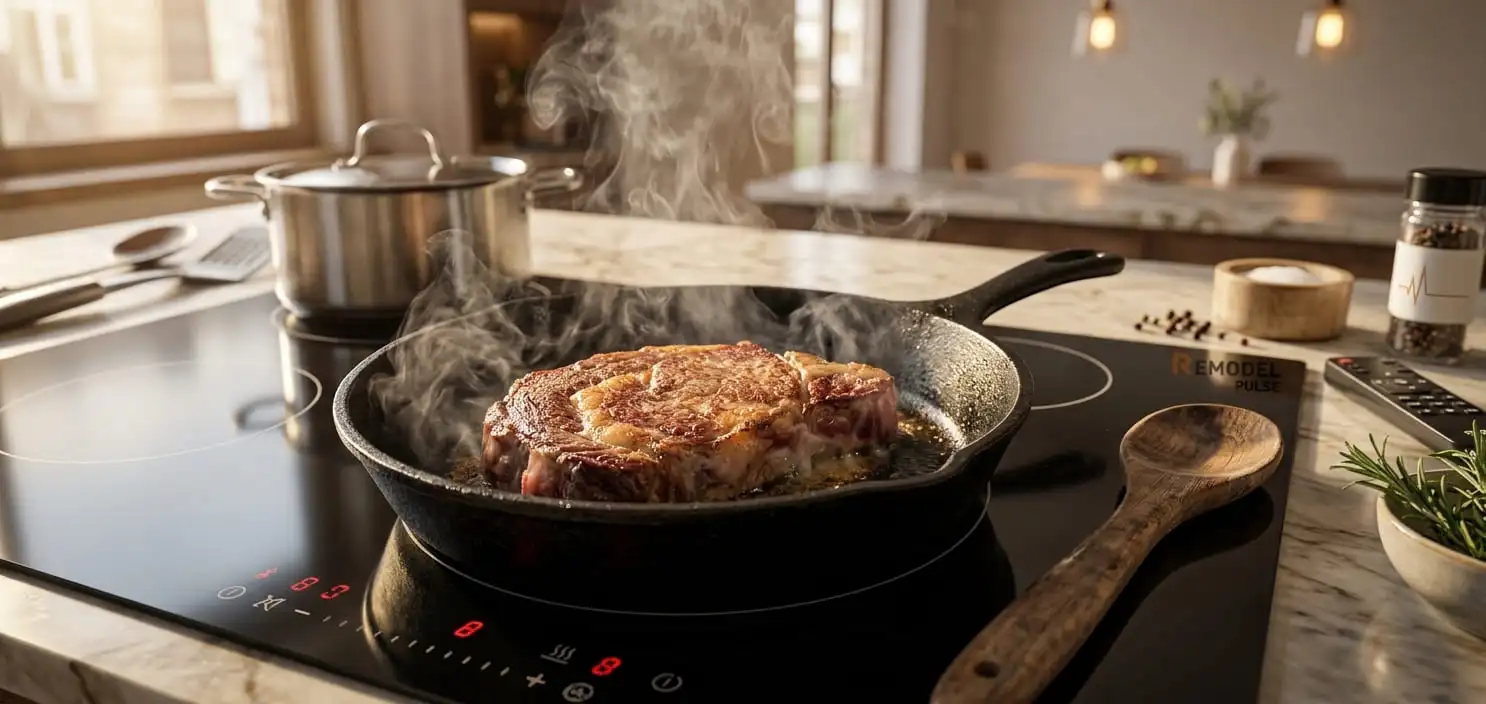
- Finally, induction has no combustion at the cooktop, so it avoids these pollutants (though frying and searing on any stove can release smoke and particles).
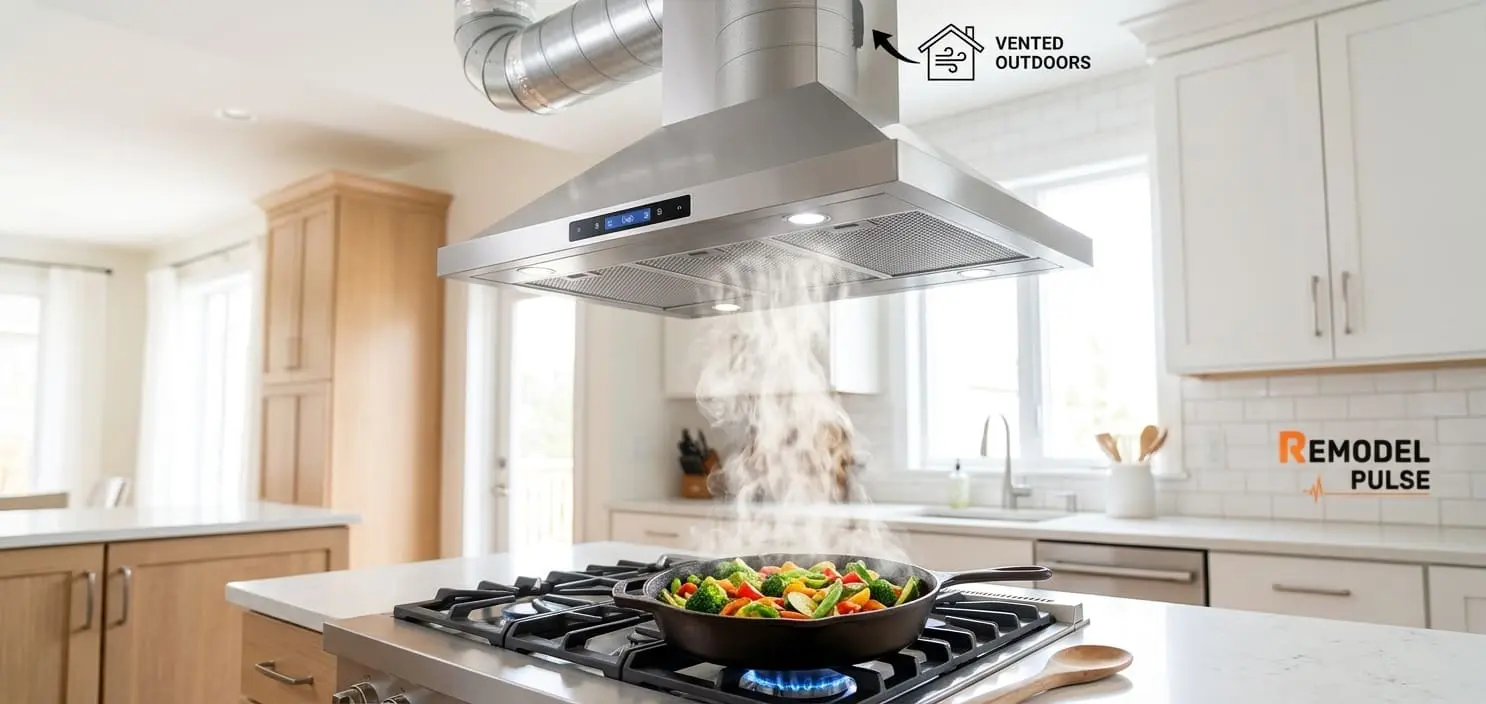
However, not everyone agrees on how big the health risk is, and the US Consumer Product Safety Commission’s chair has said the agency is not looking to ban gas stoves. What nearly everyone agrees on is that ventilation helps a lot. Therefore, if you cook with gas, run a range hood that vents outdoors, open a window, and use the fan every time. This is general information, not medical advice. If you have asthma or other health concerns, ask your doctor.
Safety
- Induction: no open flame, and the surface only gets warm from the hot pan. Additionally, many models shut off when you lift the pan. People with pacemakers or other implants should check with their doctor and the manufacturer first.
- Gas: an open flame can ignite towels and sleeves, and a leak is a serious risk. Therefore, install a carbon monoxide alarm and a working smoke alarm, and know what a gas leak smells like.
- Both: keep pot handles turned in, and never leave hot oil unattended.
Cookware: the magnet test
Specifically, induction needs pans a magnet will stick to. Hold a magnet to the bottom of your pan. If it clings, you are good. If not, it will not work.
- Works: cast iron, enameled cast iron, many stainless steel pans, and anything labeled “induction-ready.”
- Does not work: aluminum, copper, and glass, unless they have a magnetic base.
Fortunately, many people already own enough compatible pans. If you do not, a decent starter set costs far less than a cooktop. Above all, before you buy, test with a magnet and a portable induction burner if you can.

Myths vs facts
| The myth | The fact |
|---|---|
| “Induction needs all-new expensive pans.” | You need magnetic pans, and many cast-iron and stainless pans already qualify. Use the magnet test. |
| “Gas is cheaper to run.” | It depends on local prices. Some estimates show induction costing less, others show little difference, and induction can cost more where gas is cheap. |
| “Induction cannot cook with a wok.” | Flat-bottom woks work fine, and wok-specific induction burners exist. However, round-bottom woks still prefer gas. |
| “Gas gives you better control.” | Many cooks find induction more precise at low and high settings. In the end, it is a matter of habit and preference. |
| “You cannot cook during a blackout with gas.” | Many gas burners can be lit with a match during an outage. Still, ovens and electronic ignitions may need power. |
| “Induction is unsafe for everyone.” | Induction fields are generally considered safe, but people with implanted devices should check with a doctor and the manufacturer. |
Which should you buy?
| If this sounds like you | Lean toward |
|---|---|
| You already have a 240-volt circuit and no gas line | Induction |
| You want the fastest boil and a cool kitchen in summer | Induction |
| You have asthma or small children and weak ventilation | Induction |
| You rent or want the easiest cleanup | Induction |
| You have a gas line, a strong outdoor-vented hood, and love flame cooking | Gas |
| You use a round-bottom wok often | Gas |
| Your panel is full and an upgrade would cost thousands | Gas, for now |
| You want to be able to cook during outages | Gas |
| You are building new, or doing a full remodel | Induction, since you can plan the wiring |
Planning a bigger project? Where you place the cooktop affects ventilation and wiring, so see planning a cooktop spot in the island before you finalize. Additionally, check local rules too: some cities and states limit gas hookups in new buildings, and what gas and wiring changes require can include permits. Meanwhile, if you are trying to keep a budget tight, affordable kitchen updates that still impress offers other upgrades that give you more look for less money. Finally, to see what else is gaining ground, check popular kitchen upgrades coming into style.
Switching from gas: a step-by-step checklist
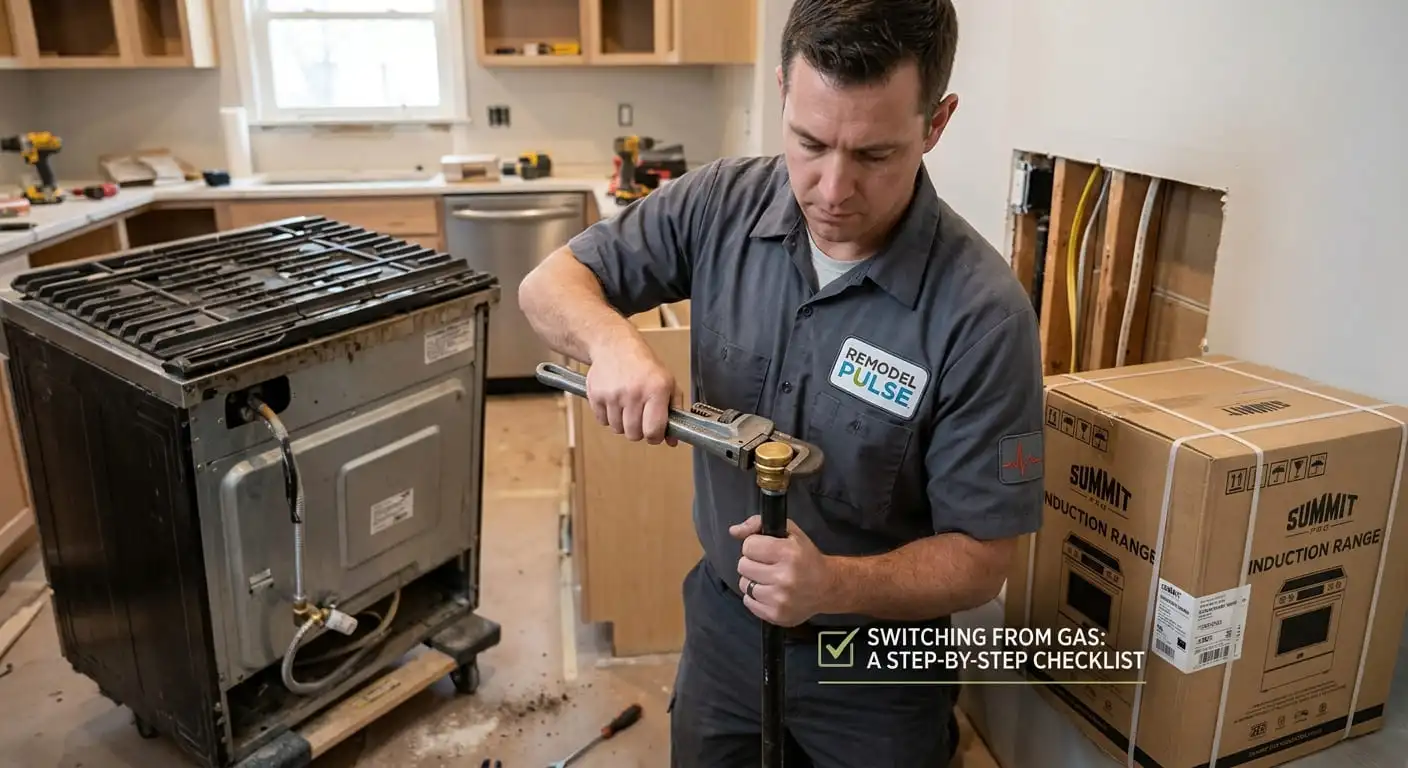
- First, check your panel. Ask an electrician whether it has room for a 240-volt, 40 to 50 amp circuit.
- Next, choose the format. A cooktop plus a wall oven, or a full range. Check the dimensions of the cutout.
- Then, test your cookware. Use a magnet, and list what you need to replace.
- Also, check rebates. Look at your state energy office, utility, and city before you buy, since some rebates need pre-approval.
- Meanwhile, plan the gas line. Have a licensed plumber cap it safely, and pull a permit if your area requires one.
- After that, review the ventilation. An outdoor-vented hood still helps with any cooking, so keep it.
- Finally, get written quotes for the wiring, the gas cap, and any panel work.
Frequently asked questions
Is induction better than gas?
For efficiency, speed, cleaning, and indoor air, induction usually comes out ahead. However, gas wins for people who love flame cooking, round-bottom woks, and cooking during outages. In the end, the best choice depends on your cookware, your wiring, and your habits.
Is an induction cooktop worth the extra cost?
Often, yes, if you already have a 240-volt circuit or are building a new kitchen. Specifically, the appliance costs more, and the wiring can add several hundred dollars or more. Still, rebates and lower running costs can offset some of it, but check local prices.
Does induction cost more to run than gas?
Not necessarily. It depends on your local electricity and gas prices. Induction is much more efficient at the pan, which often lowers the energy it uses, but cheap gas and expensive electricity can flip the result.
Do I need special pans for induction?
You need magnetic pans. If a magnet sticks to the bottom, the pan works. For example, cast iron and many stainless steel pans qualify, while aluminum and copper usually do not.
Can I switch from gas to induction myself?
The appliance swap can be DIY in some cases, but the new circuit and the gas-line cap should be done by licensed professionals, and they may need permits. Therefore, plan on hiring those parts out.
Are gas stoves bad for your health?
Research links gas combustion to nitrogen dioxide and, in some studies, benzene indoors, and some health groups have raised concerns about asthma. However, the industry disputes how large the risk is. Ventilation with an outdoor-vented range hood reduces exposure. Talk to your doctor if you have concerns.
Final thoughts
In the end, the best cooktop is the one you will actually enjoy using every day. If you love the flame, keep the flame and add a good hood. However, if you love speed and a clean surface, induction will make you smile the first time a pot boils before you finish chopping.
Whichever way you lean, do three things before you buy: check your wiring, test your pans with a magnet, and get the installation price in writing. Above all, those three steps prevent nearly every surprise.

Keep planning your project
More practical, plain-English guides on costs, permits, design, and hiring from the RemodelPulse team.