


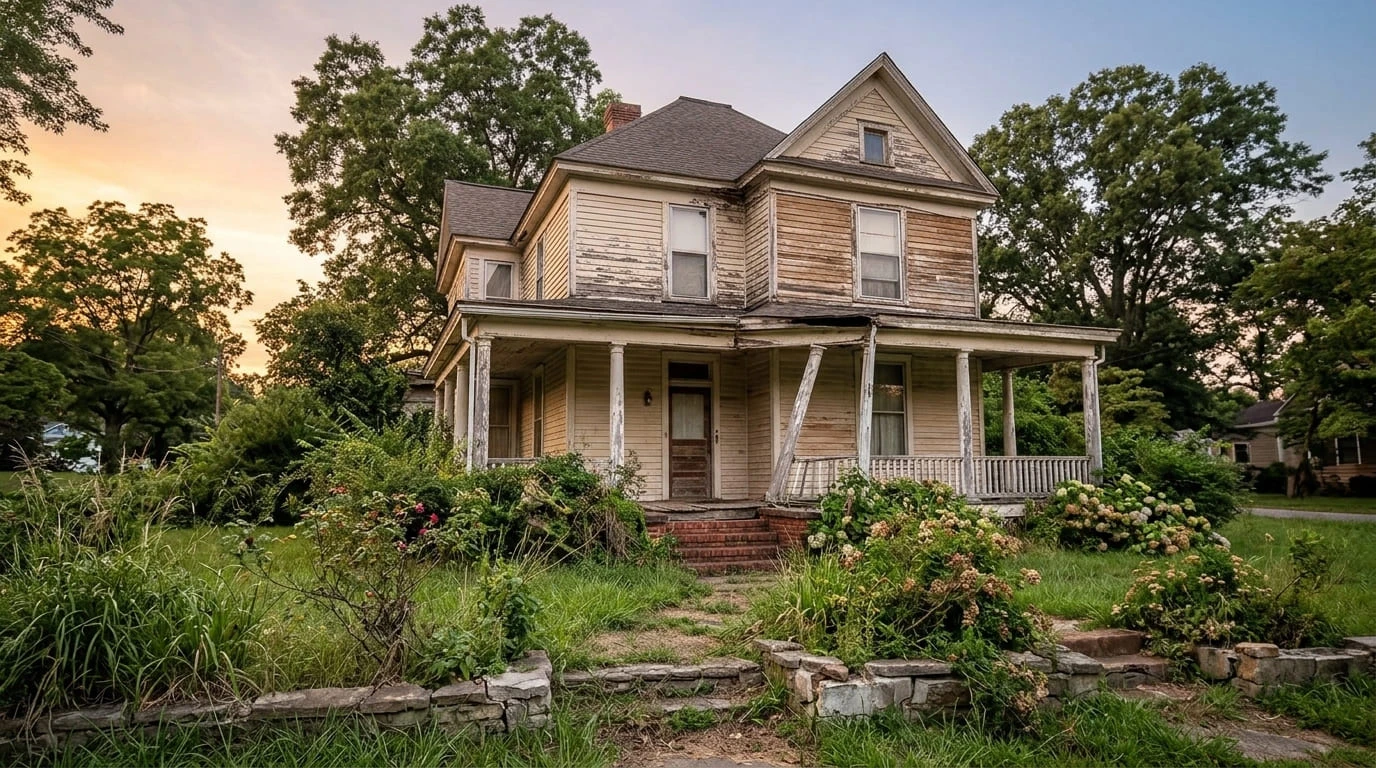
Of course, everyone falls for the photos. The listing shows morning light, a crooked-but-charming porch, and a kitchen that “just needs a little love.” Then you walk in, smell something faintly damp, and a small voice in your head asks how much “a little love” costs.
Fortunately, that voice is on your side. In fact, a fixer-upper can be one of the smartest ways to buy into a neighborhood you could not otherwise afford. However, it can also be a slow-motion money pit. Instead, the difference is almost never luck. It is what you checked before you signed.
So this guide is a calm, practical checklist for doing exactly that. It covers what to look at yourself, what to pay professionals to look at, what the big repairs can cost, how to sort problems into “deal-breaker” and “deal with it,” and how to use what you learn when you negotiate. It is written for US buyers, and where rules differ by state, it says so.
The short version
First, check a fixer-upper in three layers: your own 20-minute walkthrough, a full home inspection plus the right specialists, and real repair and insurance quotes before your inspection window closes. Then sort every problem into red, yellow, or green. Finally, walk away from the reds you cannot afford, and budget the yellows with a 10 to 20 percent cushion.
However, this is general information, not legal, financial, or engineering advice. Your state’s rules, your contract, and your inspector’s judgment come first.
Before you make an offer
The cheapest inspection is the one you do before you fall in love. Therefore, ask these questions up front and write down the answers.
- First, how old are the roof, furnace, air conditioner, and water heater? Ask for dates, receipts, or permits.
- Also, what work has been done, and was it permitted? Unpermitted work can mean trouble at resale and with insurers. See checking old permits and unpermitted work.
- Next, has the house had water damage, flooding, or an insurance claim? Ask directly, and read the seller’s disclosure form. Disclosure rules vary by state.
- Then, is the house in a flood zone? FEMA’s maps will tell you, and it affects insurance and renovation rules.
- Finally, why is the seller selling? The answer will not always be honest, but it is useful.
If the home was built before 1978, federal law says the seller must disclose known lead-based paint, give you the EPA pamphlet, and allow a 10-day window to test for lead, which you and the seller can agree to shorten, lengthen, or waive in writing. However, sellers are not required to test. See the EPA lead page for details.
Do this the same week you go under contract
That is why you should call an insurance agent and ask for a quote on the exact house. Insurers can refuse to cover old roofs, knob-and-tube wiring, certain electrical panels, and polybutylene pipes, and you want to learn that while you still have time to negotiate or walk away.
Your 20-minute walkthrough checklist
Fortunately, you do not need to be an inspector to spot trouble. First, bring a flashlight, your phone, a tape measure, and a small outlet tester if you have one. Also, take photos of everything that bothers you. Finally, print this list or save it to your phone.
Outside
- ☐Does the ground slope away from the house, or toward it?
- ☐Gutters and downspouts: sagging, clogged, or dumping water near the foundation?
- ☐Roof from the ground: curling, missing, or sagging shingles, damaged flashing around the chimney
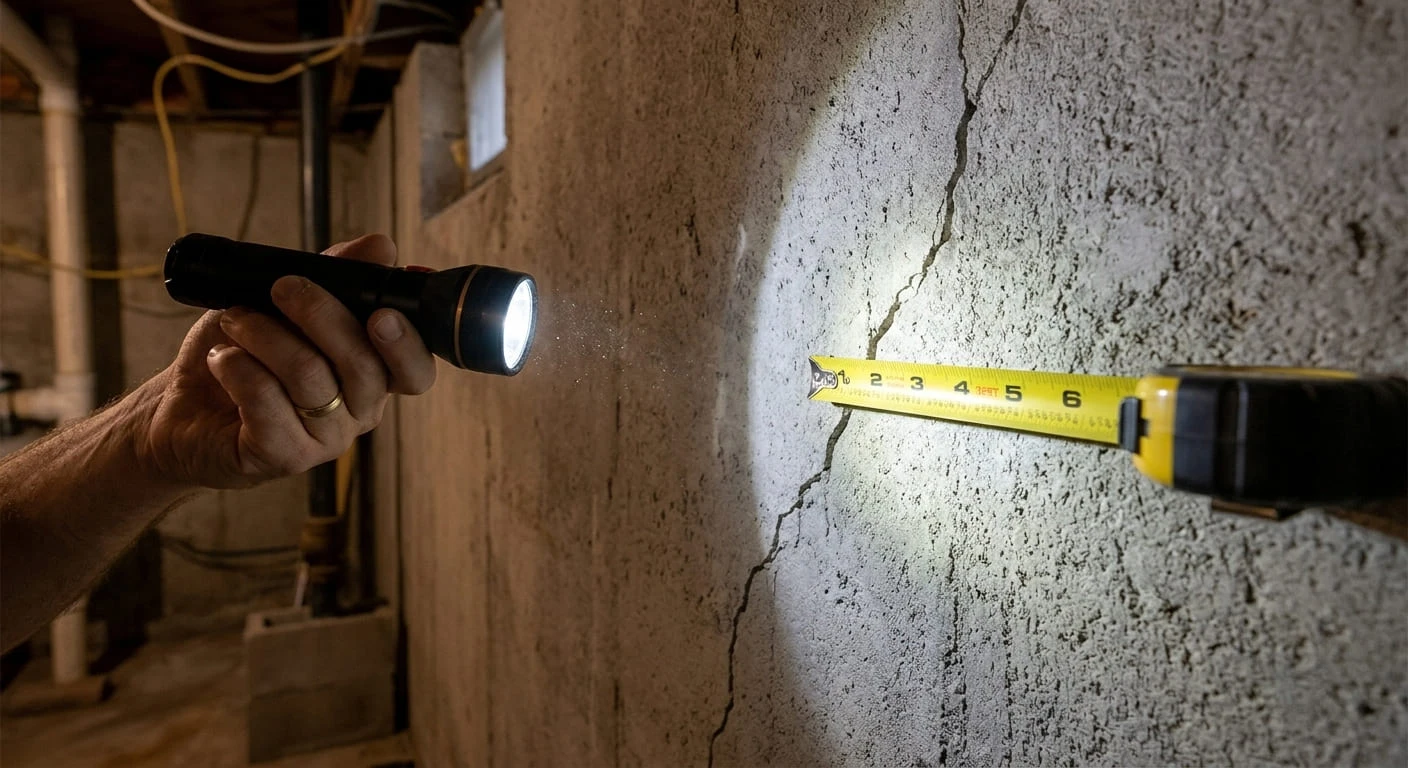
- ☐Foundation: cracks wider than a pencil line, stair-step cracks in brick, or gaps between wall and ground
- ☐Siding and trim: soft spots, rot, or peeling paint (and note the home’s age for lead concerns)
- ☐Trees close to the house or sewer line
- ☐Driveway and steps: big cracks or heaving
Inside
- ☐Smell: a musty or damp odor is information, not decoration
- ☐Ceilings and walls: brown water stains, bubbling paint, or fresh paint over one patch
- ☐Floors: slope, bounce, or soft spots, especially near toilets and tubs
- ☐Doors and windows: do they stick, rub, or leave gaps? Sticking doors can hint at settling
- ☐Run every faucet and flush every toilet. Then check water pressure and how fast sinks drain
- ☐Test outlets and light switches, and look for ungrounded two-prong outlets
- ☐Look under sinks for stains, rust, or buckets
Basement, crawl space, and attic
- ☐Basement walls: white chalky residue, damp patches, or fresh paint on bare walls
- ☐A sump pump? Does it look maintained, and where does it drain?
- ☐Floor joists and beams: cracks, sags, or signs of insects
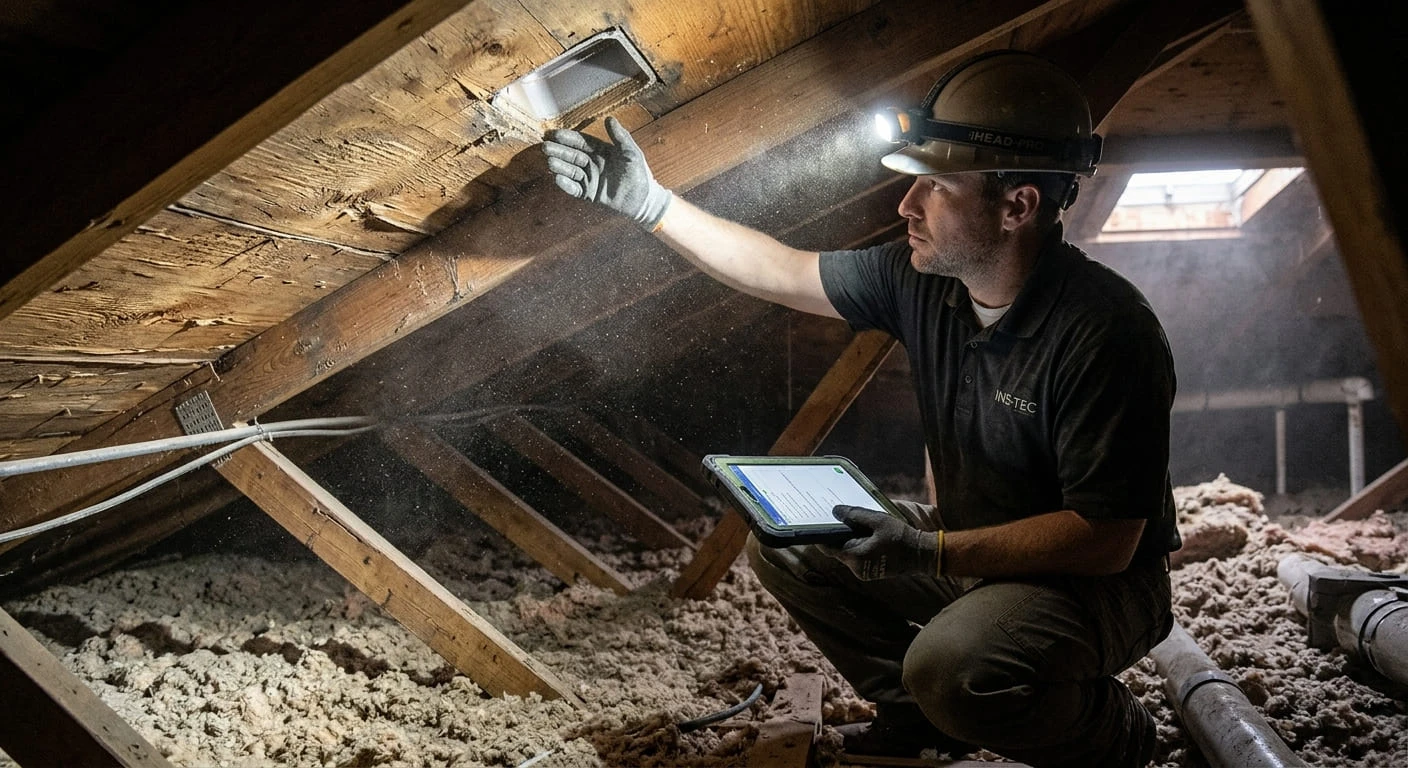
- ☐Attic: dark stains on the wood, matted or missing insulation, daylight through the roof, or pest droppings
Systems
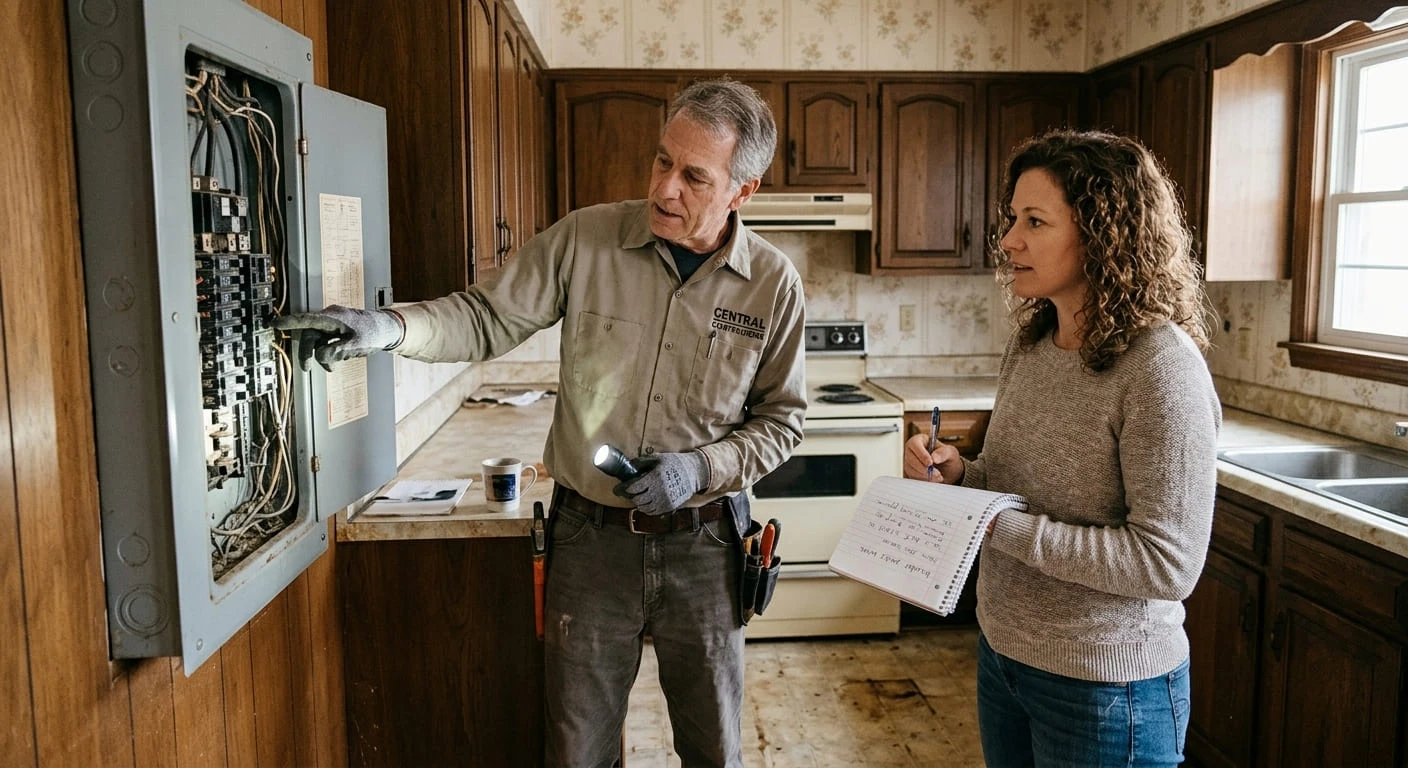
- ☐Electrical panel: note the brand and whether it is rusty or has scorch marks. Brands such as Federal Pacific and Zinsco worry insurers
- ☐Furnace, A/C, and water heater: check the date on the label
- ☐Pipe material: copper is good, galvanized steel and polybutylene are concerns
- ☐Smoke and carbon monoxide alarms: present and working?
If you are not sure what you are looking at, our guide to the quiet warning signs inside an older house explains what each clue usually means.
The professional inspection: what you get and what you don’t
In short, a general home inspection is a visual check of the visible parts of a house. It is not a guarantee, and it does not look behind walls or under floors. In 2026, HomeAdvisor reports a national average of about $344, with most buyers paying between about $296 and $424, and other industry guides put base inspections at $300 to $500.
However, here is the part many buyers miss: a standard inspection usually does not include radon, termites, asbestos, lead, mold, sewer lines, septic, wells, or pools. Those are add-ons, and on a fixer-upper they are where the surprises live.
| Add-on | Typical cost (published 2026 ranges) | When it is worth it |
|---|---|---|
| Radon test | About $100 to $250 | Most homes, especially with a basement |
| Sewer scope (camera) | About $100 to $350, sometimes more | Older homes, big trees, clay or cast iron pipes |
| Termite or wood-destroying organism check | About $75 to $325 (often about $100) | Any wood-framed home, and required by some lenders |
| Mold inspection or sampling | About $200 to $660 | Only with a musty smell or water damage |
| Asbestos sampling | About $490 on average | Before you plan to disturb old materials |
| Septic inspection | About $300 to $600 | Homes not on city sewer |
As a result, a realistic package for an older fixer-upper often lands between about $700 and $1,700, which is small next to the repairs it can reveal.
On inspection day
- First, go in person. Walk through the house with the inspector, ask questions, and take photos.
- Also, ask what worries them most, and ask how long major systems have left.
- Next, ask for a plain list of the top five concerns before you read the full report.
- Finally, choose your own inspector. Check qualifications, reviews, and sample reports rather than taking a name from someone who wants the deal to close.
When to call a specialist
| What you see | Who to call | Typical cost |
|---|---|---|
| Stair-step cracks, sloping floors, sticking doors | Structural engineer | A few hundred dollars to about $1,500 |
| Old sewer lines, trees nearby, slow drains | Sewer scope specialist | About $100 to $350 or more |
| Knob-and-tube, aluminum wiring, an old panel | Licensed electrician | Varies; get a written estimate |
| Roof near 15 to 20 years old or leaking | Roofer | Often a free or low-cost inspection |
| Old furnace or A/C | HVAC technician | Often a modest service fee |
| Musty smell, past water damage | Mold or moisture specialist | About $200 to $660 |
| Pre-1978 home | Lead inspector (use your 10-day window) | Varies |
| Plans to open walls or remove old floors or tiles | Asbestos testing | About $490 for sampling |
Still, the specialist you call matters less than doing it inside your inspection window. Because contingency periods (your inspection window) are often short, commonly a week or two, you should line up your inspector and a contractor before you write the offer.
What the big repairs can cost
Therefore, cost figures help you decide whether a problem is a minor annoyance or a deal-breaker. These are published 2026 ranges from several repair guides. They are wide for a reason: location, size, and severity change everything. Your local quotes always beat any table.
| Repair | Typical published range |
|---|---|
| Roof replacement | About $5,700 to $16,000, with some guides at $8,000 to $25,000 for larger homes |
| HVAC system replacement | About $5,000 to $12,000 |
| Foundation repair | About $2,000 to $8,000 for smaller issues, and $25,000 to $40,000 or more for severe ones |
| Electrical panel upgrade | About $1,500 to $4,000 |
| Whole-house rewiring | About $8,000 to $20,000 in many guides, with lower figures for small homes |
| Repiping | About $5,000 to $20,000 |
| Sewer line replacement | About $3,000 to $25,000, depending on depth and length |
| Mold cleanup and removal | About $1,500 to $9,000, and up to $30,000 for large problems |
| Water heater replacement | About $800 to $2,500 |
Add a few of those together and a “cheap” house can stop being cheap. For that reason, a contractor’s opinion during your inspection period is worth gold. Our guide on getting repair bids you can compare shows how to read the numbers.
Red, yellow, green: how to sort what you find
Inspection reports can run 40 pages and make every house look like a disaster. However, sorting turns the pile into a plan.
| Color | What it means | Examples | What to do |
|---|---|---|---|
| Red | Safety, structure, or water | Active foundation movement, a leaking roof, mold, gas leaks, fire-hazard panels, termite damage in structure, serious drainage problems | Get quotes now. Negotiate hard, require repairs, or walk away if you cannot afford the fix |
| Yellow | Aging systems that will need money soon | Furnace or A/C near end of life, old water heater, galvanized pipes, outdated but safe wiring, old windows | Budget for them and use them as negotiation points |
| Green | Cosmetic and easy fixes | Dated kitchen, worn floors, ugly paint, old light fixtures | Ignore in negotiation. Plan them as upgrades |
Walk-away signs
That said, every buyer has a different limit, but walk away or reprice sharply if you find:
- Foundation movement that is still happening, with no engineer’s plan or price
- Widespread water intrusion plus mold in the structure
- Major structural changes, like removed load-bearing walls, with no permits or engineer sign-off
- A combination of old wiring, old plumbing, and an old roof that adds up to more than you can borrow or pay
- A seller who refuses reasonable access or lies about known problems
If the total starts looking like a different house, read about when a house is too far gone before you decide.

The hidden gatekeepers: insurance and lenders
Even if you are willing to accept a problem, someone else may not be.
Insurance
Insurers worry about fire and water. For example, they commonly flag old shingle roofs (in some markets, 15 to 20 years), knob-and-tube wiring, aluminum branch wiring, Federal Pacific and Zinsco panels, polybutylene pipes, and aging galvanized plumbing. Some will decline the house, some will insure with limits, and some will require repairs first. In some states, such as Florida, insurers often require a “4-point” inspection of the roof, electrical, plumbing, and HVAC. A quote is not a promise until the policy is bound, so keep your options open until the end.
Lenders
Mortgage rules differ by loan type. FHA and VA loans have property condition standards, so an appraiser may require repairs before closing. Some buyers use renovation loans, such as the FHA 203(k) or Fannie Mae HomeStyle loan, to roll repair costs into the mortgage. As a result, you should talk to a lender early, because loan options shape what kind of house you can buy.
Using the report to negotiate
When the inspection report is in, you usually have a few options:
- First, ask the seller to make repairs before closing. Make sure the repairs are done by licensed professionals, with receipts.
- Second, ask for a price reduction. You make the repairs yourself, with the savings in hand.
- Third, ask for a closing credit. This helps with cash needs, though lenders may limit credits.
- Fourth, accept the house as is, if the problems are small or already priced in.
- Finally, walk away, if the red items are too big or the seller will not negotiate.
Above all, be reasonable. Focus on safety, structure, and major systems. Sellers rarely respond to a list of fifty tiny items, but they may respond to five serious ones with quotes attached. Bring written bids, not guesses.
If repairs grow after you close, what happens when repairs grow mid-job explains how to keep control of the bill.
Build the real budget
To see the true cost, add these lines together:
- Purchase price
- Inspection and specialist fees
- Repair and renovation quotes
- A 10 to 20 percent cushion on the repairs, since walls hide things
- Closing costs and moving costs
- Temporary housing or extra costs if you cannot live there during the work
For example, a $300,000 house needs $60,000 of repairs. A 15 percent cushion adds $9,000. Even before closing costs, your real number is about $369,000. If that is still a good price for the neighborhood, great. If it is higher than similar finished homes, rethink. For a method to track every line, see turning repair quotes into a realistic budget.
Once the keys are yours, our notes on what to fix first after you close can keep you from paying twice, and whether you can move in while fixing it covers the practical side. If resale matters, which fixes pay off at resale shows what buyers care about.

Frequently asked questions
What should I look for when buying a fixer-upper?
First, start with the big four: foundation and structure, roof, water and drainage, and the main systems (electrical, plumbing, and heating and cooling). Cosmetic problems matter least. Therefore, pay for a full inspection and the right specialists before your inspection period ends.
Should I get a home inspection on a fixer-upper?
Yes. In fact, a fixer-upper is exactly where an inspection pays off. An “as-is” sale does not mean you cannot inspect. Instead, it usually means the seller will not fix what you find, so use the report to decide, negotiate, or walk away.
How much does a home inspection cost?
A standard inspection averages about $344 nationally in 2026, with most between $296 and $424, and other guides citing $300 to $500. Add-ons like radon, sewer scope, and termite checks are extra, and an older fixer-upper often runs $700 to $1,700 in total.
What are the biggest red flags in a fixer-upper?
Active foundation movement, a leaking or failing roof, widespread moisture or mold, fire-hazard wiring or panels, serious drainage problems, and unpermitted structural changes. In short, any of these can mean five-figure repairs.
How much should I budget for repairs on a fixer-upper?
First, get contractor quotes during your inspection window, add a 10 to 20 percent cushion, and include closing costs and any time you cannot live in the house. A common warning: if the total is close to the price of a finished home nearby, the discount may not be a discount.
Can I back out after the inspection?
If your contract has an inspection contingency and you act within its deadline, you can usually negotiate or cancel under its terms. However, if you waived the contingency, you may lose your deposit. Read your contract and ask your agent or attorney.
Final thoughts
There is nothing foolish about falling for an old house. After all, people have always done it, and many of the best homes started as someone’s “what were they thinking.” The wise part is letting your head have a vote next to your heart.
So bring a flashlight, ask the awkward questions, pay for the specialists, and get real numbers in writing. If the house still makes sense after all that, you are not just buying a project. You are buying one with your eyes open.

Keep planning your project
More practical, plain-English guides on costs, permits, design, and hiring from the RemodelPulse team.