

Every old house eventually asks you a question. Do you love me enough to fix me, or is it time to say goodbye? Nobody enjoys that conversation, and nobody enjoys the price tags that come with it.
The choice between renovating and rebuilding is one of the biggest money decisions a homeowner can make. It is also one of the easiest to get wrong, because people decide with their feelings first and their numbers second. A beloved porch can talk you into a money pit. Similarly, a scary quote can scare you out of a perfectly good house.
Therefore, this guide gives you the numbers, the rules, and a simple scorecard. It uses US cost data and rules that apply across the country, with honest notes about what varies by state and city. Cost figures were checked in October 2026, and they will move, so treat them as ranges, not promises.
The short answer
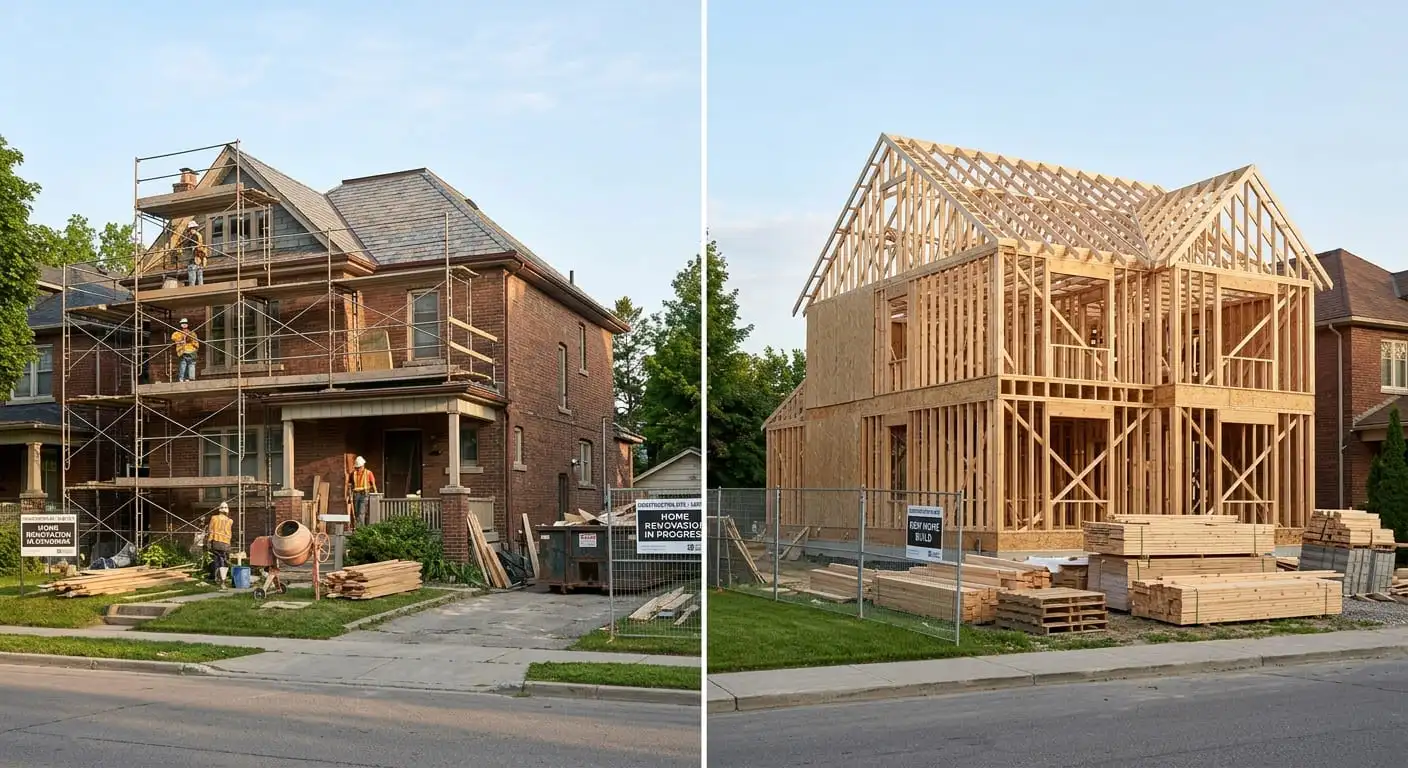
Renovate when the foundation and frame are sound and the layout can work. Rebuild when the structure is failing, when you need a completely different footprint, or when renovation costs climb to about 50 to 60 percent of the price of building new, a rule of thumb some builders use. The right answer comes from comparing three things on paper: the all-in renovation cost, the all-in rebuild cost, and what each leaves you with.
This is general information, not financial, legal, or engineering advice. For a decision this big, get a structural inspection and written quotes first.
What the numbers look like
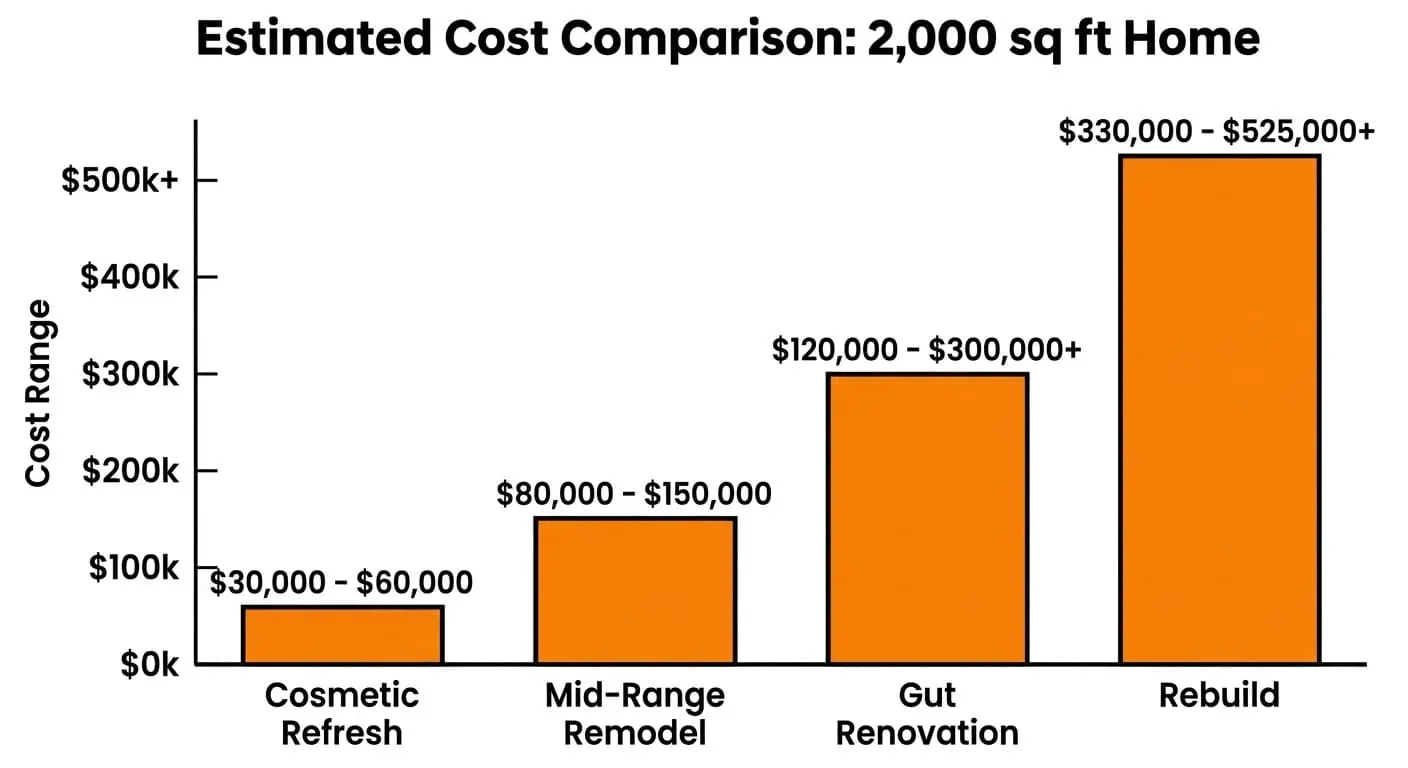
To make the figures concrete, let’s start with an example. Imagine a 2,000-square-foot house. Below are the ranges from published 2026 cost guides, converted into totals.
Cost ranges for a 2,000-square-foot house
| Option | What it means | Rough cost for 2,000 sq ft | Typical time |
|---|---|---|---|
| Cosmetic refresh | Paint, floors, updated kitchen and baths | About $30,000 to $60,000 ($15 to $30 per sq ft) | Weeks to a few months |
| Mid-range whole-house remodel | New kitchen and baths, new finishes, some system updates | About $80,000 to $150,000 ($40 to $75 per sq ft) | Several months |
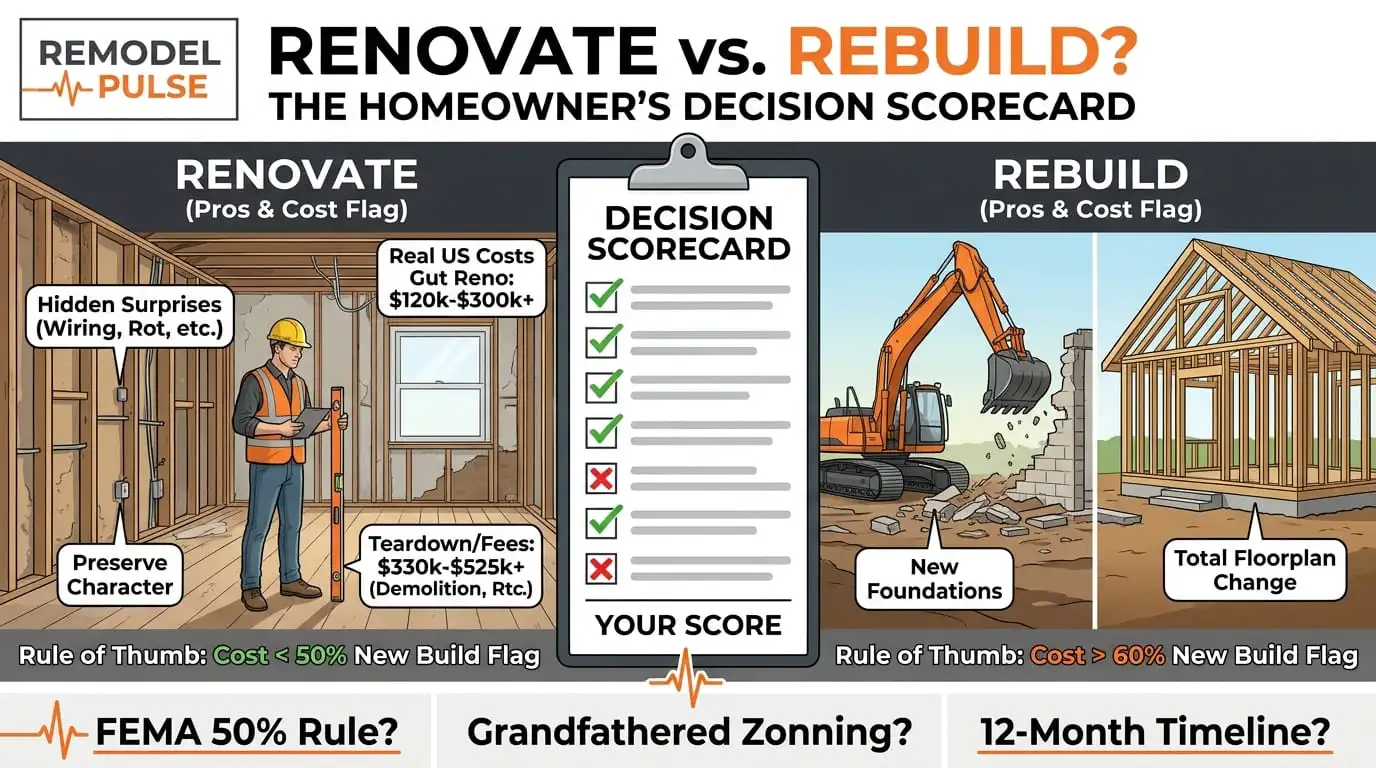
| Gut renovation | Down to the studs, with new wiring, plumbing, and layout | About $120,000 to $300,000+ ($60 to $150+ per sq ft) | Often 10 to 12 months or more |
| Teardown and rebuild, same size | Demolish, then build new | About $330,000 to $525,000 before extras | Often 10 to 12 months of building, plus design and permits |
How the rebuild total was calculated
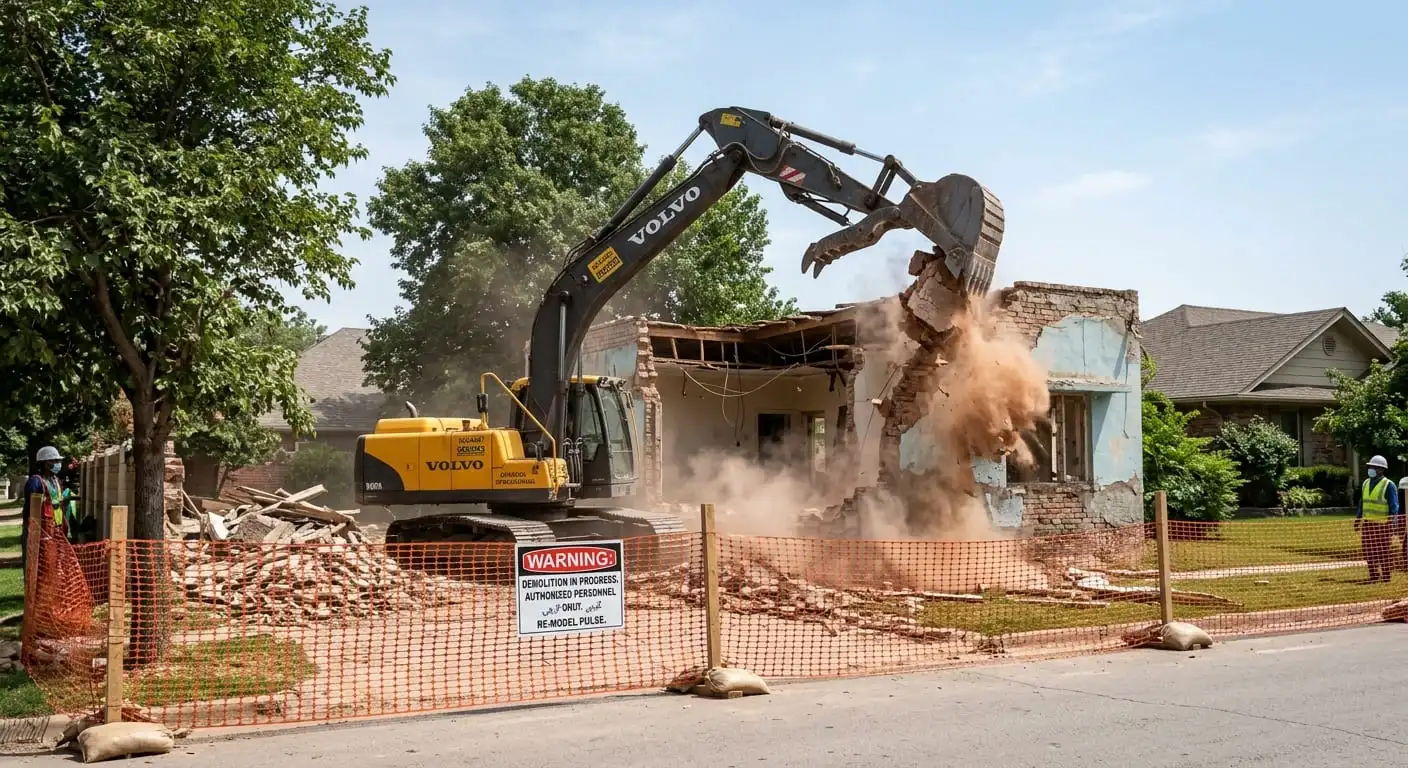
The National Association of Home Builders (NAHB) reported an average construction cost of about $162 per square foot in its 2024 survey, for a typical new home of about 2,647 square feet, not counting land. Meanwhile, many 2026 guides put standard builds between $150 and $250 per square foot. For 2,000 square feet, that is about $324,000 to $500,000. Add demolition, which averages around $15,800 and typically runs $6,000 to $25,000, and you land at roughly $330,000 to $525,000.
How region changes the math
Those are national figures. However, costs can run far higher in expensive coastal markets, where some builders quote $350 to $600 or more per square foot. Similarly, they can run a bit lower in parts of the Midwest and South. Therefore, your local quotes beat any national number.
The 50 to 60 percent rule of thumb
Some builders say rebuilding deserves a serious look when a renovation would cost more than about 50 to 60 percent of building new. On a $400,000 rebuild, that is roughly $200,000 to $240,000. It is not a law. Instead, it is a flag that says: get a rebuild quote and compare.
The costs that hide on each side
Most comparisons look at construction cost only. Unfortunately, that is where people get hurt. Each path hides its own extras.
Hidden costs side by side
| Renovating can hide | Rebuilding can hide |
|---|---|
| Surprises behind walls: rot, old wiring, plumbing, mold, hazardous materials | Demolition and hauling, with extra cost if asbestos or lead is present (guides cite up to about $25 per sq ft) |
| Costs that grow through change orders and scope creep | New utility connections and temporary power, often $2,000 to $3,200 for the temporary part |
| Living through dust and noise, or renting for the loudest months | Rent or another home for 12 months or more, which could be $24,000 at $2,000 a month |
| Old systems that stay old, like the foundation, roof, or windows | Permits, impact fees, soil tests, driveway, landscaping, and fencing |
| A layout that never feels quite right | Higher property taxes in many counties, because new construction is often assessed at full value |
Why surprises matter most
Surprises are the big risk when you renovate. For example, our guide on surprise costs mid-project explains how they show up. Additionally, our guide on planning the money side of a big project shows how to protect yourself. As a result, a cushion of 10 to 20 percent is a common rule of thumb for either path.
Meanwhile, temporary housing deserves its own line in your plan. One Bay Area builder estimated that a long rebuild with rent at $5,000 to $7,000 a month can add six figures, which shows how much location changes the math. In your area it might be far less, but it is never zero.
Rules that can decide for you
Sometimes the law makes the choice for you, or at least narrows it. Therefore, check these before you fall in love with either plan.
1. The FEMA 50 percent rule (if you are in a flood zone)
If your home is in a mapped floodplain, the National Flood Insurance Program says that improvements costing 50 percent or more of the structure’s market value make it a “substantial improvement.” Consequently, the building then has to meet current floodplain standards, which can mean elevating it. The land does not count, only the structure. Some communities also add up work over several years or set a lower threshold. FEMA explains it in its substantial damage guide. Above all, ask your local floodplain manager before you finalize any plan.
2. Zoning and “grandfathered” homes
Many older homes sit closer to the property line or are taller than today’s zoning allows. In many places, a renovation can keep that older status. However, a teardown usually cannot, so a new house may have to follow current setbacks, height, and lot coverage. As a result, that can shrink what you are allowed to build. Therefore, ask your planning department for the current rules on your lot.
3. Permits and inspections
A rebuild needs full plan review, a demolition permit, and a series of inspections. In contrast, a renovation may need less, or just as much if you gut the house. Our guide on which approvals a big project needs gives you the basics.
4. Historic and demolition review
Many cities review demolition of older or historic homes, and some require waiting periods or approvals. Therefore, if your house is decades old or sits in a historic district, check before you buy a plan.
5. Hazardous materials
Homes built before 1978 can contain lead paint, and older homes may hide asbestos. Both affect renovation and demolition, and many places require testing before demolition. For details, start with the EPA lead page.
When renovating wins
- The foundation and frame are sound. Specifically, this is the big one. A good structure is worth a lot.
- The layout can work. For instance, you can get the rooms you need by moving a few walls, not by changing the footprint.
- The house has character you cannot rebuy. For example, old-growth wood, handmade details, or a historic look.
- The lot rules favor keeping it. In other words, grandfathered setbacks or height would be lost with a teardown.
- You do not want to rent for a year. The disruption of moving out is a real factor.
- You want less waste. Notably, the EPA reports about 600 million tons of construction and demolition debris in 2018, and more than 90 percent of it came from demolition. Keeping a sound structure avoids creating that debris. See the EPA’s overview.
Additionally, a renovated home can also be more efficient. The EPA’s ENERGY STAR program estimates that air sealing plus insulation saves the average homeowner about 15 percent on heating and cooling costs, which is a strong return for a sound house.
When rebuilding wins
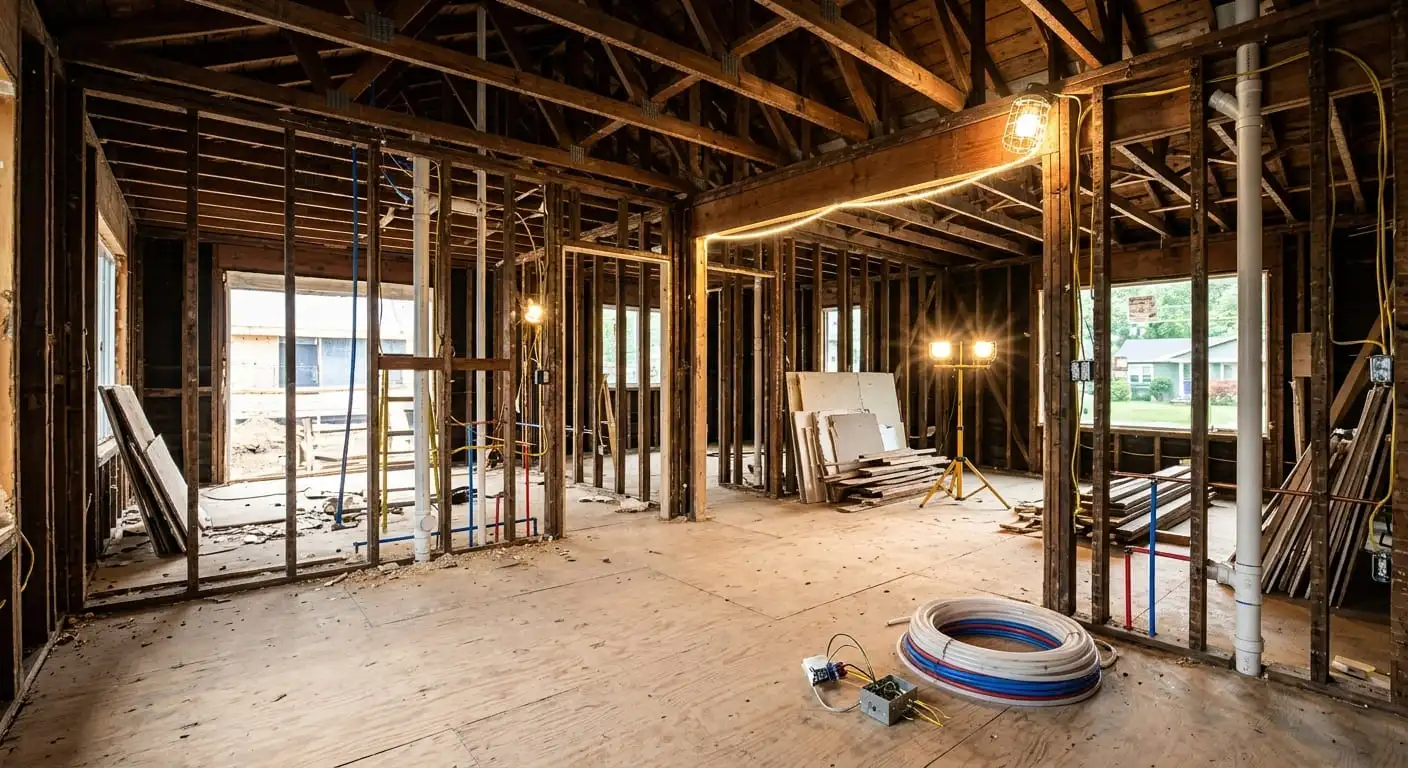
- The structure is failing. Specifically, serious foundation settling, widespread rot, or major termite damage can make repairs cost as much as new.
- You need a totally different footprint. For example, a two-story plan on a small ranch lot.
- Renovation costs approach the rebuild. In fact, if the quote is near 50 to 60 percent or more of a new build, get the rebuild number.
- You want everything new. Additionally, new systems, a new warranty, modern energy performance, and no hidden surprises.
- The house is small, cramped, and badly arranged. In short, fixing the wrong bones costs a lot.
- The lot is the prize. Above all, you love the location, and the house is the least valuable part of the property.
A decision scorecard
Answer each question honestly. Then put a mark in the column that fits your answer. At the end, see which column has more marks.
| Question | Points toward renovating | Points toward rebuilding |
|---|---|---|
| How is the foundation and frame after an inspection? | Sound or fixable | Failing or very costly to fix |
| Can the layout you need fit the existing footprint? | Yes | No |
| How does the renovation quote compare to the rebuild quote? | Under about 50 percent | Over about 60 percent |
| Can you live elsewhere for 12 months or more? | No, or it is a strain | Yes, comfortably |
| How does your lot’s zoning treat a new house? | A new house would be smaller or closer | A new house could be bigger or better |
| Is the house historic or full of character? | Yes | No |
| Do you want brand-new systems and a full warranty? | Not a priority | Very important |
| Are you in a flood zone with the 50 percent rule? | Renovation stays under 50 percent | Renovation would exceed it |
There is no magic score. However, if one column wins by a wide margin, that is your answer. Still, if it is close, the answer is probably the option that fits your money and your patience best.

How to decide in six steps
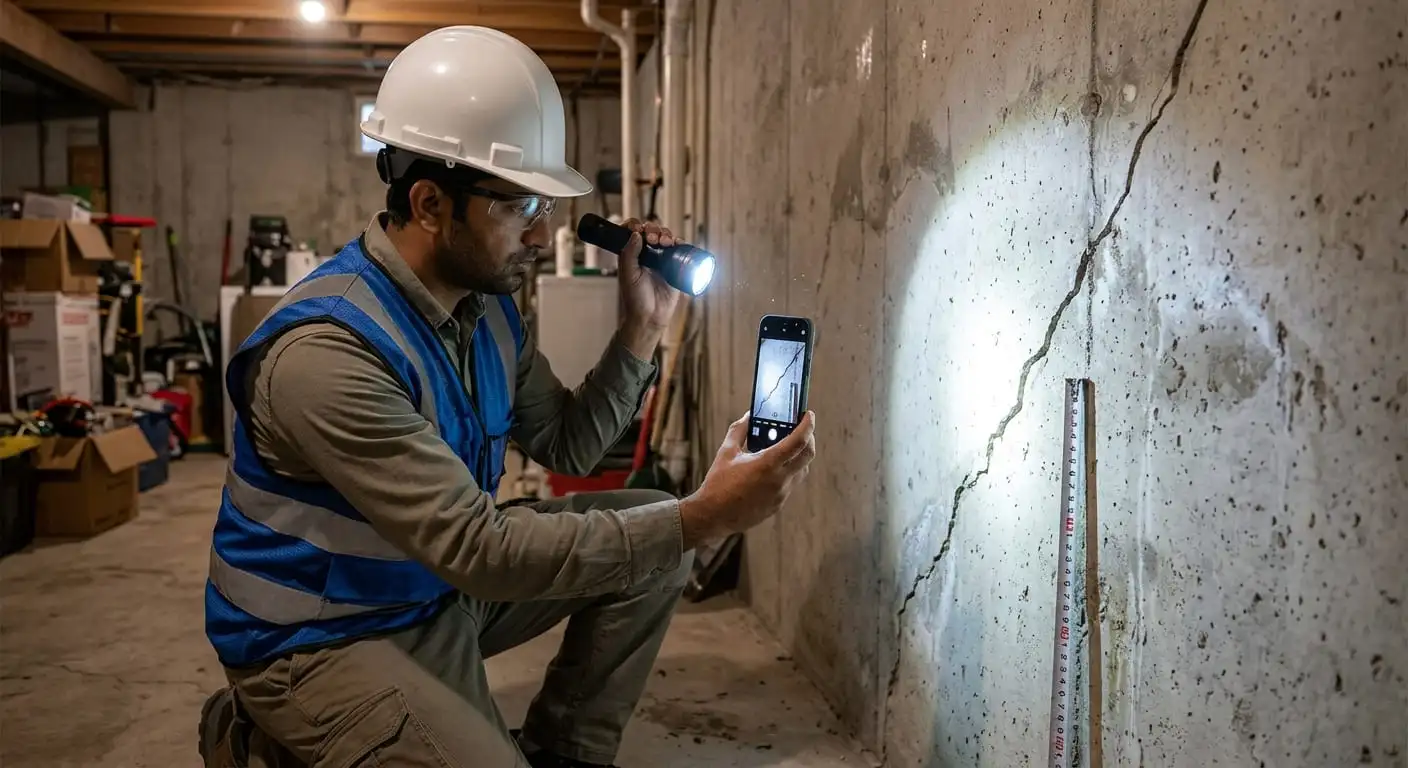
- First, get the structure checked. Hire a home inspector, and a structural engineer if you see cracks, sagging, or moisture. Notably, this step alone can end the debate.
- Next, write down your must-haves. Bedrooms, bathrooms, size, layout, and budget. Be honest about what is a need and what is a wish.
- Then, get two comparable quotes. One for the renovation and one for a rebuild with the same must-haves. Ask the rebuild quote to include demolition, site work, utilities, and permits. Our guide on comparing bids from builders shows how to read them.
- Also, check the rules. Talk to your city or county about zoning, demolition review, flood rules, and permits.
- Meanwhile, add the hidden costs. Rent, time, property taxes, a 10 to 20 percent cushion, and moving costs.
- Finally, compare the whole picture. Cost, time, risk, and the home you will end up with. Then decide, and write down why.
If you choose to renovate, a phase-by-phase plan for a whole-house job can save you from paying twice for the same work. Additionally, if the house is showing its age and you are not sure how serious it is, read about warning signs that a house is failing.
Meanwhile, one mind trap to avoid is the sunk cost. If you have already spent money on repairs, it is tempting to keep going. However, money already spent should not decide what you spend next. Therefore, choose based on what is best from here.
Paying for it
Naturally, how you pay can change the decision, so talk to a lender early. This is general information, not financial advice.
- For renovations, common options include savings, a home equity loan, a home equity line of credit, a cash-out refinance, and renovation mortgages such as the FHA 203(k) and Fannie Mae HomeStyle loans.
- For a rebuild, a construction loan, often a construction-to-permanent loan, is common, and many lenders want detailed plans and a builder before approving it.
- For both, lenders look at your credit, your income, and the home’s value, and they may require an appraisal.
Additionally, ask each lender how your current mortgage fits in, what you can borrow against the home’s future value, and how payments work during construction.
Frequently asked questions
Is it cheaper to renovate or rebuild?
Usually, renovating costs less up front, unless the house needs major structural work. For example, a mid-range remodel can cost a fraction of a rebuild, while a full gut renovation can approach it. Therefore, compare written quotes for both, plus hidden costs like rent and demolition.
How much does it cost to tear down a house and rebuild in the US?
For a typical 2,000-square-foot home, published 2026 ranges point to about $330,000 to $525,000 before extras, using about $150 to $250 per square foot to build plus demolition. However, coastal and custom builds cost much more.
When does it make sense to rebuild instead of renovate?
Specifically, when the foundation or frame is failing, when you need a different footprint, or when renovation costs rise to about 50 to 60 percent of the price of building new. In short, a builder’s rebuild quote tells you where you stand.
What is the 50 percent rule?
In flood zones, FEMA’s rule says that if improvements cost 50 percent or more of a structure’s market value, the whole building must meet current floodplain standards. Meanwhile, some builders also use a separate 50 to 60 percent rule of thumb to decide whether renovating or rebuilding is smarter.
How long does it take to rebuild a house vs renovate?
A rebuild often takes 10 to 12 months of construction, plus months for design and permits. Similarly, a gut renovation can also take 10 to 12 months or more, while a lighter remodel may take just a few months.
Do I lose grandfathered status if I tear the house down?
In many places, yes. Rules differ by city, but a new house often has to follow current zoning rules on setbacks, height, and lot coverage. Therefore, ask your planning department before you decide.
Final thoughts
There is no villain in this story. A good old house is worth saving, and a failing one is worth letting go. However, the mistake is deciding before you know which one you have.
Therefore, start with the inspection, ask for two written quotes, and check the rules in your town. Then sit with the numbers for a week. In the end, the right answer usually looks calm, not exciting. And whichever way you go, you will make the choice with your eyes open.
Keep planning your project
More practical, plain-English guides on costs, permits, design, and hiring from the RemodelPulse team.