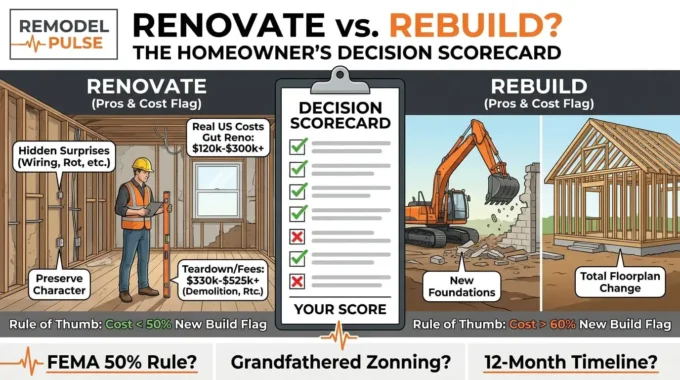



Picture this: it is 7:42 on a Tuesday morning. Meanwhile, a drill is going off in the next room. The coffee maker is in the bathroom. Your dog is staring at a sheet of plastic that was a doorway yesterday, and your kid wants to know why breakfast is crackers.
So, can you live in your house during a renovation? Yes — in fact, plenty of people do it. However, the better question is whether you should, for which projects, and for how long. Ultimately, the answer depends on the size of the job, the age of the house, who lives there, and how much dust, noise, and chaos you can honestly handle.
Therefore, this guide gives you straight answers: when staying works, when moving out is smarter, the health and insurance facts people miss, and a simple plan to survive the weeks in between.
The short answer
Usually yes, for example, for painting, flooring in one room, exterior work, and one bathroom when you have a second one. Possible with planning for a kitchen remodel (expect several weeks without a kitchen). However, strongly consider moving out, at least for the worst stretch, for whole-house gut jobs, work that disturbs lead paint or asbestos, projects that shut off water or power for days, or if you have a baby, a pregnancy, or serious breathing problems in the home.
However, this is general information, not medical or legal advice. Therefore, if someone in your home has health concerns, ask a doctor before you decide to stay.

Staying vs leaving: the honest trade-offs
| Staying in the house | Moving out | |
|---|---|---|
| Money | No extra rent, but more takeout and small daily costs | Rent, storage, and moving, which can add up fast |
| Supervision | You can watch the work and answer questions quickly | You rely on check-ins and photos |
| Dust and noise | Constant, and it affects sleep, work, and school | Gone, since you are somewhere else |
| Speed | Crews often work around you, which can slow things down | Crews can work freely and sometimes finish sooner |
| Safety | Dust, fumes, and hazards sit close to your family | Much easier to keep kids, pets, and pregnant family members safe |
| Stress | Your home is the project, so you never get a break | Less daily stress, but more logistics |
| Insurance | Normal coverage, plus a call to your insurer | Possible vacancy issues if the home sits empty a long time |
Many contractors say an occupied home is harder to work in, since they have to protect your things, stop for family needs, and clean up more often. Therefore, it is worth asking for two quotes: one for a project where you stay, and one where the house is empty. As a result, the difference can tell you what staying really costs.
A traffic-light guide by project type
| Light | Projects | Why |
|---|---|---|
| Green: usually fine to stay | Painting, flooring in one room, exterior work, a single bathroom when you have a second one, small kitchen refreshes | Short, limited dust, and you keep a working bathroom and kitchen |
| Yellow: possible with planning | A kitchen remodel, your only bathroom, basement finishing, window replacement, a room addition | You may lose key rooms or utilities for days or weeks, and dust travels |
| Red: consider moving out | A whole-house gut, work that disturbs lead or asbestos, long water or power shutoffs, floor refinishing with strong fumes | Health risks are higher, and the house may be unlivable for stretches |
For example, a kitchen remodel is the classic yellow case. In fact, many families are without a working kitchen for several weeks, and our timeline guide on how many weeks you may be without a stove shows the phases. Meanwhile, if you are thinking about a lighter job, refresh projects you can live through can keep disruption smaller. Similarly, if your house has just one bathroom, ideas for a single-bath home can help you plan around it.
Health and safety facts you should not skip
Lead paint
If your house was built before 1978, it may contain lead paint, and renovation can turn it into dust. Therefore, the EPA says to keep children, pregnant women, and pets out of the work area at all times, contain the dust, use wet methods or HEPA tools, and clean up with a HEPA vacuum and wet wiping. In addition, EPA tells homeowners to seal doors and heating and cooling vents. Furthermore, professional contractors who disturb lead paint in homes built before 1978 must be EPA certified and must give you the Renovate Right pamphlet. For more details, learn more on the EPA lead page.
Asbestos and other hidden materials
Similarly, some older materials, like certain floor tiles, pipe wrap, and textured ceilings, may contain asbestos. For this reason, test before anything is torn out, and plan to stay away while the work is done.
Dust
Even so, ordinary renovation dust is not harmless, especially for people with asthma, allergies, or other breathing problems. Therefore, if anyone has these concerns, talk to a doctor and consider staying elsewhere for the dustiest days.
Fumes
Likewise, paint, stain, adhesives, and floor finishes give off fumes. As a result, choose low-odor products when you can, ventilate well, and keep sleeping areas far from the work.
Fire and carbon monoxide
In addition, keep your smoke and carbon monoxide alarms working. Do not remove or permanently cover them. If dust sets them off, ask your contractor how to protect them without turning them off. Finally, keep exits clear of tools and materials.
How to set up your home to live through it
To begin with, a good setup turns chaos into a plan. Therefore, think in zones: one for the work, one for living, and a clear line between them.
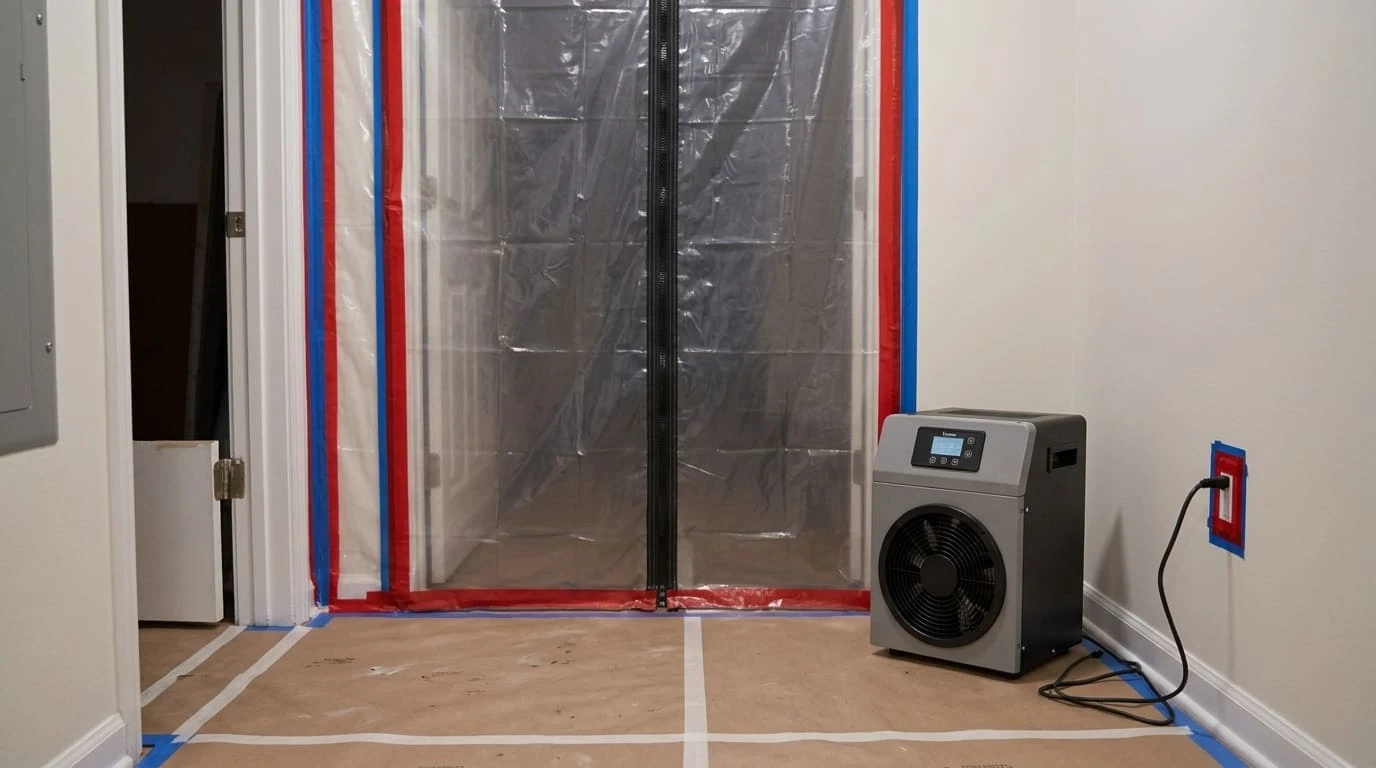
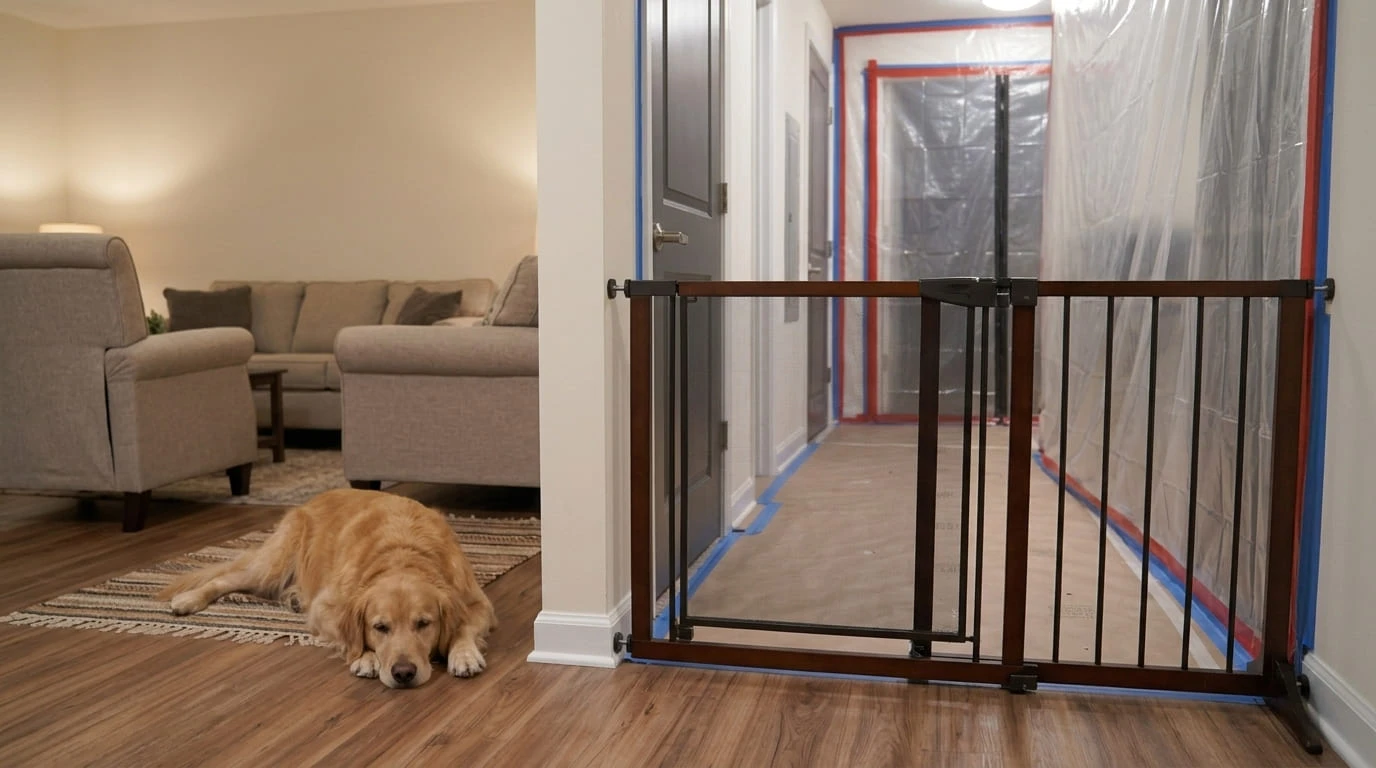
- First, build a dust wall. Use heavy plastic sheeting with a zip door to seal the work area, and tape the edges. Then seal off nearby heating and cooling vents so dust does not travel through the ducts.
- Next, protect the floors. Cover walkways with floor protection, and give workers one path in and out.
- After that, create a clean zone. Choose at least one bedroom and one living space that stay off limits to workers.
- Also, add a HEPA air cleaner to the main living area, and use a HEPA vacuum for daily cleanup.
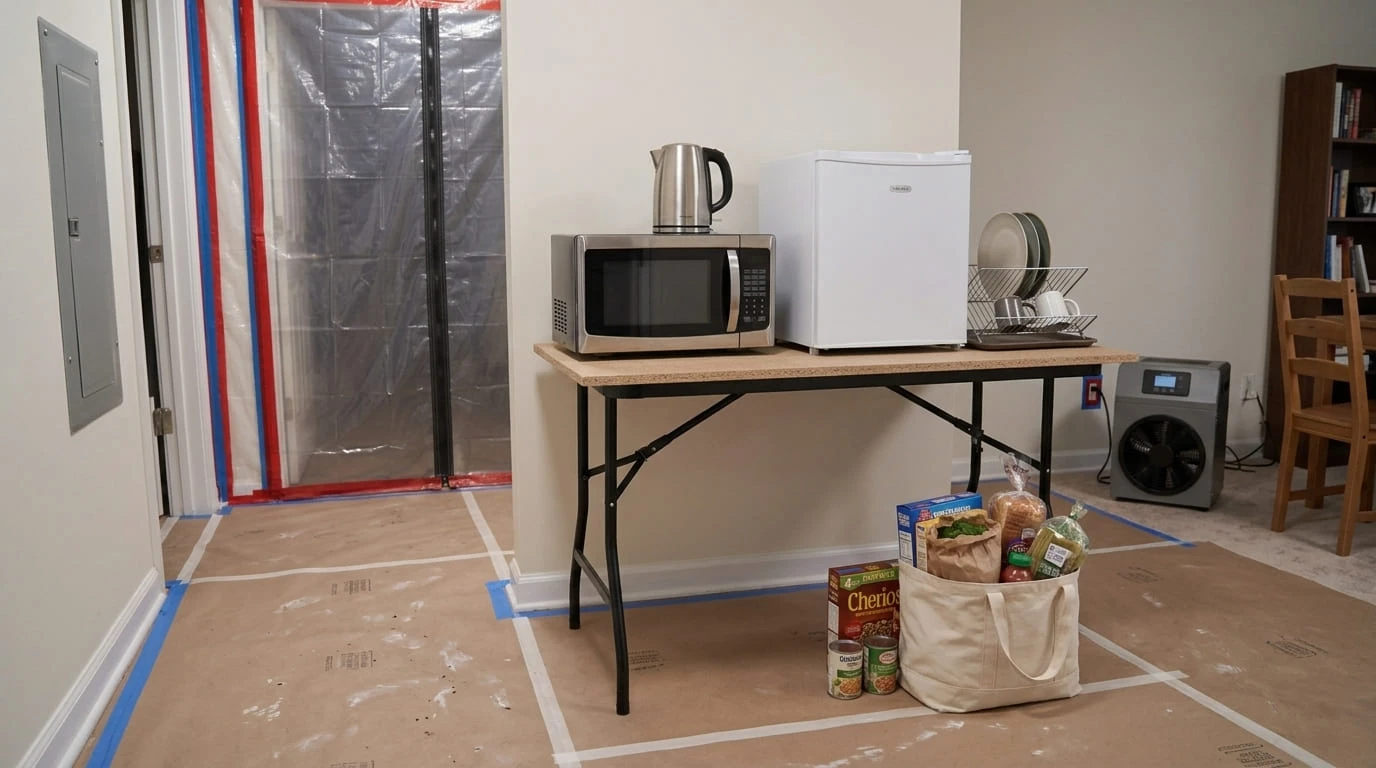
- Then make a temporary kitchen with a microwave, kettle, small fridge, and a folding table, plus a sink you can use. This matters most if the kitchen is the project.
- Similarly, plan your bathroom. Keep one bathroom working, or arrange a portable toilet and a plan for showers. Ask your contractor which days water will be off.
- Meanwhile, set shoe rules. Workers and family wipe or change shoes at the line.
- Finally, pack away the precious stuff. Move valuables, important papers, and fragile items out of the work area, or off-site.
If you need help with the order of the work so you can plan your zones, see planning work in zones for the usual sequence of trades.
What to settle with your contractor first
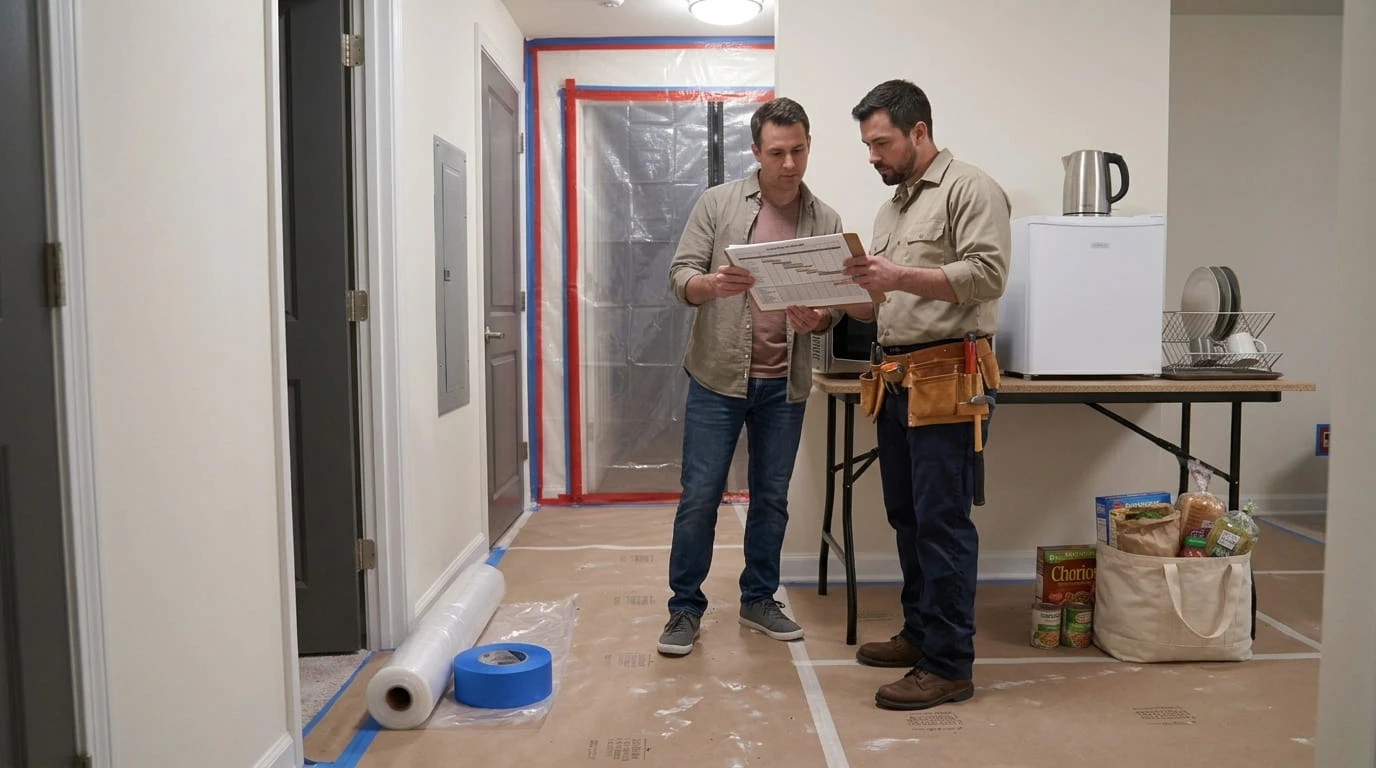
Surprises are what make living through a renovation miserable. Fortunately, most of them can be settled on paper before work begins. Therefore, put the answers in your contract.
- First, working hours. Start and end times, and which days they work.
- Also, access and parking. Where workers park and which door they use.
- Next, dust control. What containment they will use, and who cleans up each day.
- Then, shutoffs. Which days water, power, or gas will be off, with notice.
- Additionally, bathroom access. Do workers use yours? A portable toilet is often a better choice.
- Moreover, lead and asbestos plans, if your home is older.
- Furthermore, pets and kids. Rules for gates, doors, and quiet hours.
- Also, a single point of contact and a short daily check-in.
- Finally, proof of insurance and licensing.
In addition, a written scope helps keep this clean. See questions to settle before signing a contract for what belongs in it, and putting schedule changes in writing for how to handle delays.
Insurance and legal checks
Fortunately, two quick calls can save you a lot of pain.
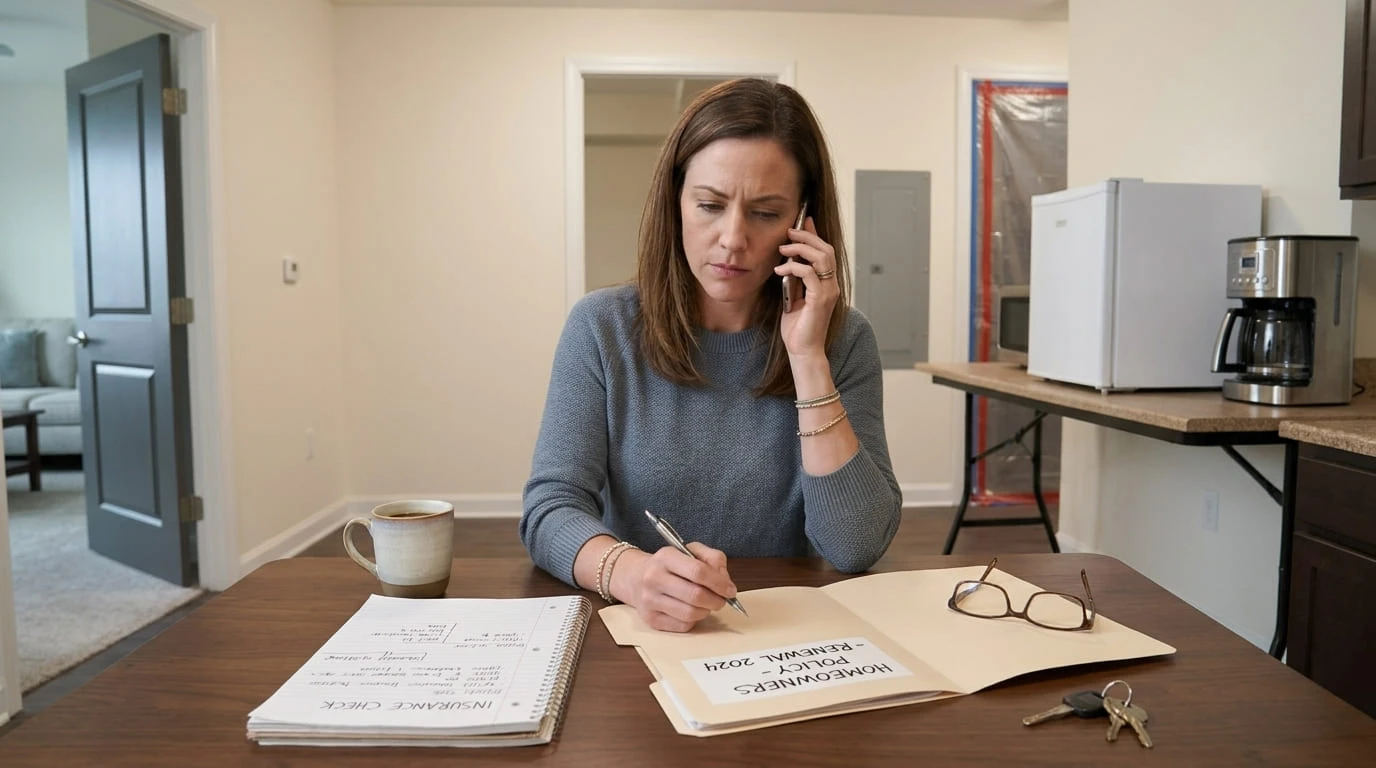
- First, call your homeowners insurer. Tell them about the project and ask what changes. Insurance guidance says many policies are affected when a home becomes a construction zone, and some policies exclude or limit coverage for losses during renovation.
- Also, ask about vacancy rules. Many standard policies cut or void some coverage if a home is unoccupied for 30 to 60 days in a row, depending on the insurer. If you plan to move out for a long stretch, ask about an endorsement or a different policy.
- Additionally, ask about builder’s risk coverage for larger projects. It can cover materials and work in progress.
- Finally, verify your contractor’s insurance. Ask for proof of general liability and workers’ compensation, and check that it is current.
Insurance rules vary a lot by company and state, so get answers in writing. Consequently, you will have a record if a dispute arises.
What staying vs leaving really costs
Moving out costs money, but staying costs money too, just in smaller ways. Therefore, compare both before you decide.
| Cost | If you stay | If you leave |
|---|---|---|
| Housing | None | Rent or a hotel, for example $2,000 a month for three months is $6,000 |
| Food | More takeout, plus a temporary kitchen | Whatever you already spend, plus extra if your stay has no kitchen |
| Storage and moving | Maybe a small storage unit | Moving costs and a storage unit |
| Cleaning | More frequent cleanup | A final deep clean |
| Speed | Possibly slower work | Possibly faster work |
| Insurance | Phone call and notes | Possible endorsement |
For instance, the $2,000 rent figure is only an example. In fact, real prices vary widely by city and by season, and in very expensive areas, a long stay elsewhere can cost far more. Therefore, add these numbers to your plan, and see adding living costs to your plan for how to track them. Meanwhile, if you are weighing a bigger project, such as a teardown, how long a rebuild keeps you out of the house covers what that looks like.
A sanity kit for the long weeks
- First, noise-cancelling headphones or earplugs, especially if you work from home.
- Also, a backup workspace. A library, coworking space, or a friend’s spare desk.
- Next, a meal plan. Slow-cooker meals, sandwiches, salad kits, and a few restaurant nights as rewards.
- Then, a laundry plan. A basket for dusty clothes and a place to wash them.
- Additionally, a pet plan. Gates, a quiet room, or boarding on loud days.
- Moreover, kid-friendly zones. A play area that is truly off-limits to the work.
- Furthermore, a daily reset. Ten minutes at the end of each day to wipe surfaces and vacuum with a HEPA vacuum.
- Finally, a weekend off. If you can, leave for a couple of nights midway. It helps more than you think.
When to leave, even for a few days
Even so, you can stay for most of a project and still leave for the worst parts. Therefore, consider a short stay elsewhere when:
- First, demolition is happening, because it is the loudest and dustiest stage.
- Also, floors are being sanded or finished, since fumes and dust spread everywhere.
- Next, water, power, or gas will be off for days.
- Then, lead paint or asbestos work is happening.
- Finally, a baby, pregnant family member, or someone with breathing problems lives in the house.
Therefore, ask your contractor which days will be the worst, and plan a trip or a stay with family for those days. As a result, a few nights away can make the rest of the project feel manageable.
Frequently asked questions
Can you live in your house during a renovation?
Yes, for many projects. In fact, it works best for painting, single-room work, exterior jobs, and small updates. However, bigger jobs, like whole-house remodels and work that disturbs lead or asbestos, are usually better handled by moving out for at least part of the time.
Can you live in a house during a kitchen remodel?
Yes, but expect several weeks without a working kitchen. Therefore, set up a temporary kitchen with a microwave, kettle, and small fridge, use another sink, and plan easy meals.
Can you live in your house during a bathroom remodel?
Yes, if you have a second bathroom. However, if it is your only one, plan for a portable toilet, a gym membership for showers, or a stay with family for the days the bathroom is out of service.
Is it safe to live in a house during renovation with kids and pets?
It can be, with good containment and rules, but be extra careful. For example, the EPA says to keep children, pregnant women, and pets out of the work area, especially in homes that may have lead paint. Therefore, if anyone has asthma or other health concerns, ask a doctor.
Will my homeowners insurance still cover me?
Often yes, but you should call your insurer before the work begins. Specifically, policies can limit coverage for losses during renovation, and many have vacancy clauses that apply after 30 to 60 days of an unoccupied home. Therefore, get the answers in writing.
Does living in the house slow down the renovation?
It can. For example, contractors may need to protect your belongings, work around your schedule, and clean up more often, which can add time. Therefore, ask for a quote with you staying and one without, so you can compare.
Final thoughts
Living through a renovation is a bit like a long road trip with the car in pieces. It is doable, and often funny later, but it goes better with a plan, a map, and a few spare snacks. Therefore, decide early whether you are staying, leaving, or doing both.
First, before work begins, set up your zones, settle the rules with your contractor, call your insurer, and plan your worst week. Then give yourself permission to be grumpy at least once. After all, everyone is.

Keep planning your project
More practical, plain-English guides on costs, permits, design, and hiring from the RemodelPulse team.