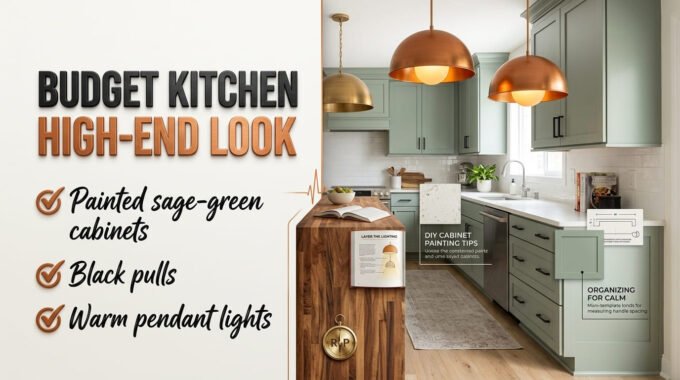



You are tired of the kitchen. The cabinets look dated, the hardware feels cheap, and the lighting makes every meal look a little gray. A full remodel is not in the budget this year, and you are not sure it should be. That is a reasonable place to stop and think.
If the layout works and the cabinet boxes are solid, you can update a kitchen on a budget without tearing anything out. The changes that matter most are the ones you see and touch every day: color, hardware, light, and the wall between the counter and the upper cabinets. This guide covers what those updates actually cost in the United States in 2026, what they can and cannot fix, and how to spend the money in an order that does not waste it.
The short answer
A practical kitchen refresh in 2026 often lands between about $1,500 and $6,000 when you keep the cabinet boxes, counters, and layout. Angi data puts professional cabinet painting near $943 for a typical reported job (range about $425 to $1,467), hardware around a few hundred dollars, and a standard backsplash near $1,000. Bigger sprayed paint jobs and new counters cost more. The 2025 Cost vs. Value Report, still the latest national edition widely cited into 2026, found a minor midrange kitchen remodel recouped about 113 percent of its cost at resale, while a major gut remodel recouped closer to half. Keep the layout. Fix what you see. Leave plumbing and walls alone unless they are actually failing.
Why a refresh beats a gut job for many kitchens
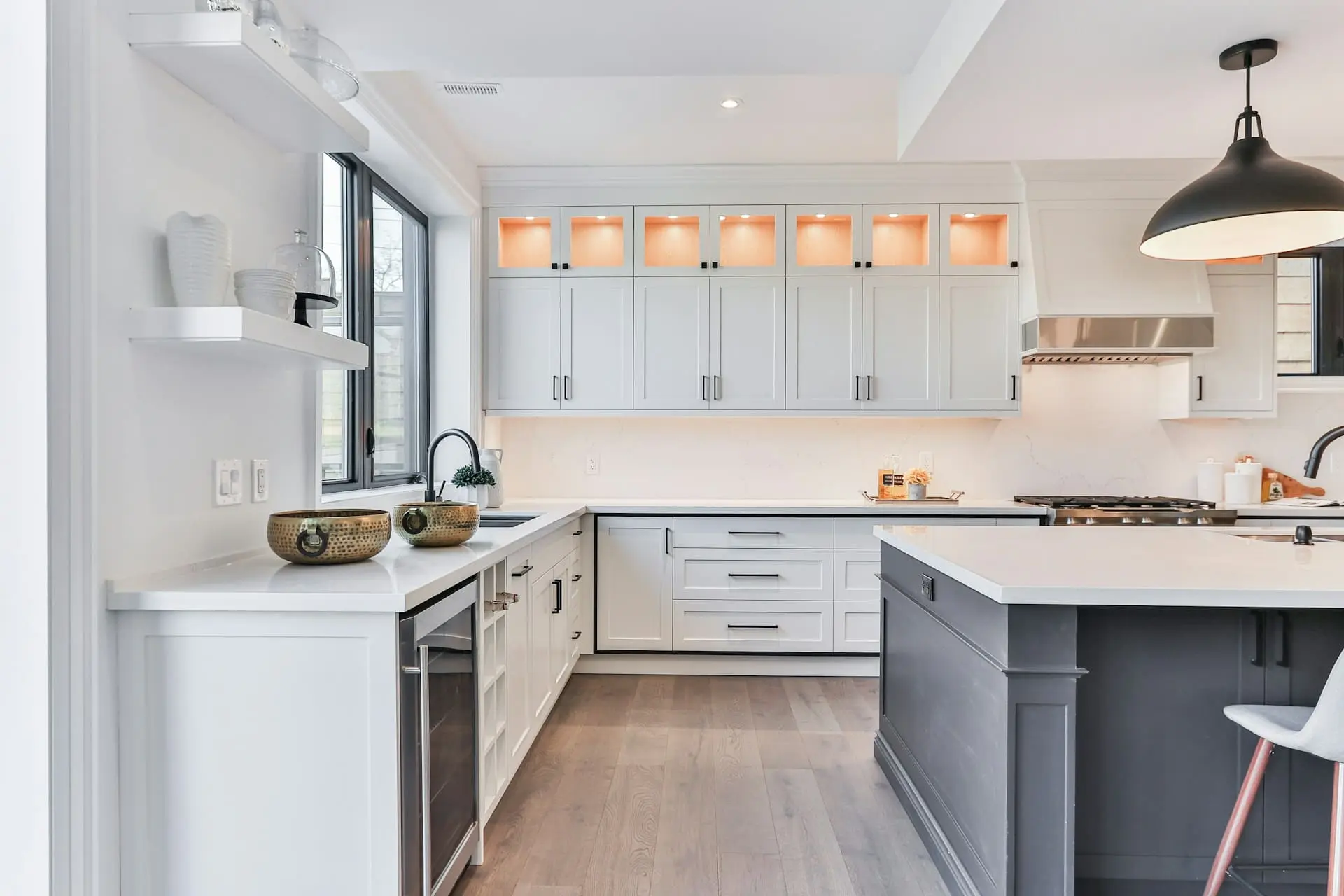
A full kitchen remodel is expensive because cabinets, counters, appliances, and labor stack up fast, and because moving a sink or a wall pulls in plumbing, electrical, and permits. Smaller updates avoid almost all of that. You are changing surfaces and fixtures, not the bones of the room.
The resale math supports restraint when the layout already works. In the 2025 Cost vs. Value Report from Zonda (published with Remodeling magazine), a minor midrange kitchen remodel had a national job cost of about $28,458 and was estimated to add about $32,141 in resale value, or roughly 113 percent of the cost recovered. A major midrange remodel, at about $82,793, recovered closer to 51 percent. As of late 2026, that 2025 edition was still the latest full national report widely cited. Local markets move these percentages, so treat them as a pattern, not a promise for your house.
The pattern is simple. Buyers notice a kitchen that looks current and works. They do not pay you back, dollar for dollar, for a custom layout that only you wanted. If you plan to stay, the same logic applies in a different way: spend where daily life improves, and stop before the project becomes a second mortgage. For a wider look at which projects tend to hold value, see our guide to improvements that tend to hold value at resale.
Check the kitchen before you spend
A cheap update only works when the parts you are keeping are sound. Walk the kitchen with a short list before you buy paint or tile.
- Cabinet boxes. Open a door and look at the side panels and the shelf pin holes. Solid wood or plywood boxes in good shape can be painted. Particleboard that is swollen from a past leak, or doors that are warped and will not close, will not reward a paint job.
- Layout. If two people cannot pass, the fridge blocks a drawer, or the sink and the stove fight each other, paint will not fix that. Layout problems need a real remodel.
- Counters. A laminate top with a clean edge and no swelling at the sink can stay. A burned, cracked, or delaminating top will keep the room looking unfinished no matter what you do to the cabinets.
- Water and electrical. Soft cabinet bottoms, a leaking faucet base, or outlets that spark are not cosmetic. Fix those first. Cosmetic money spent on top of a leak is money you will spend twice.
If the boxes and the floor plan pass that test, you are a candidate for a refresh. If they do not, a modest remodel that replaces cabinets in the same footprint is often cleaner than fighting failing boxes. Our notes on lower-cost kitchen remodel ideas that stay in one footprint cover that next step when a paint-and-hardware plan is not enough.
Updates that change the room for less
These are the changes that move the look of a kitchen without moving pipes or walls. Costs are national U.S. ranges for 2026. Your metro will sit higher or lower. Get local quotes before you commit.
1. Paint the cabinets, or hire someone who will prep them
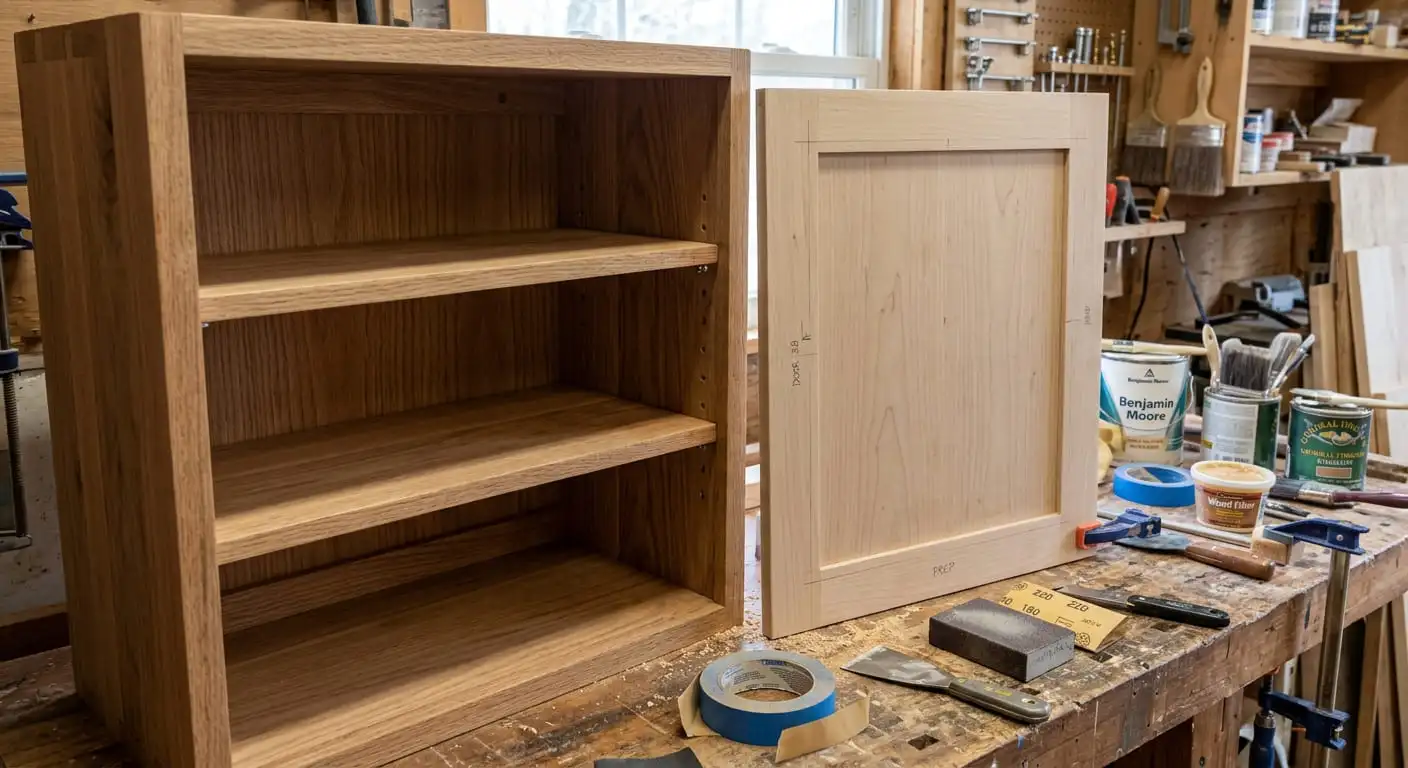
This is the single biggest visual change you can make while keeping the boxes. Angi reported in 2026 that professional cabinet painting, based on more than 13,000 verified projects, typically ran from about $425 to $1,467, with most homeowners paying around $943. That band reflects many smaller or simpler jobs. Guides that price a full sprayed enamel finish on an average kitchen often land closer to $2,000 to $6,500, because labor is most of the bill and prep is most of the labor. DIY materials commonly run about $200 to $600, plus many hours of cleaning, sanding, priming, and two coats.
Paint lasts when the prep is honest. Grease has to come off. Glossy finishes need a bonding primer. Doors should come off the boxes. If you skip that, the new color chips at the handles within a year, and the room looks worse than when you started. Solid wood and well-made MDF paint well. Thermofoil and some laminates need a specialty primer, and some are better left alone.
2. Replace the hardware
Knobs and pulls are the jewelry of the kitchen. Angi put the 2026 national average cost to install cabinet hardware near $300, with individual pieces commonly ranging from a few dollars to about $50 depending on material. A kitchen with 25 to 35 doors and drawers can often be redone for well under $500 in materials if you install them yourself and match the existing hole spacing.
Match the hole pattern when you can. New holes in a freshly painted door are easy to regret. If you are painting anyway, this is the moment to switch styles, because the old holes get filled and painted over. Wait until the paint has cured before you tighten new hardware, or the pulls will leave permanent dents.
3. Change the light
A single ceiling fixture leaves the counters in shadow, which is why so many older kitchens feel dim even after a paint job. Under-cabinet lighting, a new pendant over a table or peninsula, and warmer bulbs in the existing cans change how the room feels at 6 p.m. on a weeknight. Plug-in or peel-and-stick LED strips are the lowest-cost path. Hardwired fixtures cost more and should be done by someone comfortable with electrical work, or by a licensed electrician if your local rules require it.
Aim for light you can actually cook under, not just light that looks good in a photo. A dimmer on the new fixture lets the room shift from task light to evening light without another purchase.
4. Add a simple backsplash
The strip of wall between the counter and the uppers is small, and it carries a lot of the room’s character. Angi reported a 2026 national average of about $1,000 to install a backsplash, based on roughly 35 square feet, with most projects between $480 and $1,500. Installed cost commonly runs about $15 to $40 per square foot. Ceramic and porcelain subway tile sit at the lower end. Glass, natural stone, and marble climb quickly.
A straightforward running-bond subway tile in a neutral color photographs well and cleans easily. Busy patterns date faster and are harder to sell later. If the budget is tight, do the cooktop wall first. That is the surface guests notice and the one that takes the most grease.
5. Swap the faucet and paint the walls
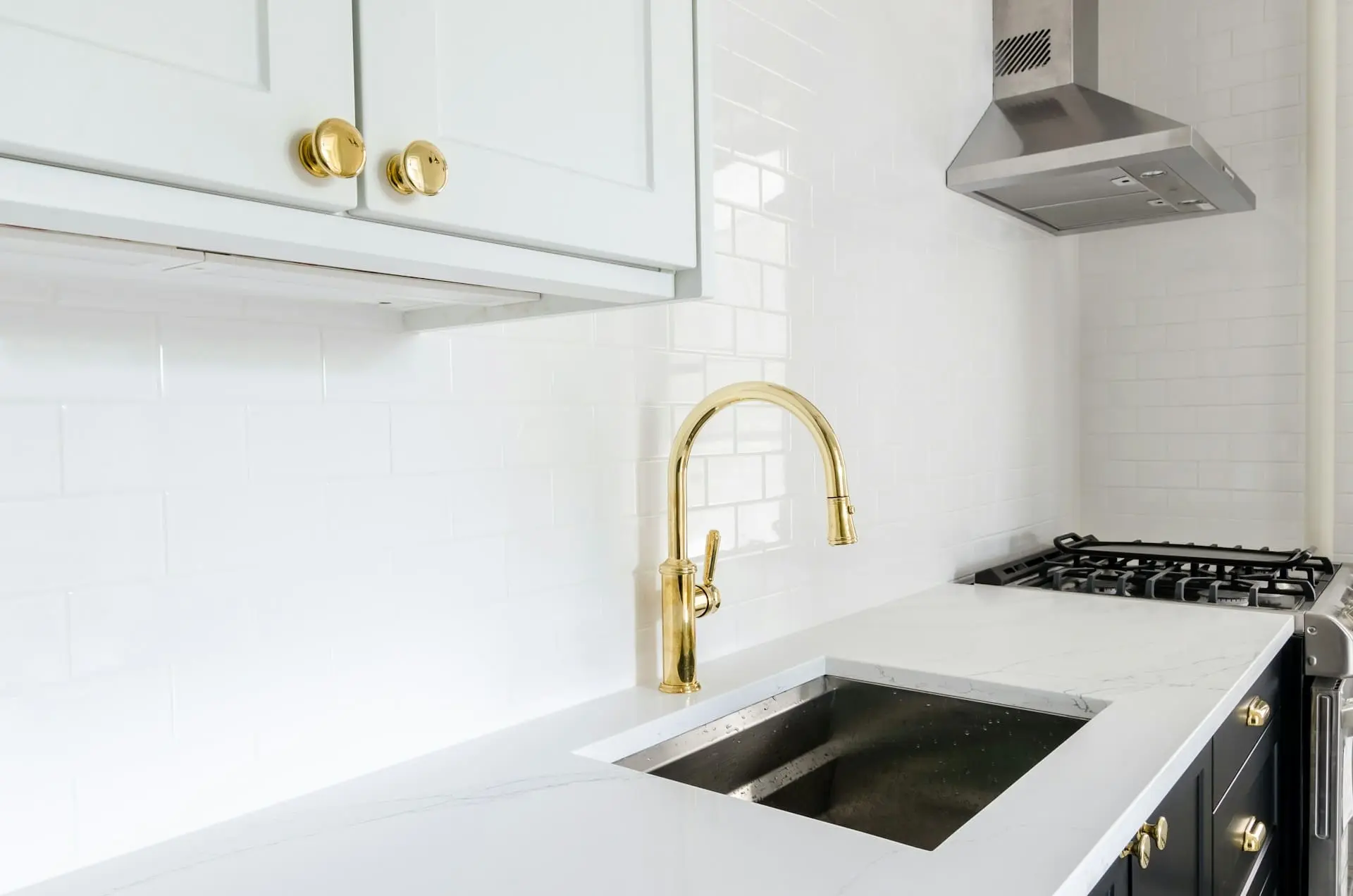
A new faucet in the same holes is one of the fastest ways to make the sink area feel finished. Choose a model that fits the existing hole count so you are not cutting the counter. Wall paint is even cheaper. A warm white or a soft neutral on the walls, with a slightly brighter white on the ceiling, makes cabinet color read as a choice instead of a leftover. Skip trendy accent walls in a small kitchen. They shrink the room and are the first thing the next owner will paint over.
6. Fix how the cabinets work
Soft-close hinges, a few pull-out bins, and a junk-drawer organizer do not show up in listing photos the way paint does. They show up every time you cook. That daily ease is why a refresh can feel like a new kitchen even when the floor plan did not change. Spend here after the visible work, not instead of it, if money is tight. If money allows both, do both. Function is what makes you glad you stayed.
| Update | Typical U.S. cost in 2026 | What it changes |
|---|---|---|
| Cabinet paint, typical pro job | About $425 to $1,467; many pay near $943 (Angi). Full sprayed jobs often $2,000 to $6,500 | The color of the whole room |
| DIY cabinet paint supplies | About $200 to $600, plus your time | Same result if prep is careful |
| New knobs and pulls | Often under $500 in materials; pro install averages near $300 (Angi) | The finish people touch |
| Tile backsplash, installed | Most projects $480 to $1,500; average near $1,000 (Angi) | The wall everyone looks at |
| Faucet in existing holes, plus wall paint | Often a few hundred dollars combined | Sink area and overall brightness |
These are planning ranges, not bids. For help holding the whole number together, including a small contingency, see our guide to building a renovation budget you can actually keep.
A sensible order of work
Doing these updates out of order is how a weekend project turns into a month of living around wet paint and open outlets. Work from the messiest task to the most delicate one.
- Empty, clean, and repair. Fix leaks, loose hinges, and soft wood before any finish goes on.
- Paint cabinets, then walls. Cabinet paint creates dust and overspray risk. Walls come after the doors are back on, or at least after the boxes are done.
- Install the backsplash. Tile goes on clean, painted walls, with the counter protected. If you are also replacing the counter later, wait on the tile. Tile that has to be cut around a new counter edge is frustrating work.
- Add lighting and the faucet. These are the last mechanical pieces. Test them before you put everything back.
- Hardware last. Install pulls only after paint has cured. Then load the cabinets back in a way you will actually use.
A refresh like this is often a long weekend if you do the work, or a few days if a painter and a tile setter overlap. A full remodel takes much longer. Our guide on how long a typical kitchen remodel takes is useful if you are still deciding whether this stays a refresh or becomes a larger project.
What three real budgets can buy
These are planning packages for a kitchen whose boxes and layout already work. They use the 2026 national ranges above. Labor in a high-cost city will push each package up. Doing the painting and hardware yourself pulls them down.
- About $500 to $1,500. New hardware, a faucet in the existing holes, wall paint, better bulbs, and plug-in under-cabinet lights. The kitchen looks cared for. It does not look new.
- About $1,500 to $4,000. Add a careful cabinet paint job (DIY or a smaller pro job) and a simple tile backsplash on the main wall. This is the package most people mean when they say the kitchen finally feels updated.
- About $4,000 to $8,000. A full professional sprayed cabinet finish, backsplash on all exposed walls, lighting, faucet, and hardware, sometimes with a laminate counter replacement if the old top is failing. Still not a remodel. The boxes and the layout stay.
Hold back 10 percent even on a small job. A cracked tile, an extra gallon of cabinet paint, or a faucet that does not fit the holes is normal. It should not blow the plan.

What not to cheap out on
Cheap and careless are not the same thing. A few shortcuts undo the whole refresh.
- Skipping cabinet prep. Paint over grease fails. The failure shows up at the handles first, which is exactly where people look.
- Painting swollen or peeling boxes. You are decorating a problem. Replace those doors or those boxes instead.
- A backsplash that fights the counters. If the counters are busy, keep the tile quiet. Two patterns in a small kitchen make both look accidental.
- Moving the sink “while you are at it.” That single decision turns a refresh into a remodel. Plumbing moves are where budgets leave the plan.
- The lowest cabinet-paint bid with no prep description. Ask what is included: degreasing, sanding, primer, number of coats, and whether doors are sprayed off-site. Compare the scope, not just the total. Our guide to reading a contractor quote line by line walks through how to do that without getting lost.
Frequently asked questions
How can I update a kitchen on a budget without remodeling?
Keep the cabinet boxes and the layout. Paint the cabinets, replace the hardware, improve the lighting, paint the walls, and add a simple backsplash. Swap the faucet only if it fits the existing holes. In 2026 those steps often land between about $1,500 and $6,000, depending on whether you hire the painting out.
How much does it cost to paint kitchen cabinets in 2026?
Angi data from 2026 puts a typical professional job between about $425 and $1,467, with most homeowners paying around $943. Full-kitchen sprayed finishes are often quoted higher, commonly $2,000 to $6,500, because prep and labor dominate. DIY supplies usually run about $200 to $600.
Is painting cabinets worth it?
Yes, when the boxes are solid and the layout works. It is one of the highest-impact changes per dollar. It is not worth it on swollen particleboard, peeling thermofoil, or doors that no longer close. In those cases, new doors or new cabinets in the same footprint are the honest fix.
Do small kitchen updates add resale value?
Smaller projects tend to return a larger share of their cost than gut remodels. The 2025 Cost vs. Value Report estimated a minor midrange kitchen remodel recouped about 113 percent nationally, versus about 51 percent for a major midrange remodel. Results vary by market and by how well the finishes match the rest of the house.
What is the cheapest update that still looks finished?
New hardware, a clean faucet, fresh wall paint, and better lighting. That package often stays under $1,500 and makes the kitchen look maintained. Cabinet paint is the next step if you want the room to look genuinely different.
When should I stop refreshing and remodel instead?
When the layout does not work, the boxes are failing, or you need to move the sink, the range, or a wall. Paint cannot fix those. At that point a same-layout remodel is usually cleaner than layering cosmetic work on a kitchen you already know is wrong.
Final thoughts
You do not need a new kitchen to stop dreading the one you have. If the boxes are sound and the layout already fits how you cook, an update on a budget is not a compromise. It is the right size of project. Paint, hardware, light, and a quiet backsplash change what you see every morning. They do it without months of dust and without a loan you will still be paying when the trend color has moved on.
Start with the check. If the bones pass, pick one budget and do the work in order. If they fail, stop and plan a real remodel instead of decorating a problem. Either choice is calmer than starting a gut job because the hardware looks tired.
Keep planning your project
More practical, plain-English guides on costs, permits, design, and hiring from the RemodelPulse team.